x


 EtchingWallArtPost-Impressionism
 20.0 x 19.0 cm
 Hammer Museum
Museum-quality giclée or canvas print with fast production and flexible finish options. ( Buy Hand Made Painting Buy Image)





























Pick from our preset sizes that match the artwork's original proportions.

You may enter your own dimensions to fit a specific frame or space. If your selected size does not match the original image's proportions, we will either crop the artwork or extend the image with a mirrored or solid-fill edge. A digital mockup will be sent for your approval before production begins.
Please note that the on-screen preview does not reflect the actual cropping or extension. Only the mockup will accurately show the final composition.
While custom sizes are available, we recommend selecting a dimension from the predefined list to preserve the original proportions.
Worldwide Delivery () in 2 weeks instead of standard 4/5 weeks. (4 September)


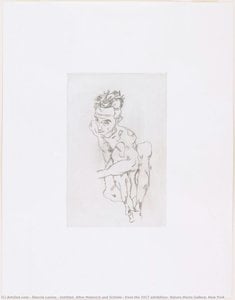
The Mirror
Reproduction Size
Paul César Helleu's "The Mirror," created around 1895, is more than just a portrait; it’s a meticulously crafted window into the social and psychological landscape of late 19th-century France. This drypoint etching, housed within the Hammer Museum at UCLA, captures a moment of quiet contemplation – two women observing each other through a shimmering mirror, their gazes holding a complex blend of curiosity, judgment, and perhaps even a touch of melancholy. Helleu, a master of his craft, expertly utilizes the limitations of printmaking to create an image brimming with subtle detail and emotional resonance.
Helleu’s genius lies in his command of drypoint etching – a technique he embraced after encountering the work of James Jacques Tissot. Unlike traditional engraving, drypoint involves scratching directly into a metal plate with a needle, creating a delicate, velvety texture known as “burr.” This burr then picks up ink, resulting in rich tonal variations and an immediate sense of depth. In "The Mirror," this technique is brilliantly employed to render the women’s clothing, the intricate folds of their garments, and the reflective surface itself with astonishing realism. The varying line weights – from delicate hairlines to bold, decisive strokes – create a dynamic interplay of light and shadow, drawing the viewer's eye into the scene and imbuing it with a palpable sense of atmosphere.
“The Mirror” is firmly rooted in the Belle Époque – an era defined by opulent luxury, rapid industrialization, and a burgeoning fascination with modernity. Helleu’s portraits of this period are renowned for their ability to capture not just physical likeness but also the social standing and inner lives of his subjects. The women depicted here belong to the fashionable elite, their attire reflecting the latest trends – elaborate gowns, delicate jewelry, and carefully coiffed hairstyles. The setting, though somewhat ambiguous, suggests a refined interior space—likely a salon or drawing room—a typical environment for socializing and observing others. Helleu’s skill lies in his ability to convey this sense of social context through subtle details: the arrangement of furniture, the positioning of the mirror, and the women's own postures and expressions.
The central image—the mirror itself—is far more than a simple reflective surface. It functions as a potent symbol, inviting multiple interpretations. Mirrors have long been associated with introspection, self-perception, and the duality of identity. In this context, it suggests that each woman is not only observing the other but also contemplating her own reflection – her appearance, her social position, and perhaps even her inner thoughts. The act of looking into a mirror can be both revealing and deceptive, highlighting the complexities of human relationships and the often-contradictory nature of self-awareness. The composition subtly reinforces this idea; the mirroring effect creates a sense of circularity, suggesting an endless cycle of observation and judgment.
Paul César Helleu's “The Mirror” stands as a testament to his exceptional talent and his deep understanding of the Belle Époque aesthetic. His meticulous attention to detail, combined with his masterful command of drypoint etching, results in an image that is both visually stunning and emotionally resonant. Reproductions of this captivating artwork offer a unique opportunity to bring a touch of Parisian elegance into any space – a reminder of a bygone era and the enduring power of visual storytelling. Consider commissioning a high-quality print from WahooArt.com to experience the full beauty and nuance of Helleu’s masterpiece.

Paul César Helleu was born in Vannes, Brittany, France, in 1859. His father, a customs inspector, passed away when Helleu was still a teenager. Despite his mother's initial reservations, he moved to Paris at a young age to pursue his artistic ambitions. He studied at Lycée Chaptal and, at the remarkably young age of sixteen, gained admission to the prestigious École des Beaux-Arts. There, he received formal training under Jean-Léon Gérôme.
Helleu's early exposure to the Impressionist movement during the Second Impressionist Exhibition in 1876 proved pivotal. He was deeply influenced by artists like John Singer Sargent, James McNeill Whistler, and Claude Monet, captivated by their innovative techniques and focus on outdoor scenes—a stark contrast to traditional studio practices.
To support himself early in his career, Helleu worked for Théodore Deck’s ceramic workshop, hand-painting decorative plates. This experience honed his technical skills. A significant turning point came with his meeting and mentorship under Giovanni Boldini, a portrait painter known for his bravura style. Boldini's influence significantly shaped Helleu's artistic direction.
A close friendship developed between Helleu and John Singer Sargent, which lasted throughout their lives. Sargent’s encouragement and support were crucial to Helleu’s early career. Helleu's mastery of drypoint etching was a defining characteristic of his work. Introduced to the technique by James Jacques Tissot, he quickly became a virtuoso, employing it with the same dynamism and sophistication as his pastels.
Helleu is best known for his portraits of elegant women from Parisian society during the Belle Époque. Notable subjects included the Duchess of Marlborough, the Marchesa Casati, Belle da Costa Greene, Louise Chéruit, and Helena Rubenstein. His ability to capture their beauty and grace with a refined elegance earned him widespread acclaim.
Paul César Helleu’s work embodies the spirit of the Belle Époque—a period characterized by optimism, elegance, and artistic innovation. His portraits offer a valuable glimpse into the lives and fashions of Parisian high society during this era.
Helleu’s work is represented in major museums worldwide, including the Musée d'Orsay and the Louvre in Paris, as well as the Tate in London and the Metropolitan Museum of Art in New York.

1859 - 1927 , France

Embark on a sophisticated journey through art history's most captivating masterpieces of reflection. Explore how legendary artists used mirrors to explore identity, surrealism, and the soul through expert art historical analysis.
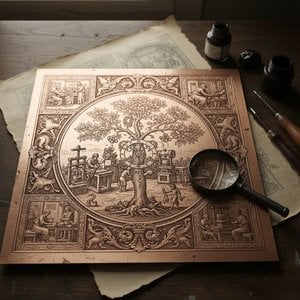
Explore the intricate world of etching and intaglio printmaking. Discover how masters use acid and metal to create profound textures and lines, from Romanticism to modern era, through an expert lens of art history and technical mastery.

Explore the profound symbolism of mirrors in fine art history. From Surrealist distortions to Vanitas themes, discover how masters use reflections to capture reality and the metaphysical soul.
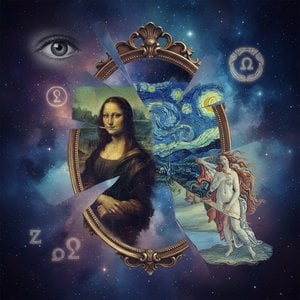
Explore the profound symbolism of mirror images in fine art. From Surrealist distortions to classical self-portraits, discover how masters use reflections to explore reality, identity, and the infinite through a sophisticated art-historical lens.
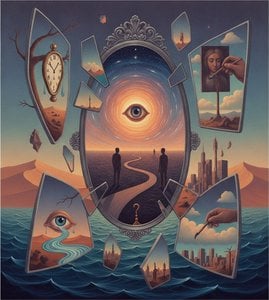
Explore the profound symbolism of mirror art through a journey of Surrealist mastery. From Dalí's fractured realities to technical brilliance, discover how reflections redefine art history and inspire sophisticated modern collections.


Stay updated with the latest art news, exclusive offers, and decoration ideas.
Tell us about your project and our art experts will provide you with 3 personalized art suggestions.
Let Us Curate 3 Options Just for You - Free!

 Preview
 Send
Send Share
Share
 Details

 Download
 Similars
 X-Ray
X-Ray Diaporama
 Read More







 Glass option is only available in size under 110 CM