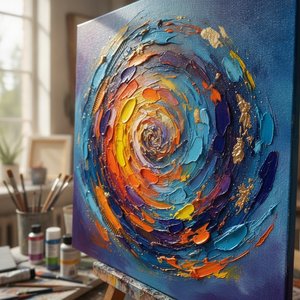
Preview AR preview Buy Hand Made Painting Switch to Digital Image Send
Details Guide Add to favorites Download Similars X-Ray Diaporama Stats

No Interviews, Please

Marlene Dumas’s paintings explore themes of vulnerability and identity through minimalist compositions featuring portraits of anonymous figures. Her technique utilizes acrylic paint on paper to create textured surfaces that convey subtle emotional states.

Marlene Dumas (b. 1953) is a South African painter celebrated for emotionally charged portraits exploring themes of race, sexuality, identity & vulnerability. A leading contemporary Romantic artist.

The artwork displayed on this page is protected by copyright law, which means we cannot legally create or sell an identical reproduction. This protection is enforced under international agreements such as the Berne Convention and by national laws, including those outlined by the U.S. Copyright Law - Title 17.

This method fully complies with copyright regulations because it does not involve copying or duplicating the protected artwork. Instead, it is a creative reinterpretation - a new painting that is influenced by the original but not identical to it.

Giclée / Art Print

Museum-quality giclée or canvas print with fast production and flexible finish options. ( Buy Hand Made Painting Switch to Digital Image)

Corner sample of the P118B picture frame: moulded polystyrene, 5 cm wide and 3 cm thick
P118B $10
Corner sample of the P118H picture frame: moulded polystyrene, 5 cm wide and 3 cm thick
P118H $10
Corner sample of the P118W picture frame: moulded polystyrene, 5 cm wide and 3 cm thick
P118W $10
Corner sample of the P438Z picture frame: moulded polystyrene, 5.5 cm wide and 3.5 cm thick
P438Z $10
Corner sample of the P508JH picture frame: moulded polystyrene, 7 cm wide and 3.5 cm thick
P508JH $12
Corner sample of the P508YH picture frame: moulded polystyrene, 7 cm wide and 3.5 cm thick
P508YH $12
Corner sample of the P805H picture frame: moulded polystyrene, 5 cm wide and 3.5 cm thick
P805H $10
Corner sample of the P805Z picture frame: moulded polystyrene, 5 cm wide and 3.5 cm thick
P805Z $10
Corner sample of the P919BZ picture frame: moulded polystyrene, 7 cm wide and 3.5 cm thick
P919BZ $10
Corner sample of the P919G picture frame: moulded polystyrene, 7 cm wide and 3.5 cm thick
P919G $10
Corner sample of the P919XJ picture frame: moulded polystyrene, 7 cm wide and 3.5 cm thick
P919XJ $10
Corner sample of the P959ZH picture frame: moulded polystyrene, 5 cm wide and 3 cm thick
P959ZH $10
Corner sample of the P968JZ picture frame: moulded polystyrene, 6 cm wide and 4 cm thick
P968JZ $12
Corner sample of the W106C picture frame: solid wood, 5 cm wide and 3 cm thick
W106C $8
Corner sample of the W218G picture frame: solid wood, 5 cm wide and 3 cm thick
W218G $10
Corner sample of the W218JH picture frame: solid wood, 5 cm wide and 3 cm thick
W218JH $8
Corner sample of the W218Y picture frame: solid wood, 5 cm wide and 3 cm thick
W218Y $10
Corner sample of the W307PJ picture frame: solid wood, 6 cm wide and 3 cm thick
W307PJ $10
Corner sample of the W316G picture frame: solid wood, 6 cm wide and 3 cm thick
W316G $10
Corner sample of the W316PJ picture frame: solid wood, 6 cm wide and 3 cm thick
W316PJ $8
Corner sample of the W316Y picture frame: solid wood, 6 cm wide and 3 cm thick
W316Y $10
Corner sample of the W398PJ picture frame: solid wood, 5 cm wide and 3 cm thick
W398PJ $8
Corner sample of the W4111J picture frame: solid wood, 6.5 cm wide and 3.5 cm thick
W4111J $10
Corner sample of the W500HY picture frame: solid wood, 7 cm wide and 5 cm thick
W500HY $15
Corner sample of the W500JH picture frame: solid wood, 7 cm wide and 5 cm thick
W500JH $15
Corner sample of the W692G picture frame: solid wood, 8 cm wide and 4 cm thick
W692G $12
Corner sample of the W849H picture frame: solid wood, 5 cm wide and 3 cm thick
W849H $8
Corner sample of the W940BG picture frame: solid wood, 7.5 cm wide and 4.5 cm thick
W940BG $15
Corner sample of the W953PJ picture frame: solid wood, 6 cm wide and 3.5 cm thick
W953PJ $8

Standard
custom
CM
INCH

Pick from our preset sizes that match the artwork's original proportions.

width
height

Type the width and the height you need, to fit your frame or your wall. A print can only be cut, never made bigger than the picture, so a size with a different shape loses a part of the image. We send you a digital mockup to approve before we print anything. The picture shown on this page does not show the real cut — only the mockup does.

Worldwide Delivery () in 2 weeks instead of standard 4/5 weeks. (18 October)

Free Worldwide Express Shipping
High-Quality Linen Canvas
Full Shipping Insurance
Customs Tax Refund Guarantee
True Color Matching Guarantee
100-Day Return Policy (Defects Only)
100% Money-Back Guarantee
Bulk Discount Offer

Total Price

$ 69

No Interviews, Please

Giclée / Art Print

Reproduction Size

-

Total Price

$ 69

Quick Facts

  • Title: No Interviews, Please
  • Movement: Contemporary Romanticism
  • Notable elements or techniques: Text and image combination
  • Subject or theme: Identity & Gender
  • Dimensions: 30 cm x 22 cm
  • Medium: Acrylic paint & crayon on paper

Art Quiz

There is only one correct answer for each question.

Question 1:
What is Marlene Dumas known for?
Question 2:
The image shows a collection of artworks by Marlene Dumas. What medium is primarily used for these paintings?
Question 3:
What influences shaped Dumas's artistic vision?
Question 4:
Approximately how many people are depicted in the artworks showcased?
Question 5:
What is a prominent characteristic of Dumas's artistic style, as reflected in her work?

A Window into Emotion: Exploring Marlene Dumas's Artistic Vision

Marlene Dumas (b. 1953) stands as a singular voice in contemporary art—a painter whose work transcends mere visual representation, delving into the depths of human experience with unflinching honesty and profound sensitivity. Her oeuvre is characterized by a distinctive approach: she eschews grand narratives or overtly expressive gestures, instead favoring meticulously crafted portraits that capture fleeting moments of emotion and subtly convey complex psychological states.

  • Subject Matter: Dumas’s subjects—often anonymous figures—are presented with remarkable immediacy. These aren't idealized representations but raw glimpses into human vulnerability, confronting viewers with uncomfortable truths about identity and perception.
  • Style: Her style leans heavily toward Minimalism, prioritizing stark simplicity in composition and color palettes. This deliberate restraint serves to amplify the emotional impact of her images, forcing us to confront the unspoken narratives residing beneath the surface.

Acrylic on Paper: Technique and Texture

Dumas’s favored medium is acrylic paint applied onto paper—a choice that lends itself beautifully to capturing subtle textures and tonal variations. The artist employs a technique of layering thin washes of color, often combined with pencil sketches or crayon marks, creating surfaces that appear deceptively calm yet harbor considerable depth.

  • Material Choice: The use of paper is significant; it embodies fragility and impermanence—themes recurrent throughout Dumas’s artistic explorations.
  • Layering Technique: Her meticulous layering process allows for nuanced gradations of color, mirroring the complexities of human emotion and memory.

Echoes of Apartheid and Sociopolitical Reflection

Born in Cape Town during the era of apartheid—a period marked by institutionalized racial segregation and oppression—Dumas’s formative years instilled within her a deep awareness of social injustice. This experience profoundly informs her artistic vision, prompting her to grapple with questions of race, sexuality, and the psychological burden of existence.

Early Influences: Her upbringing on her father's vineyard witnessed firsthand the divisions inherent in South African society—a landscape simultaneously beautiful and scarred by history. This early exposure fueled her desire to portray human subjects not as symbols of societal ideals but as individuals grappling with their own internal struggles.

Symbolism Beyond Surface Appearance

Despite its apparent simplicity, Dumas’s work is laden with symbolic resonance. The portraits themselves serve as conduits for exploring themes of loss, longing, and unspoken desires—capturing the elusive essence of human experience. Her images invite contemplation and provoke questions about how we perceive ourselves and our relationships to others.

  • Recurring Motifs: Recurring motifs—such as fragmented faces and ambiguous gestures—suggest a preoccupation with the fractured nature of identity and the difficulty of articulating emotion.
  • Emotional Resonance: Ultimately, Dumas’s art succeeds in conveying a palpable sense of melancholy and vulnerability—a testament to her ability to capture the profound emotional truths that lie beneath the veneer of everyday life.

Questions & Answers

Where can I buy a hand-painted reproduction of "No Interviews, Please" by Marlene Dumas?

Hand-painted copies of "No Interviews, Please" by Marlene Dumas are sold on this website: a hand-painted oil reproduction on linen canvas, ordered from its Hand-Painted Reproduction page.

Which color stands out most in "No Interviews, Please"?

The dominant color of "No Interviews, Please" by Marlene Dumas is gray (#857765).

What size and orientation are recommended for a print of "No Interviews, Please" by Marlene Dumas?

medium size, square orientation: that is the print setup suggested for "No Interviews, Please" by Marlene Dumas.

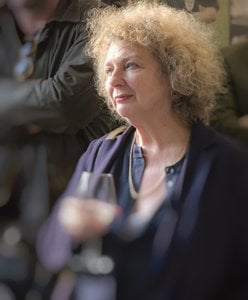
Artist Biography

A Life Shaped by Landscape and Sociopolitical Currents

Marlene Dumas, born in 1953 in Cape Town, South Africa, is a painter whose work resonates with an emotional depth rarely encountered in contemporary art. Her upbringing amidst the stark realities of apartheid profoundly shaped her artistic vision, instilling within her a keen awareness of social injustice and the complexities of human identity. Growing up on her father’s vineyard in Kuils River, she witnessed firsthand the divisions and inequalities that defined South African society during those years—a landscape both beautiful and burdened by history. This early exposure to a fractured world would become a recurring theme throughout her career, informing her exploration of race, sexuality, and the psychological weight of existence. Dumas’s formal artistic journey began at the University of Cape Town in 1972, where she pursued a Bachelor of Fine Arts degree alongside studies in ethics. This combination proved crucial, laying the groundwork for an art practice deeply concerned with moral questions and the human condition. She later continued her education at Ateliers '63 in Haarlem, Netherlands, relocating to Amsterdam in 1976—a move that marked a significant shift in both her geographical location and artistic perspective. Further academic pursuits in psychology at the University of Amsterdam between 1979-1980 would further refine her ability to portray inner states with remarkable sensitivity.

The Evolution of a Distinctive Style

Dumas’s artistic development has been characterized by a constant questioning of representation and a willingness to confront difficult subjects. Her early work directly addressed the political climate of apartheid, reflecting her identity as a white woman grappling with the moral implications of living within a system of racial segregation. However, she quickly moved beyond purely political statements, delving into more universal themes of human vulnerability, desire, and loss. Influenced by the emotional intensity of Romanticism—particularly artists like Egon Schiele and Francis Bacon—Dumas developed a distinctive style marked by loose brushstrokes, distorted figures, and an evocative use of color. She often begins her paintings with source material gathered from diverse origins: Polaroid photographs, magazine clippings, even pornographic imagery. These images are not simply copied but rather serve as starting points for explorations of feeling and memory. Her technique is notable for its layering—a wet-on-wet approach that builds depth and texture through the interplay of thin and thick paint. This creates a sense of fluidity and ambiguity, mirroring the complexities of the emotions she seeks to convey. The resulting images are often hauntingly beautiful, simultaneously alluring and unsettling.

Themes of Identity, Sexuality, and the Human Condition

At the heart of Dumas’s work lies an unwavering commitment to exploring the intricacies of human experience. Her subjects range widely—from portraits of friends and lovers to depictions of children, strippers, and figures drawn from popular culture. However, these are never mere representations; they are vehicles for investigating deeper psychological states. Race, sexuality, identity, violence, guilt, innocence – these are all recurring themes in her oeuvre, approached with a rare degree of honesty and nuance. Dumas’s paintings often challenge conventional notions of beauty and desirability, exposing the vulnerabilities and contradictions inherent in human relationships. She is particularly interested in the ways in which bodies are constructed and perceived—how they become sites of both pleasure and pain, power and oppression. Her work frequently engages with issues of representation, questioning who has the right to look at whom and what implications arise from that gaze. This critical perspective extends to her own artistic practice, as she acknowledges the inherent limitations and ethical challenges of portraying others.

Recognition and Lasting Impact

Marlene Dumas’s contributions to contemporary art have been widely recognized through numerous exhibitions and accolades. A significant milestone was her first major American museum exhibition, “Measuring Your Own Grave,” which opened at the Museum of Contemporary Art, Los Angeles in 2008 and subsequently traveled to the Museum of Modern Art, New York City. This retrospective solidified her position as a leading figure in contemporary painting. Her market success has also been remarkable; in 2004, *Jule-die Vrou* (1985) sold for over $1 million, establishing her as one of only three living female artists to achieve such a price point at the time. More recently, *The Schoolboys* (1986–87) reached an astounding $9 million at Art Basel Miami Beach in 2023, and *Miss January* (1997) shattered records in May 2025, selling for $13.6 million at Christie's—a new high for a living female artist. Represented by the prestigious David Zwirner Gallery since 2008, Dumas continues to exhibit internationally and inspire a new generation of artists. Her influence extends beyond the realm of painting; she has challenged conventional notions of portraiture and encouraged a more critical engagement with social and political issues within art. Dumas’s legacy lies in her ability to create works that are both deeply personal and universally resonant—paintings that confront us with our own vulnerabilities, desires, and prejudices.

A Continuing Dialogue

Marlene Dumas remains a vital force in the art world today. Her work continues to provoke dialogue about identity, representation, and the complexities of human experience. She doesn’t offer easy answers or simplistic solutions; instead, she presents us with ambiguous images that demand our attention and invite contemplation. Her paintings are not meant to be passively observed but actively engaged with—to be felt as much as understood. By confronting difficult subjects with sensitivity and depth, Dumas has created a body of work that is both challenging and profoundly moving. She stands as a testament to the power of art to illuminate the darkest corners of the human psyche and to foster empathy in a world often divided by difference.
Marlene Dumas

Marlene Dumas

1953 - , South Africa

Quick Facts

  • Artistic Movement Or Style: Romanticism, Figurative painting
  • Artists Or Movements Influenced By This Artist: Contemporary painters
  • Artists Who Influenced This Artist:
    • Egon Schiele
    • Francis Bacon
  • Date Of Birth: 1953
  • Full Name: Marlene Dumas
  • Nationality: South African, Dutch
  • Notable Artworks:
    • The Last Supper
    • Untitled (681)
    • Untitled (830)
    • Jule-die Vrou
    • The Schoolboys
    • Miss January
  • Place Of Birth: Cape Town, South Africa
Explore artworks organized by themes, styles, and characteristics.