

The artwork displayed on this page is protected by copyright law, which means we cannot legally create or sell an identical reproduction. This protection is enforced under international agreements such as the Berne Convention and by national laws, including those outlined by the U.S. Copyright Law - Title 17.
As a respectful and legal alternative, we offer custom, hand-painted artworks inspired by the original. Our skilled and professional artists carefully study the original's style, mood, and artistic essence to create a new, unique piece that evokes the same feeling - while remaining an original creation in its own right.
This method fully complies with copyright regulations because it does not involve copying or duplicating the protected artwork. Instead, it is a creative reinterpretation - a new painting that is influenced by the original but not identical to it.
Hand-painted oil on canvas in your size and frame, made to order by our artists. ( Switch to Print Switch to Digital Image)





























Pick from our preset sizes that match the artwork's original proportions.

Type the width and the height you need, to fit your frame or your wall. This is hand-painted, so for a size with a different shape the artist can paint a bit more around the picture, or cut a bit — you choose. We send you a digital mockup to approve before the painting starts. The picture shown on this page does not show the real result — only the mockup does.
Worldwide Delivery () in 3/4 weeks instead of standard 5 weeks. (23 October). No compromise on quality.
Cavalos
Reproduction Size
Marcelo Grassmann de Oliveira’s “Cavalos” (1944) stands as a testament to Brazilian Expressionism, capturing not merely an image of a horse in motion but a visceral embodiment of energy, struggle, and primal instinct. Executed in monochrome ink or charcoal on paper—a deliberate choice that amplifies the artwork's textural qualities—the drawing immediately draws the viewer into its turbulent landscape.
Oliveira’s artistic trajectory was profoundly shaped by figures like Alfred Kubin, an Austrian Expressionist known for his unsettling dreamscapes, and prominent Brazilian engravers Oswaldo Goeldi and Livio Abramo. These influences instilled in him a fascination with symbolic imagery and recurring motifs—knights battling demons, maidens facing peril, death itself—often depicted as a formidable adversary. This preoccupation with archetypal themes speaks to Oliveira’s desire to explore the depths of human experience through visual storytelling.
The artist's technique is characterized by loose, expressive lines that convey an immediacy rarely found in academic art. Smudging and layering contribute significantly to the artwork’s surface texture, mirroring the dynamism of the subject matter—a horse galloping with ferocious determination. Oliveira eschews meticulous detail, prioritizing emotional impact over photographic realism; instead, he employs gestural marks to capture the essence of movement and convey a palpable sense of urgency.
"Cavalos" transcends its depiction of a horse and rider, functioning as a powerful symbol of power, speed, and perhaps even defiance. The swirling lines suggest a confrontation with an unseen force—a battle for survival—reflecting anxieties prevalent in the post-war era. Oliveira’s masterful use of monochrome enhances the artwork's dramatic effect, stripping away superfluous color to focus solely on form and texture, thereby intensifying its emotional resonance.
Oliveira’s “Cavalos” remains a captivating example of Brazilian Expressionism. Its raw energy, evocative symbolism, and masterful technique continue to inspire admiration among art connoisseurs and collectors alike. The drawing's enduring appeal lies in its ability to communicate profound emotions—fear, courage, and the relentless pursuit of vitality—a timeless achievement that cements Oliveira’s place as a pivotal figure in Brazilian artistic history.
The recommended pairing for "Cavalos" by Marcelo Grassmann De Oliveira: a large print in a living room.
The guide to "Cavalos" is the artwork's Guide page - a printable factsheet showing the artwork with its caption, credit line and identity table (artist, dates, medium, original size, collection).
Marcelo Grassmann De Oliveira used the acrylic on canvas technique for "Cavalos". The technique defines the material nature of the original work.


1925 - 2013 , Brazil

Explore the profound psychological depth of Expressionist portraiture. From Munch to Schiele, discover how distorted forms and visceral brushstrokes unmask raw human emotion in this definitive guide for art enthusiasts and collectors.
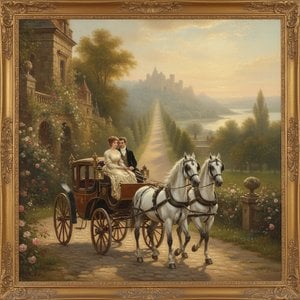
Embark on a visual journey through the romantic world of horse carriage art. Discover the mastery of equestrian oil paintings, from Impressionist textures to classical realism, and learn how to bring timeless elegance into your home with museum-quality reproductions.

Elevate your artistic practice with this expert guide to mastering the line. Discover advanced techniques in graphite, charcoal, and contour drawing designed for art students seeking technical precision and expressive depth in their fine art studies.

Explore the profound artistry of graphite drawing. Discover professional techniques for mastering depth, texture, and detail through a lens of art history, from classical sketches to modern masterpieces. Elevate your understanding of the pencil medium with our expert guide.

Discover the sophisticated mastery of graphite drawing. Explore expert techniques for achieving profound depth, intricate texture, and hyper-realistic detail through the alchemy of carbon, curated for the discerning art enthusiast and professional collector.

 Preview
 Send
Send Share
Share
 Details
 Guide
Guide

 Download
 Similars
 X-Ray
X-Ray Diaporama
 Stats
Stats


 Read More









 Glass option is only available in size under 110 CM


