
x


 Oil On CanvasWallArtSynthetic Cubism
 1913Modern
 54.0 x 73.0 cm
Hand-painted oil on canvas in your size and frame, made to order by our artists. ( Buy Print Buy Image)





























Pick from our preset sizes that match the artwork's original proportions.

You may enter your own dimensions to fit a specific frame or space. If your selected size does not match the original image's proportions, we will either crop the artwork or extend the painting with additional hand-painted elements. A digital mockup will be sent for your approval before production begins.
Please note that the on-screen preview does not reflect the actual cropping or extension. Only the mockup will accurately show the final composition.
While custom sizes are available, we recommend selecting a dimension from the predefined list to preserve the original proportions.
Worldwide Delivery () in 3/4 weeks instead of standard 5 weeks. (26 August). No compromise on quality.


Pears and grapes on a table
Reproduction Size
Juan Gris' 1913 masterpiece, "Pears and grapes on a table," isn’t merely a depiction of fruit; it is a bold declaration of a new visual language. Emerging from the fertile ground of early 20th-century Paris, this painting embodies the core tenets of Synthetic Cubism, yet possesses a unique vibrancy that sets it apart. Gris doesn't attempt to replicate reality as we perceive it, but rather dissects and reassembles it, presenting multiple viewpoints simultaneously on a single canvas. The result is an exhilarating dance of geometric shapes – fragmented planes of color suggesting the forms of pears, grapes, a goblet, and other still-life elements – all interwoven in a dynamic composition that challenges our conventional understanding of space and form.
To fully appreciate “Pears and Grapes on a Table,” one must understand its place within the evolution of Cubism. Following Picasso and Braque’s pioneering Analytical Cubism, which broke down objects into increasingly fragmented forms, Gris championed a more constructive approach – Synthetic Cubism. This meant building up compositions from simpler shapes and bolder colors, incorporating elements of collage and emphasizing the flatness of the canvas. Gris wasn't interested in merely analyzing form; he sought to *create* a new reality through the deliberate arrangement of abstract components. The painting’s asymmetrical arrangement isn’t accidental; it contributes to the sense of movement and energy that permeates the work, drawing the eye across its surface and inviting prolonged contemplation. The inclusion of newspaper fragments – barely discernible yet present – hints at the modern world intruding upon this carefully constructed still life, a subtle commentary on the complexities of contemporary existence.
Gris’ masterful use of color is integral to the painting's impact. He eschews the muted tones often associated with early Cubism, instead embracing a vivid palette dominated by warm hues – reds, oranges, and yellows – punctuated by cooler greens and blues. These aren’t simply decorative choices; they are structural elements that define shapes and create visual relationships. The bright yellow package in the upper right corner acts as a focal point, drawing the eye upwards and providing a striking contrast to the darker tones surrounding it. This interplay of complementary colors generates a sense of vibrancy and intensity, imbuing the painting with an emotional charge. The careful balance between warm and cool tones prevents the composition from becoming overwhelming, creating a harmonious yet dynamic visual experience.
“Pears and grapes on a table” is more than just a beautiful object; it’s a testament to Juan Gris' innovative spirit and his profound understanding of the principles of Cubism. The painting invites us to question our perceptions, to see beyond surface appearances, and to appreciate the beauty inherent in abstraction. Its enduring appeal lies not only in its historical significance but also in its aesthetic power – its ability to captivate and inspire viewers across generations. Whether adorning a modern living space or enriching an art collection, this artwork offers a unique blend of intellectual rigor and visual delight, a timeless masterpiece that continues to resonate with contemporary audiences.


1887 - 1927 , Spain
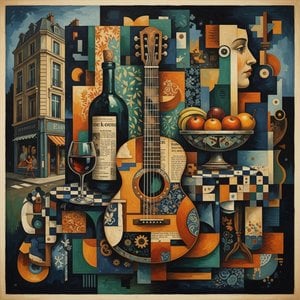
Master the vibrant world of Synthetic Cubism with our expert guide. Explore the revolutionary techniques of Picasso and Braque, from collage to color, and discover how this movement redefined modern art for collectors and connoisseurs alike.

Unveil the radical revolution of Cubism. Explore how masters like Picasso and Braque redefined modern art through fragmented forms and geometric abstraction, offering profound insights for discerning collectors of fine art history and masterpieces.

Embark on a journey through the revolutionary world of Cubism. Discover how masters like Picasso redefined perspective through Analytical and Synthetic techniques in this expert-led guide for art enthusiasts and collectors.

Explore the profound evolution of Cubism through an expert analysis of Pablo Picasso's revolutionary works. From Analytical to Synthetic Cubism, discover the techniques that redefined modern art and learn how to curate these iconic masterpieces for your private collection.


Stay updated with the latest art news, exclusive offers, and decoration ideas.
Tell us about your project and our art experts will provide you with 3 personalized art suggestions.
Let Us Curate 3 Options Just for You - Free!

 Preview
 Send
Send Share
Share
 Details

 Download
 Similars
 X-Ray
X-Ray Diaporama
 Read More







 Glass option is only available in size under 110 CM


