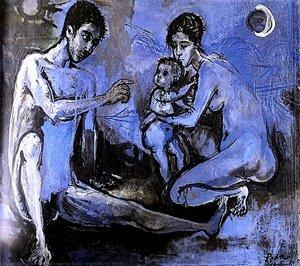
The artwork displayed on this page is protected by copyright law, which means we cannot legally create or sell an identical reproduction. This protection is enforced under international agreements such as the Berne Convention and by national laws, including those outlined by the U.S. Copyright Law - Title 17.
This method fully complies with copyright regulations because it does not involve copying or duplicating the protected artwork. Instead, it is a creative reinterpretation - a new painting that is influenced by the original but not identical to it.
Museum-quality giclée or canvas print with fast production and flexible finish options. ( Buy Hand Made Painting Switch to Digital Image)
Pick from our preset sizes that match the artwork's original proportions.

Type the width and the height you need, to fit your frame or your wall. A print can only be cut, never made bigger than the picture, so a size with a different shape loses a part of the image. We send you a digital mockup to approve before we print anything. The picture shown on this page does not show the real cut — only the mockup does.
Worldwide Delivery () in 2 weeks instead of standard 4/5 weeks. (27 October)
Risa
Reproduction Size

Born in Bogotá, Colombia, in 1942, Juan Antonio Roda’s artistic journey was shaped by a confluence of influences – from his early exposure to European art during his time in Paris to the vibrant intellectual circles of La Cueva in Barranquilla. His life, tragically cut short at the age of 51 in 1995, left behind a remarkably consistent body of work characterized by large-scale mixed media paintings dominated by muted sepia tones and featuring powerfully rendered male nudes. Roda’s art isn't merely about depicting the human form; it’s an exploration of identity, confinement, and the complexities of the modern experience – a visual poetry that continues to resonate with viewers today.
Roda’s formative years were spent in Valencia, Spain, before relocating to Bogotá. His education at the Universidad de los Andes introduced him to the work of masters like Velázquez and Goya, artists whose influence is readily apparent in Roda's early sketches and his deliberate use of chiaroscuro. This classical training provided a foundation upon which he built his own distinctive style, one that blended traditional techniques with a distinctly modern sensibility. His time in Paris proved pivotal, exposing him to the artistic currents of the era – including the works of Willem de Kooning and Francis Bacon – artists whose expressive brushwork and exploration of psychological states would undoubtedly inform his later development.
Roda’s paintings are immediately recognizable for their restrained palette. He rarely employed bright colors, instead favoring a limited range of sepia tones that evoke a sense of melancholy, introspection, and timelessness. This deliberate choice of color contributes significantly to the mood of his work, creating an atmosphere of quiet contemplation. His compositions often feature male nude figures – frequently depicted in moments of vulnerability or isolation – arranged within carefully constructed spaces. These figures are not idealized; they possess a raw, almost unsettling quality that reflects the realities of human existence.
Beyond the figure, Roda incorporated unexpected elements into his paintings: fabrics and rope were sometimes integrated into his compositions, adding layers of texture and symbolism. These additions weren’t merely decorative; they seemed to represent the constraints and limitations imposed upon individuals within society. His technique involved layering oil paints, inks, and washes on canvas or paper, creating a rich, textured surface that invites close examination. The use of mixed media allowed him to achieve a remarkable level of detail and expressiveness.
Roda’s talent quickly gained recognition within the Colombian art scene. In 1968, he won first prize at the First Ibero-American Biennial in Medellín, solidifying his position as a leading figure in contemporary Colombian art. His work has been exhibited extensively throughout Colombia and internationally, including at prestigious institutions like the Luis Ángel Arango Library in Bogotá. The Museum of Contemporary Art Bogotá houses several key works from his oeuvre, notably *Amarraperros* (1970) and *Retrato de un Desconocido* (1968), both powerful etchings that demonstrate his mastery of printmaking.
Roda’s influence extends beyond his own individual achievements. He is often compared to fellow Colombian artist Luis Caballero Holguín, who also explored themes of masculinity and eroticism in their work. Roda's unique style—a synthesis of classical training and modern sensibilities—has inspired a new generation of artists in Colombia. His commitment to exploring the complexities of the human condition through his art ensures that he will continue to be studied and appreciated for years to come.
Notable works such as *Amarraperros* (meaning “angry dogs”) and *Retrato de un Desconocido* offer compelling insights into Roda’s artistic vision. *Amarraperos*, a haunting black-and-white portrait, captures the intensity of emotion and the struggle for identity. The Museum of Modern Art of Bogotá holds several important examples of his work, including these iconic pieces. His art continues to be exhibited and studied, with reproductions available on platforms like WahooArt.com. The exhibition “Roda: His visual poetry” at the Museo Nacional in 2014 provided a comprehensive overview of his career, highlighting the breadth and depth of his artistic output.
For those seeking to delve deeper into the life and work of Juan Antonio Roda, resources such as the WahooArt.com artist page (https://WahooArt.com/pl/artists/juan-antonio-roda-en/?srsltid=AfmBOoqCbY0HtwCsJpHzfC1nJNmDHkoVzwl_Zz2oHQ0J1qXbXEoUwdnX) and the ICAA/MFAH article (https://icaa.mfah.org/s/en/item/1091966) offer valuable information about his artistic development and career.

1942 - 1995 , Colombia

Master the nuances of Giclée printing with our expert guide. Discover how pigment-based inks and museum-grade substrates create fade-resistant, high-fidelity art reproductions designed for discerning collectors seeking unparalleled quality and longevity.

Explore the profound artistry of black and white photography. From historical mastery to the interplay of light and shadow, discover how monochrome captures timeless emotion and form through a sophisticated lens of art history.

Elevate your most cherished memories with WahooArt’s bespoke service. We transform your personal photos into breathtaking, hand-painted black & white oil masterpieces. Experience museum-quality craftsmanship and timeless elegance for your private collection. Discover the art of legacy.

 Preview
 Send
Send Share
Share
 Details
 Guide
Guide

 Download
 Similars
 X-Ray
X-Ray Diaporama
 Stats
Stats

 Read More






































 Glass option is only available in size under 110 CM