FREE ART CONSULTATION

x
Buy print Buy printBuy Painting Buy Painting SendSend
DetailsDetails Add to favorites Add to favorites DownloadDownload SimilarsSimilars X-RayX-Ray DiaporamaDiaporama

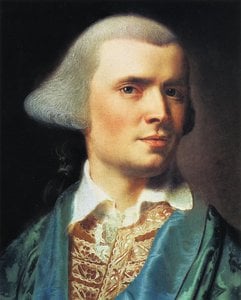
Theodore Atkinson Jr

Experience John Singleton Copley’s Neo-Classical masterpiece, "Theodore Atkinson Jr." A stunning 1758 oil on canvas portrait capturing a young man in formal attire – perfect for art lovers and collectors.

Discover John Singleton Copley (1738-1815), a pivotal Anglo-American painter celebrated for his detailed colonial portraits and innovative historical scenes. Explore his masterpieces today!

Purchase a high-resolution, enhanced digital image, far superior to the online preview.

Each file is meticulously prepared by our in-house specialists using advanced tools and expert manual retouching. We ensure every image has exceptional clarity, precise color accuracy, and fine detail.

The final file is delivered via email within 72 hours, optimized for immediate use in professional, editorial, and print environments. This is the same quality trusted by top-tier design studios, publishers, and galleries.

Digital Image

Download a high-resolution file for personal display, printing, and creative projects.

Total Price

$9.99

Included in Every Digital Image Order

Expert Digital Delivery, Guaranteed

When you choose WahooArt.com, you're not just getting an image - you're receiving a professionally enhanced digital artwork, crafted with precision and backed by a satisfaction guarantee. Here's everything that comes with your order, automatically:

shipping_icon
Fast Email Delivery

Your high-resolution digital image file will be emailed to you within 72 hours of ordering - ready for immediate use.

canvas_icon
AI-Enhanced Digital File

Your artwork is professionally optimized using advanced AI tools and manual editing, ensuring maximum detail, clarity, and color accuracy.

insurance_icon
Free Lifetime Re-Delivery

Accidentally deleted or lost your file? No worries - we'll resend it to you anytime, free of charge.

tax_icon
No Import Fees - Ever

Enjoy your artwork instantly with zero customs, duties, or delivery fees - digital downloads are always tax-free.

color_icon
Color Accuracy Guarantee

We ensure your digital image reflects the original colors as closely as possible using professional tools and color management.

return_icon
60-Day Satisfaction Guarantee

If you're not satisfied with your digital image, we'll revise it or refund 100% within 60 days - no questions asked.

guarantee_icon
100% Money-Back Guarantee

Not satisfied? Get a full refund within 60 days of receiving your digital file - no questions asked.

discount_icon
Bulk Order Discounts

Buy 3 images, save 10% - Buy 5, save 15% - Buy 10+, save 20%. Great for creative projects, galleries, and agencies.

Quick Facts

  • Artistic style: Portraiture
  • Influences:
    • Copley
    • Anglo-American
  • Subject: Young man
  • Medium: Oil on Canvas
  • Artist: John Copley
  • Title: Theodore Atkinson Jr
  • Movement: Neo-Classicism

Collectible Description

The Enduring Elegance of Theodore Atkinson Jr. – A Neo-Classical Masterpiece

  • Subject: The portrait depicts Theodore Atkinson Jr., a young man presented with a poised confidence and an air of intellectual pursuit. Copley’s meticulous attention to detail captures not just his physical appearance, but also the subtle nuances of youth and aspiration.
  • Style & Technique: Executed in the Neo-Classical style, this painting exemplifies Copley's mastery of capturing a sense of timeless grace and order. The oil on canvas medium allows for rich color saturation and nuanced tonal gradations, creating a remarkably realistic depiction. Notice the careful layering of paint – a hallmark of Copley’s technique – that builds depth and texture within the subject’s clothing and the surrounding landscape.
  • Historical Context: Created in 1758, “Theodore Atkinson Jr.” offers a fascinating glimpse into the social and cultural landscape of colonial Boston. The formal attire—the black coat and white shirt—reflects the importance placed on appearances and status within this era. Copley’s work was deeply intertwined with the burgeoning American elite, documenting their lives and aspirations as they navigated a period of significant change.

John Singleton Copley: A Revolutionary Portraitist

Born in Boston in 1738, John Singleton Copley stands as a pivotal figure in the development of American art. His journey from self-taught apprentice to celebrated artist is a testament to his unwavering dedication and keen observational skills. Unlike many artists of his time, Copley didn't simply copy existing styles; he forged a distinctly Anglo-American aesthetic, blending European influences with the unique character of colonial Boston. His early life, shaped by his father’s involvement in the tobacco trade and his mother’s shop on Long Wharf, instilled within him an acute understanding of material culture – a crucial element in his ability to portray subjects with such remarkable realism. Copley's portraits weren't merely likenesses; they were carefully constructed narratives reflecting the social standing, personality, and aspirations of his sitters. He was a keen observer of human nature, capturing not just physical appearance but also the subtle emotions and gestures that defined individual character.

Symbolism & Composition – Layers of Meaning

  • The Book Bag: The inclusion of the book bag is significant, subtly suggesting Theodore Atkinson Jr.’s intellectual pursuits and perhaps hinting at a future career in law or academia—a common aspiration for young men of his social standing.
  • The Trees in the Background: The carefully rendered trees provide not just a scenic backdrop but also contribute to the painting’s overall sense of depth and naturalism. They represent a connection to the land, a theme frequently explored in Neo-Classical art.
  • Compositional Balance: Copley masterfully employs compositional balance, drawing the viewer's eye across the canvas with a deliberate arrangement of elements that creates a harmonious and engaging visual experience.

Owning a Piece of History – A Handcrafted Reproduction

This meticulously crafted oil painting reproduction captures the essence of Copley’s original masterpiece, offering art enthusiasts a unique opportunity to own a stunning piece of American art history. Each reproduction is created by skilled artisans who painstakingly replicate Copley's techniques, ensuring an authentic and enduring representation. The 125 x 100 cm size makes it suitable for a variety of interior design settings, from formal studies to elegant living rooms. Available exclusively through WahooArt.com, this reproduction is more than just a painting; it’s an investment in art and a connection to one of America's most important artistic legacies. Explore the full collection and discover how you can bring the timeless elegance of “Theodore Atkinson Jr.” into your home.

Related Artworks


Artist Biography

A Pioneer Bridging Worlds: The Life and Art of John Singleton Copley

John Singleton Copley, born in Boston in 1738, occupies a unique and pivotal position in the history of American art. He wasn’t merely a painter; he was a cultural bridge, forging a distinctly Anglo-American aesthetic during a period of immense political and social upheaval. His story is one of self-taught brilliance, relentless ambition, and an uncanny ability to capture not just likenesses, but the very essence of his subjects within the context of their time. Copley’s early life was steeped in the bustling maritime world of colonial Boston, a city brimming with merchants, shipbuilders, and burgeoning wealth. His father, Richard Copley, though absent shortly after John's birth, was a tobacco merchant, while his mother, Mary Singleton Copley, ran a shop on Long Wharf. This environment instilled in young John an acute awareness of the material world – the textures of fabrics, the gleam of silver, the subtle nuances of social standing – all elements that would later define his artistic style. His stepfather, Peter Pelham, an engraver and limner (an artist who created portraits on vellum or parchment), provided some initial guidance, but Copley’s talent was largely self-cultivated through diligent study and practice. He devoured any available engravings, meticulously copying them to master technique, and quickly surpassed his stepfather's abilities.

The Rise of a Colonial Portraitist

By the 1760s, Copley had established himself as Boston’s premier portraitist, catering to the city’s elite. His success wasn’t simply due to technical skill; it was his ability to imbue his portraits with a psychological depth rarely seen in colonial American art. He moved beyond mere representation, striving to capture the character and social standing of his sitters. This involved meticulous attention to detail – the precise rendering of fabrics, jewelry, and furnishings – but also a keen understanding of posture, expression, and gesture. Copley’s portraits weren't just images; they were statements about wealth, power, and social aspiration. He skillfully incorporated symbolic objects into his compositions, subtly hinting at his subjects’ professions or interests. A merchant might be depicted with imported goods in the background, a lawyer with legal texts, or a naval officer with nautical instruments. This attention to detail and symbolism elevated his work beyond simple portraiture, transforming it into a form of social commentary. His portraits of prominent figures like *Mrs. Ezekiel Gondthwait (Elizabeth Lewis)* exemplify this approach – the elegant pose, luxurious fabrics, and subtle details all convey a sense of refinement and status.

Ambition and the Call of Europe

Despite his success in Boston, Copley harbored ambitions that extended beyond the colonial art world. He yearned for recognition from the established artistic circles of London and Rome, and sought to test his skills against the masters of European painting. In 1766, he sent his *Boy with a Flying Squirrel* to the Society of Artists in London, where it received considerable praise from Joshua Reynolds and Benjamin West – two leading figures in the British art scene. This encouragement fueled Copley’s desire for further training and exposure. However, family obligations and a thriving practice kept him rooted in Boston for another decade. Finally, in 1774, with his wife Susanna Farnsworth Clarke and their children, he embarked on a journey to Europe, intending to study the Old Masters and establish himself as a historical painter. The outbreak of the American Revolution shortly after his arrival complicated matters, forcing Copley to navigate a politically charged environment while pursuing his artistic goals.

Historical Narratives and Lasting Legacy

In London, Copley found both opportunities and challenges. He continued to paint portraits, securing commissions from prominent British figures, but he also turned his attention to historical painting – a genre considered more prestigious than portraiture at the time. His most ambitious work in this vein was *The Death of Major Peirson*, depicting a scene from the Battle of Jersey during the American Revolutionary War. While technically impressive, it received mixed reviews, with some critics questioning its composition and dramatic impact. Copley’s later historical paintings, such as *The Colapse of the Earl of Chatham in the House of Lords*, were more successful, demonstrating his ability to capture complex emotions and dramatic moments. Though he never fully achieved the level of acclaim he sought in Europe, John Singleton Copley left an indelible mark on both American and British art history. He pioneered a uniquely Anglo-American style, blending European techniques with a distinctly colonial sensibility. His portraits remain invaluable historical documents, offering glimpses into the lives and values of a bygone era. He is remembered not only for his artistic skill but also for his role in shaping a national identity through his art. He died in London in 1815, leaving behind a legacy that continues to inspire artists and captivate audiences today.

Influences and Artistic Development

  • Early Influences: Copley’s early artistic development was heavily influenced by the engravings he meticulously copied, particularly those of European masters like Rembrandt van Rijn and Antoine Watteau.
  • Peter Pelham's Guidance: His stepfather, Peter Pelham, provided initial training in portraiture and engraving techniques, laying the foundation for his future success.
  • Joshua Reynolds & Benjamin West: The encouragement and feedback from these prominent British artists during Copley’s early submissions to London exhibitions were crucial in shaping his ambitions and artistic direction.
  • Rococo Style: Copley initially embraced the Rococo style, evident in his use of delicate colors, graceful poses, and ornate details. However, he gradually moved towards a more realistic and restrained approach.
  • Historical Painting Inspiration: His exposure to historical paintings by artists like Benjamin West inspired him to explore this genre, though he often struggled to fully reconcile it with his natural talent for portraiture.

John Singleton Copley

John Singleton Copley

1738 - 1815 , United Kingdom

Quick Facts

  • Artistic Movement Or Style: Portraiture, Realism
  • Artists Or Movements Influenced By This Artist: Generations of artists
  • Date Of Birth: 1738
  • Date Of Death: 1815
  • Full Name: John Singleton Copley
  • Nationality: Anglo-American
  • Notable Artworks:
    • Earl of Chatham
    • Mr. & Mrs. Izard
    • Watson and the Shark
  • Place Of Birth: Boston, UK