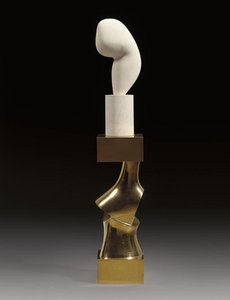
The artwork displayed on this page is protected by copyright law, which means we cannot legally create or sell an identical reproduction. This protection is enforced under international agreements such as the Berne Convention and by national laws, including those outlined by the U.S. Copyright Law - Title 17.
This method fully complies with copyright regulations because it does not involve copying or duplicating the protected artwork. Instead, it is a creative reinterpretation - a new painting that is influenced by the original but not identical to it.
Museum-quality giclée or canvas print with fast production and flexible finish options. ( Buy Hand Made Painting Switch to Digital Image)





























Pick from our preset sizes that match the artwork's original proportions.

Type the width and the height you need, to fit your frame or your wall. A print can only be cut, never made bigger than the picture, so a size with a different shape loses a part of the image. We send you a digital mockup to approve before we print anything. The picture shown on this page does not show the real cut — only the mockup does.
Worldwide Delivery () in 2 weeks instead of standard 4/5 weeks. (22 October)
Relief, clock
Reproduction Size
Jean Arp’s “Relief, Clock,” created in 1914 during the tumultuous period of Dadaism and its nascent embrace of Surrealist principles, stands as a testament to artistic experimentation and a profound engagement with geometric abstraction. More than just a decorative object; it embodies a radical departure from traditional sculptural conventions—a deliberate rejection of representational accuracy in favor of exploring fundamental visual elements: form, color, and chance.
“Relief, Clock” emerged from the Dada movement’s rejection of logic and reason—a reaction against the horrors of World War I. Dada artists sought to dismantle established artistic hierarchies and embrace absurdity as a means of critique. Arp's work aligns closely with Surrealist explorations of subconscious imagery and dreamlike states, drawing inspiration from figures like Marcel Duchamp and Giorgio Morandi. Notably, it shares stylistic similarities with Jean Arp’s biomorphic sculptures—a deliberate move away from representational art toward an aesthetic rooted in organic forms.
The circular motif symbolizes wholeness and unity – a concept central to Surrealist thought. The asymmetrical arrangement of shapes contributes to the artwork's emotional impact, conveying a feeling of playful disruption and inviting contemplation. Beyond its formal qualities, “Relief, Clock” evokes an atmosphere of quiet dynamism—a subtle suggestion of movement within stillness.
Likely executed using painted wood or similar durable material, the sculpture’s surface is remarkably smooth and glossy due to a meticulous polishing process. The careful cutting and placement of geometric shapes underscore Arp's mastery of craftsmanship—a testament to his commitment to achieving visual harmony through precise execution.
"Relief, clock" by Jean Arp is still protected by copyright. Copyright terms are measured from the artist's death, and Jean Arp died in 1966.
"Relief, clock" by Jean Arp is recommended for accent, ideally in a living room. Use and space together guide where a reproduction fits.
The popularity level recorded for "Relief, clock" by Jean Arp is recognized.


1886 - 1966 , Germany

Explore the profound spiritual depth of geometric abstraction. From Malevich's Suprematism to modern masters, our expert guide reveals how pure form and color command presence in fine art collections.

 Preview
 Send
Send Share
Share
 Details
 Guide
Guide

 Download
 Similars
 X-Ray
X-Ray Diaporama
 Stats
Stats
 Read More









 Glass option is only available in size under 110 CM