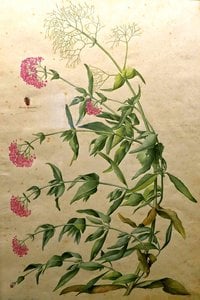
Oil On CanvasWallArtMannerism
 1580Renaissance
 260.0 x 341.0 cm
 Galleria degli Uffizi
Museum-quality giclée or canvas print with fast production and flexible finish options. ( Buy Hand Made Painting Switch to Digital Image)





























Pick from our preset sizes that match the artwork's original proportions.

Type the width and the height you need, to fit your frame or your wall. A print can only be cut, never made bigger than the picture, so a size with a different shape loses a part of the image. We send you a digital mockup to approve before we print anything. The picture shown on this page does not show the real cut — only the mockup does.
Worldwide Delivery () in 2 weeks instead of standard 4/5 weeks. (23 October)
Gerbil
Reproduction Size
To gaze upon Jacopo Ligozzi's depiction of the gerbil is to witness not merely a portrait of an animal, but a frozen moment of pure, unbridled vitality. This painting transcends simple naturalism; it captures the very essence of motion. The small creature is suspended in mid-air, its front legs splayed as if caught at the apex of a joyful leap or swift dash across an unseen plain. Ligozzi has imbued this humble subject with such palpable energy that one feels the slight puff of air accompanying its jump. The meticulous detail applied to the fur, the alertness in its large ears, and the graceful arc of its tail all conspire to create a scene brimming with life force against the stark simplicity of the white background.
Dating from 1580, this work sits squarely within the rich currents of late Renaissance and early Mannerism. Ligozzi himself was a pivotal figure, one who masterfully bridged the gap between high art and keen scientific observation. While many contemporaries focused on grand mythological scenes or religious narratives, Ligozzi turned his sophisticated eye toward the natural world. This choice speaks volumes about the intellectual curiosity of the era; it suggests an age where the boundary between artistic representation and empirical study was delightfully porous. The technique employed is one of exquisite rendering—a hallmark of Florentine craftsmanship—where every whisker and muscle tension is rendered with academic precision, yet never sacrificing the painting's inherent charm.
In art history, the depiction of small, energetic creatures often carries layers of meaning. The gerbil, in this context, becomes a potent symbol of resilience, agility, and the persistent spirit that thrives even in seemingly mundane settings. Against the void of the white wall, the animal’s existence is highlighted—a perfect meditation on life's inherent momentum. For the modern collector or designer, owning such a piece offers more than mere decoration; it introduces a focal point of dynamic contemplation into any space, suggesting that beauty and vigor can be found in the most unexpected subjects.
Considering the scale—a substantial 260 x 341 cm reproduction—this artwork commands attention. It is designed not just to hang on a wall, but to anchor a room with its narrative energy. For those seeking an accent piece that speaks to both scholarly appreciation and whimsical delight, this Ligozzi original offers unparalleled depth. Reproducing such a work allows one to integrate the sophisticated artistry of 16th-century Italian masters into contemporary décor, inviting conversation and admiration for the artist's unique ability to find grandeur in the everyday flutter of life.
"Gerbil" by Jacopo Ligozzi shows a vivid color intensity.
"Gerbil" by Jacopo Ligozzi has a calm atmosphere and is recommended for a living room. The mood is what the work brings to the space around it.
The AR Preview page of "Gerbil" by Jacopo Ligozzi uses augmented reality to show the artwork in your own space, on a compatible device.

In the vibrant, transformative era of late-Renaissance and Mannerist Italy, few figures embodied the intersection of aesthetic grace and empirical curiosity as profoundly as Jacopo Ligozzi. Born in Verona in 1547 to the respected artist Giovanni Ermano Ligozzi, Jacopo was immersed from birth in a world where craftsmanship and visual storytelling were paramount. His early life was shaped by the rigorous traditions of the artisan guilds, yet his spirit possessed an insatiable hunger for the wonders of the natural world. This dual passion—the disciplined technique of the painter and the observant eye of the naturalist—would eventually allow him to bridge the gap between art and science, earning him a legacy that transcends mere decoration.
Ligozzi’s artistic journey was significantly shaped by his time in Florence, where he studied under the legendary sculptor Giovanni Battista Buonarroti. This period of intense training within the Florentine Mannerist tradition instilled in him a mastery of form, light, and dramatic composition. However, Ligozzi was never content to remain solely within the confines of stylistic imitation. His ambitions led him toward the burgeoning scientific inquiries of his age. His invitation to the Habsburg court in Vienna served as a pivotal moment in his career; there, he presented exquisite drawings of botanical and zoological specimens that captivated the imperial gaze. These works were not merely beautiful illustrations but were early precursors to modern scientific documentation, demonstrating a level of precision that would later lead many to refer to him as the "Audubon of Florence."
Upon settling in Florence, Ligozzi ascended to the highest echelons of the artistic community. Following the death of Giorgio Vasari in 1574, he assumed leadership of the Accademia e compagnia delle arti del disegno, a position that granted him immense influence over the direction of Florentine art. His career was inextricably linked to the powerful Medici dynasty, as he served successive Grand Dukes including Francesco I, Ferdinando I, and Cosimo II. This prestigious patronage allowed him to experiment with diverse media, from grand historical narratives to the delicate artistry of pietre dure design.
His body of work is characterized by a remarkable versatility that ranges from the deeply spiritual to the intensely biological:
The historical significance of Jacopo Ligozzi lies in his refusal to see art and science as separate disciplines. While many of his contemporaries focused on the idealized human form or mythological allegories, Ligozzi looked toward the earth, the flora, and the fauna with a reverence that demanded accuracy. He transformed the canvas into a laboratory of observation, where every petal and every scale was rendered with an almost tactile reality.
By integrating the meticulousness of scientific illustration with the sophisticated language of Mannerism, Ligozzi helped pave the way for the natural history movements of subsequent centuries. His life remains a testament to the power of curiosity, proving that the artist's brush can be just as potent a tool for discovery as the scientist's lens. Today, his works stand as enduring monuments to a period when the pursuit of beauty and the pursuit of truth were one and the same.

1547 - 1627 , Italy
Explore the dramatic evolution of Northern Mannerism. Discover how masters like Bosch and Grünewald transitioned from Renaissance harmony to profound, elegant distortion through an expert analysis of symbolism, emotional intensity, and artistic innovation.

Step into the spotlight with WahooArt's AI-driven transformation. Turn your photos into stunning, hand-painted anime oil masterpieces. Experience the perfect fusion of cutting-edge technology and museum-grade craftsmanship to create a timeless pop-culture legacy for your home.

 Preview
 Send
Send Share
Share
 Details
 Guide
Guide

 Download
 Similars
 X-Ray
X-Ray Diaporama
 Stats
Stats Read More









 Glass option is only available in size under 110 CM