x
PreviewPreview AR previewAR preview Buy Print Buy PrintBuy Image Buy Image SendSend
DetailsDetails Add to favorites Add to favorites DownloadDownload SimilarsSimilars X-RayX-Ray DiaporamaDiaporama

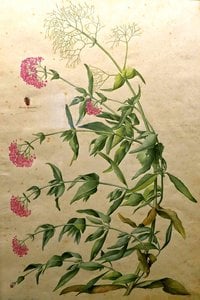
Model for a pietre dure table top

Explore Jacopo Ligozzi's masterpiece – 'Model for a pietre dure table top,' a stunning oil painting showcasing intricate floral arrangements against a black backdrop, inspired by Florentine pietra dura craftsmanship.

Jacopo Ligozzi (1547-1627) was an Italian late-Renaissance & Mannerist painter renowned for detailed botanical illustrations, fauna depictions, and designs for the Medici court. Often called the 'Audubon of Florence', he bridged art & science.

Hand Made Oil Reproduction

Hand-painted oil on canvas in your size and frame, made to order by our artists. (Buy Print Buy PrintBuy Image Buy Image)

P118B $10
P118H $10
P118W $10
P438Z $10
P508JH $12
P508YH $12
P805H $10
P805Z $10
P919BZ $10
P919G $10
P919XJ $10
P959ZH $10
P968JZ $12
W106C $8
W218G $10
W218JH $8
W218Y $10
W307PJ $10
W316G $10
W316PJ $8
W316Y $10
W398PJ $8
W4111J $10
W500HY $15
W500JH $15
W692G $12
W849H $8
W940BG $15
W953PJ $8

Standard
custom
CM
INCH

Pick from our preset sizes that match the artwork's original proportions.

width
height

You may enter your own dimensions to fit a specific frame or space. If your selected size does not match the original image's proportions, we will either crop the artwork or extend the painting with additional hand-painted elements. A digital mockup will be sent for your approval before production begins.
Please note that the on-screen preview does not reflect the actual cropping or extension. Only the mockup will accurately show the final composition.
While custom sizes are available, we recommend selecting a dimension from the predefined list to preserve the original proportions.

Examples of what can be changed: Replace face with customer photo; Add pet (e.g., replace cat with dog); Include hidden message in background; Change background landscape or elements.
After order, WahooArt.com team will email client for instructions and provide a mockup preview

Worldwide Delivery () in 3/4 weeks instead of standard 5 weeks. (29 August). No compromise on quality.

why_choose_icon
Free Worldwide Express Shipping
why_choose_icon
High-Quality Linen Canvas
why_choose_icon
Full Shipping Insurance
why_choose_icon
Customs Tax Refund Guarantee
why_choose_icon
True Color Matching Guarantee
why_choose_icon
60-Day Return Policy (Defects Only)
why_choose_icon
100% Money-Back Guarantee
why_choose_icon
Bulk Discount Offer

Total Price

$ 272

reproduction

Model for a pietre dure table top

Reproduction Medium

Reproduction Size

-

Total Price

$ 272

Quick Facts

  • Dimensions: 78 x 88 cm
  • Influences: Giovanni Battista Buonarroti
  • Notable elements or techniques: Detailed floral depiction; Precise rendering of textures.
  • Location: Museo dell'Opificio delle Pietre Dure (Florence, Italy)
  • Year: 1610
  • Artist: Jacopo Ligozzi
  • Subject or theme: Floral Still Life

Art Quiz

There is only one correct answer for each question.

Question 1:
What is the primary artistic style associated with Jacopo Ligozzi?
Question 2:
The painting utilizes oil on canvas, which contributes to what characteristic of the artwork?
Question 3:
Where is this masterpiece currently housed?
Question 4:
What does the title 'Model for a pietre dure table top' suggest about Ligozzi’s artistic intentions?
Question 5:
Approximately how large is the painting?

A Delicate Symphony of Stone and Bloom: Exploring Jacopo Ligozzi’s “Model for a Pietre Dure Table Top”

Florence, Italy – The Museo dell'Opificio delle Pietre Dure houses a treasure trove of artistic achievements, but few pieces resonate with quite the same quiet grandeur as Jacopo Ligozzi’s “Model for a pietre dure table top.” Completed in 1610, this unassuming painting transcends its modest dimensions (78 x 88 cm) to offer a glimpse into the burgeoning intersection of art and scientific inquiry that characterized Florentine Mannerism. More than just a depiction of floral ornamentation, it embodies Ligozzi’s meticulous approach—a testament to his artistic vision informed by observation and precision—and speaks volumes about the aesthetic sensibilities of its era.

The Painter's Vision: Bridging Renaissance Legacy with Scientific Observation

Ligozzi’s artistic lineage traced back to Giovanni Battista Buonarroti, whose influence instilled in him a profound respect for sculptural form and masterful craftsmanship. However, Ligozzi wasn’t merely replicating Buonarroti’s style; he actively sought to push boundaries, recognizing the potential for art to illuminate scientific principles. This ambition is palpable in his meticulous rendering of botanical specimens—a deliberate departure from idealized representations prevalent during the High Renaissance—reflecting a burgeoning fascination with anatomical accuracy and detailed naturalistic detail. The artist's goal wasn’t simply to capture beauty; it was to understand its underlying mechanisms, mirroring the broader intellectual currents shaping Florentine culture at the time.

Technique and Material: Pietre Dure – A Symbol of Refinement

The painting itself is executed in oil on canvas, a technique favored by Ligozzi for its ability to achieve luminous color palettes and subtle textural nuances. Yet, what truly distinguishes “Model for a pietre dure table top” is the inspiration it draws from a material undergoing significant innovation: pietre dure – Florentine alabaster. This precious stone, painstakingly carved and inlaid with gold leaf and silver wire, represents more than just decorative embellishment; it embodies Florentine artistic prestige and symbolizes enduring beauty. Ligozzi’s choice to depict this material—a deliberate reference to the ambitious project of crafting elaborate pietra dura tables—underscores his commitment to elevating art beyond mere visual appeal into a tangible expression of intellectual curiosity.

Floral Symbolism: Echoes of Renaissance Ideals

The floral arrangement adorning the table top is laden with symbolic significance, reflecting the humanist ideals that dominated Florentine thought during Ligozzi’s lifetime. Each flower—ranging from lilies symbolizing purity to roses representing love and devotion—was carefully positioned to convey a harmonious balance between earthly beauty and spiritual contemplation. The artist's meticulous attention to detail—evident in the delicate petals and intricate vein patterns—mirrors the Renaissance fascination with classical mythology and allegory, where floral motifs frequently served as vehicles for conveying moral lessons and philosophical concepts.

A Legacy of Precision: Ligozzi’s Contribution to Florentine Art History

“Model for a pietre dure table top” stands as a poignant reminder of Jacopo Ligozzi's pivotal role in shaping Florentine art history. His synthesis of artistic skill with scientific observation—a hallmark of Mannerism—established him as a visionary artist who dared to challenge conventions and explore new avenues of creative expression. Today, its serene beauty continues to captivate viewers, inviting contemplation on the enduring power of art to inspire wonder and illuminate the complexities of human experience. Its presence within the Museo dell'Opificio delle Pietre Dure ensures that Ligozzi’s legacy—a testament to intellectual rigor combined with artistic sensitivity—will endure for generations to come.

Artist Biography

The Visionary Synthesis of Jacopo Ligozzi

In the vibrant, transformative era of late-Renaissance and Mannerist Italy, few figures embodied the intersection of aesthetic grace and empirical curiosity as profoundly as Jacopo Ligozzi. Born in Verona in 1547 to the respected artist Giovanni Ermano Ligozzi, Jacopo was immersed from birth in a world where craftsmanship and visual storytelling were paramount. His early life was shaped by the rigorous traditions of the artisan guilds, yet his spirit possessed an insatiable hunger for the wonders of the natural world. This dual passion—the disciplined technique of the painter and the observant eye of the naturalist—would eventually allow him to bridge the gap between art and science, earning him a legacy that transcends mere decoration.

Ligozzi’s artistic journey was significantly shaped by his time in Florence, where he studied under the legendary sculptor Giovanni Battista Buonarroti. This period of intense training within the Florentine Mannerist tradition instilled in him a mastery of form, light, and dramatic composition. However, Ligozzi was never content to remain solely within the confines of stylistic imitation. His ambitions led him toward the burgeoning scientific inquiries of his age. His invitation to the Habsburg court in Vienna served as a pivotal moment in his career; there, he presented exquisite drawings of botanical and zoological specimens that captivated the imperial gaze. These works were not merely beautiful illustrations but were early precursors to modern scientific documentation, demonstrating a level of precision that would later lead many to refer to him as the "Audubon of Florence."

A Master of the Medici Court and Natural Wonders

Upon settling in Florence, Ligozzi ascended to the highest echelons of the artistic community. Following the death of Giorgio Vasari in 1574, he assumed leadership of the Accademia e compagnia delle arti del disegno, a position that granted him immense influence over the direction of Florentine art. His career was inextricably linked to the powerful Medici dynasty, as he served successive Grand Dukes including Francesco I, Ferdinando I, and Cosimo II. This prestigious patronage allowed him to experiment with diverse media, from grand historical narratives to the delicate artistry of pietre dure design.

His body of work is characterized by a remarkable versatility that ranges from the deeply spiritual to the intensely biological:

  • Biblical Narratives: In works such as his 1596 Sacrifice of Isaac, Ligozzi utilized the dramatic tension of the Baroque style to explore profound themes of faith and divine intervention, using light and shadow to heighten the emotional stakes of the biblical drama.
  • Botanical Precision: His illustrations, such as the meticulous depiction of Agave americana, showcase a scientific rigor that captures the intricate textures and muted tones of the natural world, serving as vital records for botanists of his era.
  • Historical and Naval Drama: In pieces like the Return of the Cavalier of Santo Stefano from Lepanto, he demonstrated an ability to capture large-scale historical events with a sense of movement and cultural significance that resonated with the political climate of the time.

Legacy of the Florentine Naturalist

The historical significance of Jacopo Ligozzi lies in his refusal to see art and science as separate disciplines. While many of his contemporaries focused on the idealized human form or mythological allegories, Ligozzi looked toward the earth, the flora, and the fauna with a reverence that demanded accuracy. He transformed the canvas into a laboratory of observation, where every petal and every scale was rendered with an almost tactile reality.

By integrating the meticulousness of scientific illustration with the sophisticated language of Mannerism, Ligozzi helped pave the way for the natural history movements of subsequent centuries. His life remains a testament to the power of curiosity, proving that the artist's brush can be just as potent a tool for discovery as the scientist's lens. Today, his works stand as enduring monuments to a period when the pursuit of beauty and the pursuit of truth were one and the same.

Jacopo Ligozzi

Jacopo Ligozzi

1547 - 1627 , Italy

Quick Facts

  • Artistic Movement Or Style: Late Renaissance & Mannerism
  • Artists Or Movements Influenced By This Artist: ['Giorgio Vasari']
  • Artists Who Influenced This Artist: ['Giovanni Ermano Ligozzi']
  • Date Of Birth: 1547 Verona Italy
  • Date Of Death: 1627
  • Full Name: Jacopo Ligozzi
  • Nationality: Italian
  • Notable Artworks:
    • St Francis Assisi Frescoes
    • St Raymond Resuscitating Child Canvas
    • Agave americana
  • Place Of Birth: Verona Italy
Explore artworks organized by themes, styles, and characteristics.