FREE ART CONSULTATION

x
Buy Painting Buy PaintingBuy Image Buy Image SendSend
DetailsDetails Add to favorites Add to favorites DownloadDownload SimilarsSimilars X-RayX-Ray DiaporamaDiaporama

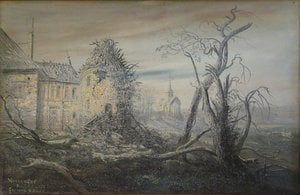
Pérouges, Rue Des Princes

Explore the art of Fernand Combes (1856-1943), a French artist known for his Impressionistic landscapes, Parisian street scenes, and religious works. Discover his contributions to late 19th and early 20th century French painting.

Giclée / Art Print

Museum-quality giclée or canvas print with fast production and flexible finish options.

Standard
custom
CM
INCH

Pick from our preset sizes that match the artwork's original proportions.

width
height

You may enter your own dimensions to fit a specific frame or space. If your selected size does not match the original image's proportions, we will either crop the artwork or extend the image with a mirrored or solid-fill edge. A digital mockup will be sent for your approval before production begins.
Please note that the on-screen preview does not reflect the actual cropping or extension. Only the mockup will accurately show the final composition.
While custom sizes are available, we recommend selecting a dimension from the predefined list to preserve the original proportions.

Worldwide Delivery () in 2 weeks instead of standard 4/5 weeks. (8 July)

why_choose_icon
Free Worldwide Express Shipping
why_choose_icon
High-Quality Linen Canvas
why_choose_icon
Full Shipping Insurance
why_choose_icon
Customs Tax Refund Guarantee
why_choose_icon
True Color Matching Guarantee
why_choose_icon
60-Day Return Policy (Defects Only)
why_choose_icon
100% Money-Back Guarantee
why_choose_icon
Bulk Discount Offer

Total Price

-

reproduction

Pérouges, Rue Des Princes

Giclée / Art Print

Reproduction Size

-

Total Price

-


Artist Biography

Early Life and Artistic Beginnings

Fernand Combes, born François Georges Fernand Combès in Les Herbiers, France, on August 4th, 1856, emerged from a rural landscape that would subtly yet profoundly shape his artistic vision. While initially pursuing studies at the École des Beaux-Arts in Paris, the rigid academic traditions of the time proved somewhat stifling for the burgeoning artist. Combes wasn’t drawn to grand historical narratives or mythological allegories; instead, he found himself captivated by the ephemeral beauty of everyday life and the shifting moods of nature. This inclination steered him away from direct competition within the Salon system and towards the nascent Impressionist movement, though his connection remained nuanced rather than a full embrace of its tenets. He sought to capture reality not through strict adherence to optical truth, but through an emotional resonance with the scenes before him.

The Parisian Years and Developing Style

Combes’s artistic journey truly blossomed during his time in Paris. The city itself became a primary subject, particularly its intimate corners and bustling street life. Unlike some of his contemporaries who focused on the glamorous boulevards, Combes often depicted quieter moments – winter scenes along the Seine, like Paris, Port des Orfèvres, l'hiver, avec la Seine gelée (1910), revealing a sensitivity to atmospheric conditions and the subtle play of light. These works demonstrate an Impressionistic leaning, characterized by loose brushwork and a focus on capturing fleeting impressions. However, Combes’s palette often retained a more traditional earthiness than the brighter hues favored by Monet or Renoir. He also explored scenes of provincial life, as seen in Honfleur, La Rue Gambetta (1913), showcasing his skill with monochrome drawings and an ability to convey realism and nostalgia.

Beyond Landscapes: Religious Themes and Diverse Subjects

While celebrated for his landscapes and Parisian streetscapes, Combes’s oeuvre extended beyond these familiar subjects. He engaged with religious themes, creating works like Scène Biblique (Moïse), revealing a depth of contemplation and narrative skill. This exploration suggests a broader intellectual curiosity and a willingness to tackle diverse artistic challenges. His versatility is further evidenced by his work in etching, engraving, and drawing, demonstrating a mastery of various techniques and a commitment to exploring different modes of visual expression. Combes wasn’t confined to a single style or subject matter; he possessed an adaptable talent that allowed him to navigate the complexities of the art world with quiet confidence.

Legacy and Historical Significance

Fernand Combes passed away in 1943, leaving behind a body of work that, while not as widely recognized as some of his Impressionist peers, offers a valuable insight into the artistic currents of late 19th and early 20th century France. He occupies an interesting position – a painter influenced by Impressionism but not wholly defined by it. His works provide a bridge between traditional academic painting and the more radical experiments of the avant-garde. Combes’s contributions lie in his ability to capture the essence of a place and moment with sensitivity and skill, imbuing his scenes with an emotional depth that resonates even today.
  • Key Characteristics: Impressionistic landscapes, Parisian street scenes, religious works, versatile technique (painting, etching, drawing).
  • Influences: École des Beaux-Arts training, Impressionist movement.
  • Major Achievements: Capturing the atmosphere of Paris and provincial France; exploring diverse subjects with skill and sensitivity.
His art continues to be appreciated for its quiet beauty, technical proficiency, and unique perspective on a pivotal era in French painting.
fernand combes

fernand combes

1856 - 1943 , France

Quick Facts

  • Artistic Movement Or Style: Impressionism
  • Date Of Birth: May 15, 1856
  • Date Of Death: January 20, 1943
  • Full Name: Franc Georges Fernand Combès
  • Nationality: French
  • Notable Artworks:
    • Paris, Port des Orfèvres
    • Honfleur, La Rue Gambetta
    • Scène Biblique (Moïse)
  • Place Of Birth: Les Herbiers, France
Explore artworks organized by themes, styles, and characteristics.