Emil Nolde: Life and Legacy
Early Life and Artistic Beginnings
Emil Nolde, a renowned German-Danish painter, was born Hans Emil Hansen on August 7, 1867, in Nolde, Schleswig-Holstein, Germany. He came from a family with strong ties to rural life and religious beliefs, factors that would profoundly influence his artistic vision. Despite initial resistance from his parents, who preferred he pursue a more conventional career, Nolde relentlessly pursued his passion for art. He initially worked as a wood carver and furniture decorator before dedicating himself fully to painting in his late twenties.
Artistic Development and Influences
Nolde’s artistic journey was marked by self-education and exploration. He traveled extensively, absorbing influences from various cultures and art forms. Early influences included Vincent van Gogh, Paul Gauguin, and traditional folk art – particularly the expressive power of primitive masks and carvings. These encounters sparked his interest in bold colors, simplified forms, and emotionally charged subject matter. He initially experimented with Realism and Impressionism but quickly moved towards a more subjective and expressive style.
Die Brücke and Expressionist Breakthrough
In 1905, Nolde co-founded Die Brücke (The Bridge), a pivotal group of German Expressionist artists. This collective sought to break away from academic traditions and express inner emotions through radical artistic experimentation. Nolde’s contribution to Die Brücke was significant; his intense use of color and distorted forms pushed the boundaries of representation. However, he maintained a somewhat independent path within the group, often diverging in subject matter and stylistic approach.
Key Themes and Artistic Style
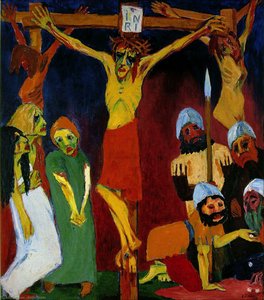
Nolde’s oeuvre is characterized by several recurring themes: religious scenes, landscapes, seascapes, and portraits. He was particularly fascinated by the power of masks – both as physical objects and symbolic representations of primal emotions. His artistic style is defined by:
- Bold, vibrant colors used to convey emotional intensity
- Distorted forms that emphasize expression over realistic representation
- Impasto technique - thick application of paint creating texture
- A focus on capturing inner psychological states
Notable Works and Achievements
Throughout his career, Nolde created a vast body of work. Some of his most celebrated paintings include:
- Masks (1906-1907) – showcasing his fascination with primitive art
- The Mocking of Christ (1909) – a powerful and emotionally charged religious scene
- Autumn Sea (1908) - demonstrating his expressive landscape painting.
- Flower Garden (Girl and Washing) (1907)
- Dance around the Golden Calf (1909)
Despite facing criticism and censorship during the Nazi regime – his work was deemed “degenerate” – Nolde continued to paint in secret. He produced a significant body of watercolor paintings during this period, demonstrating his unwavering commitment to artistic expression.
Historical Significance and Legacy
Emil Nolde’s innovative use of color and expressive brushwork profoundly influenced generations of artists. His work bridged the gap between traditional representational art and the abstract movements that followed. He remains a central figure in the history of German Expressionism, celebrated for his emotional intensity, bold experimentation, and enduring artistic vision. His legacy continues to inspire artists and art lovers worldwide.



 Preview
 Buy Hand Made Painting
 Send
Send Share
Share
 Details

 Download
 Similars
 X-Ray
X-Ray Diaporama
 Read More






































 Glass option is only available in size under 110 CM