FREE ART CONSULTATION

x
Buy print Buy printBuy Image Buy Image SendSend
DetailsDetails Add to favorites Add to favorites DownloadDownload SimilarsSimilars X-RayX-Ray DiaporamaDiaporama

Evening

Explore Emil Nolde’s "Evening" – a stylized landscape of luminous clouds & reflective water in expressive watercolor. Discover dreamlike serenity & subtle symbolism in this unique artwork.

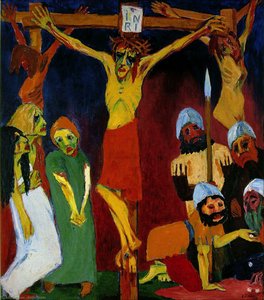
Explore Emil Nolde's vibrant Expressionism! Discover bold colors, emotive landscapes & iconic works like 'The Mocking of Christ'. A key figure in Die Brücke.

Hand Made Oil Reproduction

Hand-painted oil on canvas in your size and frame, made to order by our artists.

P118B $10
P118H $10
P118W $10
P438Z $10
P508JH $12
P508YH $12
P805H $10
P805Z $10
P919BZ $10
P919G $10
P919XJ $10
P959ZH $10
P968JZ $12
W106C $8
W218G $10
W218JH $8
W218Y $10
W307PJ $10
W316G $10
W316PJ $8
W316Y $10
W398PJ $8
W4111J $10
W500HY $15
W500JH $15
W692G $12
W849H $8
W940BG $15
W953PJ $8

Standard
custom
CM
INCH

Pick from our preset sizes that match the artwork's original proportions.

width
height

You may enter your own dimensions to fit a specific frame or space. If your selected size does not match the original image's proportions, we will either crop the artwork or extend the painting with additional hand-painted elements. A digital mockup will be sent for your approval before production begins.
Please note that the on-screen preview does not reflect the actual cropping or extension. Only the mockup will accurately show the final composition.
While custom sizes are available, we recommend selecting a dimension from the predefined list to preserve the original proportions.

Examples of what can be changed: Replace face with customer photo; Add pet (e.g., replace cat with dog); Include hidden message in background; Change background landscape or elements.
After order, WahooArt.com team will email client for instructions and provide a mockup preview

Worldwide Delivery () in 3/4 weeks instead of standard 5 weeks. (2 July). No compromise on quality.

why_choose_icon
Free Worldwide Express Shipping
why_choose_icon
High-Quality Linen Canvas
why_choose_icon
Full Shipping Insurance
why_choose_icon
Customs Tax Refund Guarantee
why_choose_icon
True Color Matching Guarantee
why_choose_icon
60-Day Return Policy (Defects Only)
why_choose_icon
100% Money-Back Guarantee
why_choose_icon
Bulk Discount Offer

Total Price

-

reproduction

Evening

Reproduction Medium

Reproduction Size

-

Total Price

-

Quick Facts

  • subject: Landscape – sky, water, and land
  • notable elements: Luminous yellow cloud, winding river/water, bold outlines
  • influences: Vincent van Gogh, Paul Gauguin, traditional folk art (primitive masks and carvings)
  • medium: Watercolor or gouache (presumed)
  • artist: Emile Nolde
  • title: Evening

Art Quiz

There is only one correct answer for each question.

Question 1:
Emile Nolde was a prominent figure in which artistic movement?
Question 2:
Based on the description, what is a dominant visual element in 'Evening'?
Question 3:
The artwork's style is best described as…
Question 4:
What medium was likely used to create 'Evening', based on the description?
Question 5:
Which artists are mentioned as influences on Emile Nolde's work?

Artwork Description

A Symphony of Color: Experiencing Emil Nolde’s “Evening”

Emil Nolde's "Evening" is a captivating exploration of light and atmosphere, characteristic of his expressive landscape work. This piece doesn’t depict a literal evening scene, but rather an *emotional* response to one – a distillation of the feeling of twilight rendered in bold color and simplified forms. A dominant, luminous yellow cloud commands attention in the upper left quadrant, acting as a focal point that draws the eye down into the composition. Below, a gradient of blues transitions from deep indigo to lighter turquoise and verdant greens along the horizon line, suggesting water reflecting the celestial drama above.

Expressionism & The Power of Color

  • Stylistic Roots: Nolde was a key figure in early 20th-century Expressionism, a movement that prioritized subjective experience and emotional impact over realistic representation. “Evening” exemplifies this approach through its non-naturalistic color palette and abstracted forms.
  • Technique & Materials: The artwork appears to be executed in watercolor or gouache, evidenced by the fluidity of the washes and blending of colors. Nolde masterfully employs these techniques to create a sense of atmospheric depth despite the flattened perspective. Visible brushstrokes add texture and energy.
  • Influences: While forging his own path, Nolde was influenced by artists like Vincent van Gogh and Paul Gauguin, particularly their use of intense color to convey emotion. He also drew inspiration from traditional folk art and primitive masks, evident in the bold outlines and simplified shapes.

Symbolism & Emotional Resonance

The symbolism within “Evening” is subtle yet potent. The large yellow cloud can be interpreted as a source of radiant energy or enlightenment – a beacon amidst the darkening sky. The winding body of water, reflecting the colors above, suggests a connection between the earthly and celestial realms. More broadly, Nolde’s landscapes often represent an attempt to connect with nature on a spiritual level.

The overall emotional impact is one of tranquility mixed with a hint of mystery. The stylized representation invites contemplation and allows viewers to project their own feelings onto the scene. Nolde's work frequently evokes a sense of longing or melancholy, reflecting his own complex relationship with the world around him.

Nolde’s Life & Legacy

Born in 1867 in Nordel, Germany, Emil Nolde dedicated himself to art after years working as a wood carver. Despite facing opposition from his family and later persecution under the Nazi regime (his work was deemed “degenerate”), he remained committed to his artistic vision. Nolde’s landscapes, seascapes, and portraits are celebrated for their raw emotional power and innovative use of color. His ability to capture the essence of a place or feeling – rather than simply its appearance – continues to resonate with audiences today.


Artist Biography

Emil Nolde: Life and Legacy

Early Life and Artistic Beginnings

Emil Nolde, a renowned German-Danish painter, was born Hans Emil Hansen on August 7, 1867, in Nolde, Schleswig-Holstein, Germany. He came from a family with strong ties to rural life and religious beliefs, factors that would profoundly influence his artistic vision. Despite initial resistance from his parents, who preferred he pursue a more conventional career, Nolde relentlessly pursued his passion for art. He initially worked as a wood carver and furniture decorator before dedicating himself fully to painting in his late twenties.

Artistic Development and Influences

Nolde’s artistic journey was marked by self-education and exploration. He traveled extensively, absorbing influences from various cultures and art forms. Early influences included Vincent van Gogh, Paul Gauguin, and traditional folk art – particularly the expressive power of primitive masks and carvings. These encounters sparked his interest in bold colors, simplified forms, and emotionally charged subject matter. He initially experimented with Realism and Impressionism but quickly moved towards a more subjective and expressive style.

Die Brücke and Expressionist Breakthrough

In 1905, Nolde co-founded Die Brücke (The Bridge), a pivotal group of German Expressionist artists. This collective sought to break away from academic traditions and express inner emotions through radical artistic experimentation. Nolde’s contribution to Die Brücke was significant; his intense use of color and distorted forms pushed the boundaries of representation. However, he maintained a somewhat independent path within the group, often diverging in subject matter and stylistic approach.

Key Themes and Artistic Style

Nolde’s oeuvre is characterized by several recurring themes: religious scenes, landscapes, seascapes, and portraits. He was particularly fascinated by the power of masks – both as physical objects and symbolic representations of primal emotions. His artistic style is defined by:

  • Bold, vibrant colors used to convey emotional intensity
  • Distorted forms that emphasize expression over realistic representation
  • Impasto technique - thick application of paint creating texture
  • A focus on capturing inner psychological states

Notable Works and Achievements

Throughout his career, Nolde created a vast body of work. Some of his most celebrated paintings include:

  • Masks (1906-1907) – showcasing his fascination with primitive art
  • The Mocking of Christ (1909) – a powerful and emotionally charged religious scene
  • Autumn Sea (1908) - demonstrating his expressive landscape painting.
  • Flower Garden (Girl and Washing) (1907)
  • Dance around the Golden Calf (1909)

Despite facing criticism and censorship during the Nazi regime – his work was deemed “degenerate” – Nolde continued to paint in secret. He produced a significant body of watercolor paintings during this period, demonstrating his unwavering commitment to artistic expression.

Historical Significance and Legacy

Emil Nolde’s innovative use of color and expressive brushwork profoundly influenced generations of artists. His work bridged the gap between traditional representational art and the abstract movements that followed. He remains a central figure in the history of German Expressionism, celebrated for his emotional intensity, bold experimentation, and enduring artistic vision. His legacy continues to inspire artists and art lovers worldwide.

emile nolde

emile nolde

1867 - 1956 , Germany

Quick Facts

  • Birth Date: August 7, 1867
  • Birth Place: Nolde, Schleswig-Holstein, Germany
  • Death Date: 1956
  • Movement: Expressionism, Die Brücke
  • Name: Emil Nolde
  • Nationality: German-Danish
  • Notable Works:
    • Masks
    • The Mocking of Christ
    • Flower Garden (Girl and Washing)
    • Autumn Sea
    • Dance around the Golden Calf
Explore artworks organized by themes, styles, and characteristics.