x


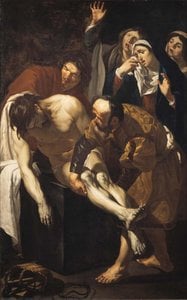
 Oil On CanvasWallArtBaroque
 1618Early Modern
 84.0 x 114.0 cm
 Kunsthistorisches Museum
Hand-painted oil on canvas in your size and frame, made to order by our artists. ( Buy Print Buy Image)





























Pick from our preset sizes that match the artwork's original proportions.

You may enter your own dimensions to fit a specific frame or space. If your selected size does not match the original image's proportions, we will either crop the artwork or extend the painting with additional hand-painted elements. A digital mockup will be sent for your approval before production begins.
Please note that the on-screen preview does not reflect the actual cropping or extension. Only the mockup will accurately show the final composition.
While custom sizes are available, we recommend selecting a dimension from the predefined list to preserve the original proportions.
Worldwide Delivery () in 3/4 weeks instead of standard 5 weeks. (29 August). No compromise on quality.


St. Francis in Meditation
Reproduction Size
In the quietude of a darkened room, where the flicker of a single candle might be the only companion, Dirck van Baburen’s St. Francis in Meditation emerges from the gloom with a profound, breathing presence. This masterpiece of the Utrecht Caravaggisti is not merely a portrait of a saint; it is an invitation into a sacred silence. The viewer is immediately drawn into the intimate orbit of Saint Francis of Assisi, captured in a moment of deep, spiritual introspection. As he sits at a simple wooden table, his form is sculpted by the dramatic interplay of light and shadow—a technique known as chiaroscuro—that defines the very essence of the Baroque era. The way the light catches the weathered texture of his skin and the heavy folds of his monastic habit creates a sense of three-dimensional reality so visceral that one can almost feel the weight of the stillness surrounding him.
The composition is a masterclass in focused storytelling, where every element serves to deepen the narrative of renunciation. Positioned slightly off-center, the Saint directs our gaze through his contemplative posture toward the symbolic objects resting before him. A skull sits prominently on the table, a stark memento mori reminding us of the inevitablity of death and the transience of earthly existence. Beside it, a simple jug and scattered coins represent the worldly wealth and material comforts that Francis famously cast aside in favor of a life of poverty and devotion. Through these carefully placed objects, van Baburen transforms a singular portrait into a universal meditation on the human condition, making the painting an intellectually stimulating centerpiece for any sophisticated collection.
To understand the power of this work, one must look to the artist’s transformative journey through Rome. Dirck van Baburen was a pivotal figure in the Utrecht School, a group of Dutch painters who brought the revolutionary energy of Caravaggio back to the Netherlands. Having studied the Italian master's use of tenebrism—the dramatic, high-contrast lighting that plunges backgrounds into impenetrable darkness—van Baburen learned how to use shadow not just as an absence of light, but as a structural tool to evoke intense emotion and psychological depth. In St. Francis in Meditation, this technique is used to isolate the Saint from the outside world, creating a private sanctuary of thought that feels both intensely personal and cosmically significant.
The technical execution of the piece reveals a painter of immense skill and sensitivity. Using oil on canvas, van Baburen employed meticulous brushwork and layered glazes to achieve a rich, somber palette dominated by earthy ochres, deep browns, and muted reds. These tones harmonize perfectly with the subject matter, reinforcing the mood of solemnity and piety. For the discerning collector or interior designer, this painting offers more than just aesthetic beauty; it provides an emotional anchor. Whether placed in a quiet study, a library, or a grand hall, the artwork commands attention through its understated strength, offering a timeless sense of peace and a profound connection to the spiritual heritage of the Dutch Golden Age.

In the annals of the Dutch Golden Age, few names evoke the visceral drama of shadow and sudden illumination quite like Dirck van Baburen. Born around 1595 in Wijk bij Duurstede, his life was a brief but brilliant meteor strike across the canvas of art history. Though his years were tragically short, ending in 1624, he managed to ignite a stylistic revolution that would redefine the northern European aesthetic. As a central pillar of the Utrecht School of Caravaggisti, van Baburen did not merely paint scenes; he orchestrated moments of profound tension, using the stark language of tenebrism to pull viewers into the intimate, often gritty reality of his subjects.
The foundation of his mastery was laid in the studios of Utrecht, under the tutelage of the respected Paulus Moreelse. However, the true metamorphosis of his soul and brush occurred during his transformative pilgrimage to Rome between 1612 and 1615. It was in the sun-drenched yet shadow-strewn streets of the Eternal City that van Baburen encountered the revolutionary spirit of Caravaggio. Through his close association with Bartolomeo Manfredi, a devoted follower of Caravaggio’s methods, the young Dutchman absorbed the secrets of chiaroscuro—the art of using extreme contrasts between light and dark to create volume and psychological depth. This Roman immersion was not merely academic; it was a social and professional ascent, as he secured commissions from prestigious patrons such as Cardinal Scipione Borghese, placing him at the very heart of the Baroque movement.
Upon his return to the Netherlands, van Baburen did not arrive as a mere student, but as a vanguard. Alongside contemporaries like Hendrick ter Brugghen and Gerard van Honthorst, he spearheaded a movement that would forever alter the trajectory of Dutch painting. This collective, known as the Utrecht Caravaggisti, sought to transplant the dramatic intensity of Italian Baroque into the local vernacular. Their work was characterized by a departure from the polished, serene landscapes of their predecessors, favoring instead:
His technical prowess allowed him to manipulate light as if it were a physical substance, carving figures out of the darkness with a precision that felt almost tactile. Whether depicting religious fervor or the humble activities of a tavern, his brushwork possessed an energy that bridged the gap between the monumental scale of Italian art and the intimate, domestic focus of the Dutch tradition.
The impact of Dirck van Baburen extends far beyond the borders of Utrecht. While his career was cut short in his early thirties, the ripples of his innovation traveled through the decades, influencing the development of the Dutch Baroque and even providing a stylistic precursor to the works of Rembrandt van Rijn. The way Rembrandt would later manipulate light to evoke profound psychological truths owes a significant debt to the groundwork laid by the Utrecht masters.
Today, van Baburen is remembered not just as a follower of an Italian master, but as an architect of a new visual language. He transformed the canvas into a stage where light and shadow perform a perpetual drama, ensuring that his name remains etched in the history of art as a master of the profound, the dramatic, and the deeply human. His ability to find the extraordinary within the ordinary continues to captivate scholars and art lovers alike, serving as a testament to the enduring power of the Caravaggesque spirit.

1595 - 1624 , Netherlands

Immerse yourself in the sacred grandeur of Baroque church interiors. Explore museum-quality, hand-painted oil reproductions and bespoke religious art commissions. From breathtaking frescoes to dramatic altarpieces, we bring historical majesty to your luxury space with unmatched expertise.


Stay updated with the latest art news, exclusive offers, and decoration ideas.
Tell us about your project and our art experts will provide you with 3 personalized art suggestions.
Let Us Curate 3 Options Just for You - Free!

 Preview
 Send
Send Share
Share
 Details

 Download
 Similars
 X-Ray
X-Ray Diaporama
 Read More







 Glass option is only available in size under 110 CM