


 Acrylic On CanvasWallArtExpressive Monochrome Sketches
 150.0 x 90.0 cm
 Shrine of Remembrance
Museum-quality giclée or canvas print with fast production and flexible finish options. ( Buy Hand Made Painting Buy Image)





























Pick from our preset sizes that match the artwork's original proportions.

You may enter your own dimensions to fit a specific frame or space. If your selected size does not match the original image's proportions, we will either crop the artwork or extend the image with a mirrored or solid-fill edge. A digital mockup will be sent for your approval before production begins.
Please note that the on-screen preview does not reflect the actual cropping or extension. Only the mockup will accurately show the final composition.
While custom sizes are available, we recommend selecting a dimension from the predefined list to preserve the original proportions.
Worldwide Delivery () in 2 weeks instead of standard 4/5 weeks. (7 September)


At Carnoy
Reproduction Size
Craig R. Barrett’s “At Carnoy,” a powerfully evocative crayon sketch, isn't merely a depiction of a historical moment; it’s a visceral plunge into the heart of trauma and the unsettling contemplation of mortality. Created in 1916 during the brutal first Battle of the Somme, the artwork captures a scene of profound quietude amidst unimaginable chaos – a stark contrast that amplifies its emotional resonance. The painting unfolds against a backdrop of a bruised, twilight sky, dominated by shades of red and black, suggesting both the setting sun and the blood spilled on the ravaged landscape. Three figures dominate the foreground: a standing soldier, his gaze fixed forward with an almost vacant intensity; a seated man, seemingly lost in thought or perhaps burdened by grief; and a prone figure, lying still and silent – a poignant representation of sacrifice and the devastating consequences of war.
Barrett’s choice of medium—crayon—is crucial to understanding the work's impact. The rough, textured application lends itself beautifully to conveying a sense of immediacy and rawness. The limited color palette, primarily consisting of reds, blacks, and whites, reinforces the painting’s somber mood and creates an atmosphere of stark realism. There is no attempt at romanticizing war; instead, Barrett presents it with unflinching honesty, mirroring the grim realities experienced by those who fought on the front lines. The deliberate lack of detail in the background – only silhouettes of trees against the dramatic sky – further emphasizes the figures themselves, drawing our attention to their individual struggles and the shared experience of suffering.
“At Carnoy” is deeply rooted in Wilfred Owen's poem of the same name. Owen, a British war poet who served during World War I, meticulously documented his experiences on the Western Front, aiming to expose the horrors of trench warfare and challenge romantic notions of heroism. Barrett’s sketch isn’t a literal illustration of the poem but rather an attempt to capture its underlying emotional core – the disorientation, fear, and profound sense of loss that permeated the lives of soldiers caught in the relentless grind of battle. The inscription at the bottom of the artwork—"At Carnoy July 3rd 1916 Don't know what to do with my body when I die"—is a hauntingly direct echo of Owen’s own anxieties and reflections on mortality, adding another layer of poignant meaning to the piece.
Craig R. Barrett’s artistic journey is as compelling as the artwork itself. Born in San Francisco in 1939, he initially forged a distinguished career as a materials scientist and, later, as the CEO of Intel Corporation – a titan of the technology industry. Yet, beneath this veneer of technological innovation lay a deep-seated interest in art and a profound empathy for human suffering. This duality—the pragmatic mind of a Silicon Valley executive juxtaposed with the sensitive soul of an artist grappling with themes of war and loss—is what gives “At Carnoy” its unique power. Barrett’s background as a meticulous engineer undoubtedly informs his precise rendering of form and space, while his experiences as a leader likely contribute to his ability to capture the weight of human experience.
The figures in "At Carnoy" are not merely individuals; they represent universal themes of loss, uncertainty, and the struggle for meaning in the face of overwhelming adversity. The standing soldier’s unwavering gaze suggests a stoic acceptance of his fate, while the seated man embodies introspection and perhaps regret. The prone figure, lying lifeless on the ground, serves as a stark reminder of the ultimate sacrifice made by so many during the Great War. The painting's emotional impact is amplified by its ambiguity—we are left to contemplate the individual stories behind these silent figures and grapple with the broader implications of war’s devastating consequences. “At Carnoy” isn't simply a historical document; it’s a timeless meditation on humanity’s capacity for both destruction and resilience.
This artwork, "At Carnoy," is meticulously reproduced as a high-quality print by WahooArt.com. Available in 150 x 90 cm format, this reproduction captures the original's textured crayon application and evocative color palette with exceptional fidelity. The piece is framed within a simple, understated frame that allows the artwork’s inherent drama to take center stage. Consider this print as more than just decoration; it’s an opportunity to engage with a powerful historical narrative and contemplate profound human emotions.


1939 - , United States of America
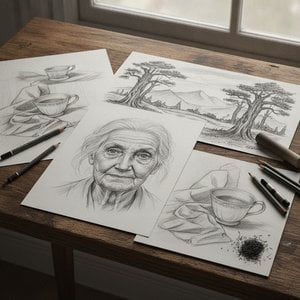
Explore the profound elegance of pencil and charcoal sketching. Discover how masters use line, shadow, and chiaroscuro to capture light and texture, bridging the gap between preparatory studies and timeless fine art masterpieces.

Explore the profound beauty of the sketch. Discover how masters use charcoal and graphite to capture raw emotion, anatomical precision, and fluid movement, bridging the gap between ephemeral marks and eternal oil masterpieces.

Elevate your most cherished memories with WahooArt’s bespoke service. We transform your personal photos into breathtaking, hand-painted black & white oil masterpieces. Experience museum-quality craftsmanship and timeless elegance for your private collection. Discover the art of legacy.

Discover how monochrome masterpieces elevate modern luxury interiors. Explore the profound impact of single-color fine art, from geometric abstraction to textured oil reproductions, curated for the discerning collector seeking sophisticated architectural elegance.

Explore the profound artistry of black and white photography. From historical mastery to the interplay of light and shadow, discover how monochrome captures timeless emotion and form through a sophisticated lens of art history.

 Preview
 Send
Send Share
Share
 Details

 Download
 Similars
 X-Ray
X-Ray Diaporama
 Read More







 Glass option is only available in size under 110 CM


