FREE ART CONSULTATION

x
Buy Painting Buy PaintingBuy Image Buy Image SendSend
DetailsDetails Add to favorites Add to favorites DownloadDownload SimilarsSimilars X-RayX-Ray DiaporamaDiaporama

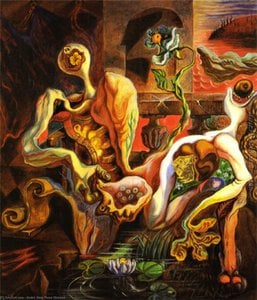
Childbirth

Explore the primal energy of André Masson's Surrealist lithograph, Childbirth (1955), capturing raw vulnerability and subconscious force; discover this masterpiece today.

Explore André Masson's art: Surrealist pioneer known for automatic drawing & sand paintings. Discover his influence on abstract expressionism & evocative themes of violence, eroticism & metamorphosis.

Giclée / Art Print

Museum-quality giclée or canvas print with fast production and flexible finish options.

Standard
custom
CM
INCH

Pick from our preset sizes that match the artwork's original proportions.

width
height

You may enter your own dimensions to fit a specific frame or space. If your selected size does not match the original image's proportions, we will either crop the artwork or extend the image with a mirrored or solid-fill edge. A digital mockup will be sent for your approval before production begins.
Please note that the on-screen preview does not reflect the actual cropping or extension. Only the mockup will accurately show the final composition.
While custom sizes are available, we recommend selecting a dimension from the predefined list to preserve the original proportions.

Worldwide Delivery () in 2 weeks instead of standard 4/5 weeks. (5 July)

why_choose_icon
Free Worldwide Express Shipping
why_choose_icon
High-Quality Linen Canvas
why_choose_icon
Full Shipping Insurance
why_choose_icon
Customs Tax Refund Guarantee
why_choose_icon
True Color Matching Guarantee
why_choose_icon
60-Day Return Policy (Defects Only)
why_choose_icon
100% Money-Back Guarantee
why_choose_icon
Bulk Discount Offer

Total Price

-

reproduction

Childbirth

Giclée / Art Print

Reproduction Size

-

Total Price

-

Quick Facts

  • Artistic style: Abstract Expressionism
  • Year: 1955
  • Subject or theme: Birth
  • Dimensions: 53 x 44 cm
  • Influences: Cubism
  • Title: Childbirth
  • Notable elements or techniques: Automatic drawing

Art Quiz

There is only one correct answer for each question.

Question 1:
In what year was André Masson's lithograph 'Childbirth' created?
Question 2:
What artistic technique did André Masson heavily utilize, which involved allowing the unconscious mind to guide his hand?
Question 3:
The Surrealist movement, which influenced 'Childbirth,' sought to liberate art from what?
Question 4:
What do the scattered stars in the artwork primarily symbolize, according to the description?
Question 5:
The subject matter of 'Childbirth' primarily evokes themes related to:

Collectible Description

André Masson: Exploring the Primordial Landscape of Surrealism

André Masson’s “Childbirth,” created in 1955, stands as a testament to the enduring fascination with primal imagery and the transformative power of automatic drawing within the Surrealist movement. This lithograph on paper captures a moment of profound vulnerability and symbolic resonance—a woman lying horizontally, bathed in muted grey tones, embodying both gestation and the inherent anxieties surrounding childbirth. Masson’s masterful use of undulating lines and swirling forms transcends mere representation; it seeks to evoke the subconscious forces shaping human experience.

A Pioneer of Automatism

Masson was undeniably a vanguard of Surrealist experimentation, championed by Antonin Artaud and Jean Dubuffet among others. His technique—automatic drawing—involved relinquishing conscious control over the creative process, allowing the unconscious mind to dictate the hand’s movements. This method aimed to bypass rational thought and tap into deeper reservoirs of emotion and instinct, mirroring the Surrealists' desire to liberate art from conventional constraints. The resulting artwork is imbued with a palpable energy, reflecting the artist’s engagement with primal forces and anxieties—themes central to Surrealist philosophy.

Symbolism Rooted in Myth and Ritual

The composition itself speaks volumes about Masson’s symbolic preoccupations. The woman's posture represents not only pregnancy but also the vulnerability inherent in creation – a mirroring of myths surrounding fertility and rebirth. Scattered stars, prominently positioned on her body and encircling the scene, symbolize hope amidst darkness and represent celestial influence over human destiny. Furthermore, the descending star-shaped object above her head embodies an unsettling suggestion of impending doom, juxtaposed with the promise of regeneration—a motif frequently explored by Surrealists to confront existential anxieties.

Lithography: Precision Meets Expression

Masson’s choice of lithograph as a medium underscores his commitment to meticulous craftsmanship alongside expressive abstraction. Lithography utilizes stone etching and chemical manipulation to transfer images onto paper, resulting in tonal variations and subtle textures that enhance the artwork's visual impact. The artist skillfully blends precise lines with organic curves, creating an image that is both intellectually stimulating and emotionally evocative. This technique allows for nuanced rendering of form and color—essential elements in conveying Masson’s vision of the human psyche grappling with fundamental questions about life and death.

Legacy Beyond Surrealism

“Childbirth” exemplifies Masson's broader contribution to 20th-century art, influencing subsequent generations of artists interested in exploring themes of trauma, metamorphosis, and the confrontation between consciousness and instinct. Its enduring appeal lies in its ability to provoke contemplation about human vulnerability and the transformative potential of confronting subconscious anxieties—a legacy that continues to resonate within contemporary artistic discourse. The artwork’s placement in Tate Modern underscores its significance as a cornerstone of Surrealist art history and invites viewers to engage with Masson's profound exploration of the human condition.

Related Artworks


Artist Biography

André Masson: A Life in Art

  • Born: Balagny-sur-Thérain, France (January 4, 1896)
  • Died: 1987

Early Life and Artistic Training

  • Masson began his artistic journey at the age of eleven, studying at the Académie Royale des Beaux-Arts in Brussels under Constant Montald. This early training provided a foundation for his later experimentation with various styles.
  • His initial work showed an interest in Cubism, demonstrating an early engagement with modern art movements.

The Surrealist Period and Automatic Drawing

  • Masson became a key figure within the Surrealist movement, enthusiastically embracing automatic drawing as a technique. This involved creating artwork without conscious control, allowing the subconscious to guide the hand.
  • He collaborated with other prominent figures of the era like Antonin Artaud, Michel Leiris, Joan Miró, Georges Bataille, Jean Dubuffet, and Georges Malkine, fostering a vibrant artistic community.
  • Notable Techniques:
    • Automatic Drawings: Numerous pen-and-ink works showcasing his innovative approach to art.
    • Sand and Glue on Canvas: Experimentation with throwing sand and glue onto canvas, creating unique oil paintings based on the resulting shapes.
  • His work during this period often explored violent or erotic themes, reflecting a departure from traditional artistic conventions.

Evolution and Later Works

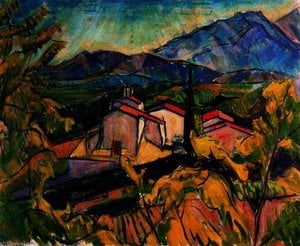
  • By the late 1920s, Masson moved away from Surrealism, developing a more structured style influenced by artists like André Derain. This is evident in his landscape paintings.
  • During World War II, his work was condemned as "degenerate" by the Nazis. He escaped to the United States with assistance from Varian Fry, significantly impacting American Abstract Expressionists like Jackson Pollock.
  • After returning to France, Masson settled in Aix-en-Provence and focused on landscape painting, demonstrating a shift towards more naturalistic subjects.

Legacy and Influence

  • André Masson's pioneering work in Surrealism and automatic drawing left an enduring legacy on the art world.
  • His influence can be seen across various artistic movements, from Cubism to Abstract Expressionism, solidifying his position as a pivotal figure in modern art history.
  • Masson’s exploration of subconscious imagery and innovative techniques continue to inspire artists today.
André Masson

André Masson

1896 - 1987 , France

Quick Facts

  • Artistic Movement Or Style:
    • Surrealism
    • Cubism
  • Artists Or Movements Influenced By This Artist:
    • Jackson Pollock
    • Abstract Expressionism
  • Artists Who Influenced This Artist: ['André Derain']
  • Date Of Birth: January 4, 1896
  • Date Of Death: October 28, 1987
  • Full Name: André Aimé René Masson
  • Nationality: French
  • Notable Artworks:
    • Beyond
    • Landscape with Rocks
    • The metamorphosis of the lovers
    • Pygmalion
  • Place Of Birth: Balagny-sur-Thérain, France
Explore artworks organized by themes, styles, and characteristics.