
x


Hand-painted oil on canvas in your size and frame, made to order by our artists. ( Buy Print Buy Image)
Pick from our preset sizes that match the artwork's original proportions.

You may enter your own dimensions to fit a specific frame or space. If your selected size does not match the original image's proportions, we will either crop the artwork or extend the painting with additional hand-painted elements. A digital mockup will be sent for your approval before production begins.
Please note that the on-screen preview does not reflect the actual cropping or extension. Only the mockup will accurately show the final composition.
While custom sizes are available, we recommend selecting a dimension from the predefined list to preserve the original proportions.
Worldwide Delivery () in 3/4 weeks instead of standard 5 weeks. (29 August). No compromise on quality.


Saying Grace
Reproduction Size
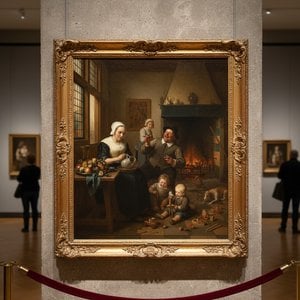
To gaze upon Adriaen van Ostade’s Saying Grace is not merely to observe a painting; it is to step across the threshold and into the warm, intimate glow of a Dutch Golden Age hearth. This scene captures that profound, suspended moment just before sustenance—the collective pause where gratitude takes precedence over appetite. The composition centers around a sturdy dining table, laden with the promise of a shared meal, yet the true focus lies in the human connection surrounding it. Van Ostade masterfully renders a gathering of souls, their postures suggesting familiarity and deep-rooted community bonds. It speaks to a time when domestic life was not just about survival, but about ritual, fellowship, and the quiet acknowledgment of blessings.
Van Ostade’s technique is a testament to the meticulous observation characteristic of Dutch genre painting. While his early work flirted with the looser brushwork of masters like Frans Hals, here we see a refinement that lends an almost tangible weight to every fold of cloth and every expression on a face. The black and white nature of this print only heightens our appreciation for the tonal subtlety—the interplay between deep shadows pooling in the corners and the soft illumination catching the polished wood of the table. Notice how the light seems to emanate from an unseen source, bathing the central group in a gentle, almost sacred glow. This attention to atmospheric detail transforms what could be a simple depiction of dinner into a profound study of human interaction.
The dining table itself functions as a powerful symbolic anchor within the painting. It is the nexus point where disparate lives momentarily converge under the banner of shared experience. The act of "saying grace" transcends mere religious observance; it symbolizes gratitude for provision, for family, and for the simple gift of time together. In the context of 17th-century Dutch life, such gatherings were vital social affirmations. Every figure, whether seated or standing, contributes to a tapestry of quiet devotion. The bowl upon the table is not just food; it represents bounty, the tangible result of labor and providence.
For the collector or designer seeking to infuse a space with the rich narrative depth of history, a reproduction of Saying Grace offers unparalleled emotional resonance. It moves beyond mere decoration; it becomes a focal point for contemplation. Imagine this scene gracing your wall—it invites conversation, prompting viewers to pause and consider their own moments of grace. The style speaks to an appreciation for the domestic sublime, suggesting that true artistry can be found not in grand historical epics, but in the quiet dignity of everyday life shared among loved ones.


1610 - 1685 , Netherlands

Explore the life & work of Adriaen van Ostade, a leading Dutch Golden Age painter. Discover his realistic genre scenes, social commentary, and lasting influence on art history. Learn more at WahooArt.
Explore the captivating world of Dutch Golden Age genre painting! Discover realistic depictions of daily life, masterful artists like Ostade & Metsu, and hidden symbolism. Learn about this influential art movement with WahooArt.
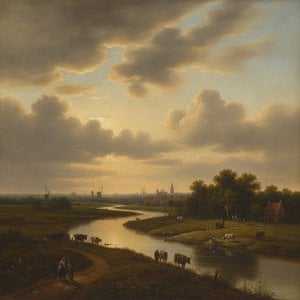
Discover the breathtaking beauty of Dutch Golden Age landscapes. Explore the mastery of light, chiaroscuro, and 17th-century realism through an expert art history lens, celebrating the enduring legacy of the Dutch Masters for discerning collectors and art lovers.

Journey into the Dutch Golden Age! Explore 10 iconic paintings by Rembrandt, Vermeer & Hals. Discover the stories behind these Baroque masterpieces and find museum-quality art reproductions to elevate your home decor on .

Journey through Rembrandt van Rijn's 25 most iconic paintings & etchings. Explore Dutch Golden Age masterpieces, dramatic chiaroscuro, and timeless portraits. Find museum-quality art reproductions to elevate your home decor on WahooArt.com.


Stay updated with the latest art news, exclusive offers, and decoration ideas.
Tell us about your project and our art experts will provide you with 3 personalized art suggestions.
Let Us Curate 3 Options Just for You - Free!


 Send
Send Share
Share
 Details

 Download
 Similars
 Diaporama


 Read More




































 Glass option is only available in size under 110 CM


