Ukiyo-e masters, in order

39 Famous Ukiyo-e Kunstnere: The Definitive Ranking

The most famous Ukiyo-e kunstner is Hokusai (1760–1849), known for Den Store Bølge ved Kanagawa og Fuji, Montre i klart vejr (Rød Fuji). Next come Ando Hiroshige, Utamaro, Tsukioka Yoshitoshi og Torii Kiyonaga. This ranking of the 39 most famous Ukiyo-e kunstnere runs from Hishikawa Moronobu (born 1618) to Goyō Hashiguchi (born 1880), across 1 countries.

How this list is ranked. Artists whose works our catalogue files under Ukiyo-e, in the order of our fame ranking of artists. Artists without a Wikidata identifier born after 1955 are left out until verified. The Wikipedia figure next to each name is the number of our 32 languages in which Wikipedia has an article on the artist.

  1. Den Store Bølge ved Kanagawa af Hokusai1Hokusai
  2. Early Department from a Daimyo af Ando Hiroshige2Ando Hiroshige
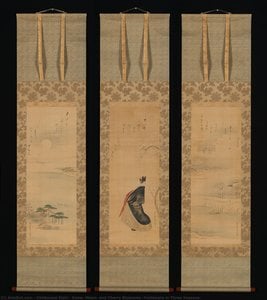
  3. Courtesan or Kneeling Lady with Fan from the series Seasonal Poems Composed by Famous Women af Utamaro3Utamaro

The essentials

Ukiyo-e at a glance

  • 39Kunstnere
  • 1618–1880Fødselsår
  • 1Fødselslande
  • 0Kvinder
  • 1Nulevende kunstnere
  • 5.896Værker i vores katalog
Byer med flest fødsler
Tokyo (12), Edo (8), Osaka (2), Kawagoe (1)

Ranked, with their masterpieces

The ranking: 39 Ukiyo-e Kunstnere and their key works

1of 39

Hokusai

Japansk Born in Tokyo Ukiyo-e Wikipedia in 32/32 languages

Hokusai

Som seksårig er drengen allerede i gang med sine skitser, drevet af en sult, som hans far, Nakajima Ise, genkender, men ikke fuldt ud kan styre. Som tolvårig træder han ind i studiet hos Katsukawa Shunshō, hvor han lærer den krævende præcision i ukiyo-e træsnit. Omkring 1831 opstår serien Tredive-seks visninger af bjerget Fuji, hvilket fundamentalt ændrer omfanget af japansk grafik.

Key works · The 100 most famous works

2of 39

Ando Hiroshige

Japansk Born in Edo *Ukiyo-e* Wikipedia in 30/32 languages

Ando Hiroshige

I første omgang var han bestemt til en mere konventionel vej inden for en samurai-familie – hans far tjente som brandvagt – men Hiroshige's kunstneriske tilbøjeligheder førte ham til et lærerskab under Utagawa Toyohiro, en mester i Utagawas skole.

Pupil of Utagawa Toyohiro #26

Key works · The 100 most famous works

3of 39

Utamaro

Japanese Born in Kawagoe *Ukiyo-e* Wikipedia in 27/32 languages

Utamaro

Det antages, at han blev født som Kitagawa Ichitarō omkring 1753, selvom hans fødested er usikkert, da forskellige steder som Kyoto, Osaka, Yoshiwara (Edo) og Kawagoe er blevet foreslået. Han kom i lære hos Toriyama Sekien, en udøver af ukiyo-e, der også var skolet i den fornemme Kanō-skole inden for malerkunst. I 1782 indledte Utamaro et samarbejde med forlæggeren Tsutaya Jūzaburō, hvilket markerede et vendeple i hans karriere.

Key works · The 100 most famous works

4of 39

Tsukioka Yoshitoshi

Japansk Born in Edo Ukiyo-e Wikipedia in 15/32 languages

Tsukioka Yoshitoshi

Født som Owariya Yonejiro den 30. april 1839 trådte manden, der senere skulle blive kendt som Tsukioka Yoshitoshi, ind i en verden i konstant forandring. Født som Owariya Yonejiro i Shimbashi-distriktet i det gamle Edo, voksede den dreng, der senere skulle blive til Yoshitoshi, op i en husholdning præget af sociale ambitioner. I 1850, i en alder af blot 11 år, påbegyndte han et strengt læreforhold under mesteren Utagawa Kuniyoshi.

Key works · The 100 most famous works

6of 39

Kuniyoshi

Japansk Born in Tokyo Ukiyo-e Wikipedia in 24/32 languages

Kuniyoshi

Selvom han var dygtig inden for de etablerede stilarter, kæmpede han med at finde sin unikke stemme i det overfyldte landskab af Edo-trykning. Dette værk katapulerede Kuniyoshi til berømmelse, etablerede ham som mester i musha-e – krigerbilleder.

Pupil of Utagawa Toyokuni I #13 · Teacher of Utagawa Yoshitora #32, Kawanabe Kyōsai #11

Key works · The 100 most famous works

7of 39

Suzuki Harunobu

Japansk Born in Edo Ukiyo-e Wikipedia in 21/32 languages

Suzuki Harunobu

Han blev født omkring 1725, og hans familiehistorie var mærket af fordrivelse; både hans far, Shigekazu, og hans bedstefar, Shigemitsu, blev sendt i eksil fra Edo til Kyoto. Han trak på stilarterne fra Torii Kiyomitsu og Ishikawa Toyonobu, samtidig med at han opsugede elementer fra både Kawamata- og Kanō-skolerne.

Key works · The 100 most famous works

8of 39

Hishikawa Moronobu

Japansk Born in Hota Ukiyo-e Wikipedia in 20/32 languages

Hishikawa Moronobu

Hishikawa Moronobu, født i Edo (det moderne Tokyo) i 1618, står som en skelsættende skikkelse i historien om japansk kunst. Edo-perioden (1603-1868) var vidne til en blomstrende urban kultur, næret af økonomisk velstand og relativ fred.

Key works · The 100 most famous works

9of 39

Kunisada

Japanese Born in Edo Ukiyo-e Wikipedia in 17/32 languages

Kunisada

Utagawa Kunisada, født Sumida Shōgorō IX i det livlige distrikt Honjo i Japan, står som uden tvivl den mest fejrede ukiyo-e kunstner fra det 19. århundrede. Hans enorme produktion og uovertrufne kommercielle succes cementerede hans position som en titan blandt sine samtidige—Hiroshige, Hokusai og Kuniyoshi—og etablerede ham som den ubestridte konge af farverigt træsnit under Edo-perioden.

Pupil of Utagawa Toyokuni I #13

Key works · The 100 most famous works

10of 39

Chobunsai Eishi

Japansk Born in Tokyo Ukiyo-e, Bijin-ga Wikipedia in 11/32 languages

Chobunsai Eishi

Chobunsai Eishi (1756-1829), også kendt som Hosoda Tokitomi, står som en central skikkelse i den livlige verden af Edo-periodens japanske kunst. Han blev født ind i en fremtrædende samuraifamilie inden for den prestigefyldte Fujiwara-klan – en slægt med rødder i indflydelsesrige roller i shogunatet – og Eishis liv var præget af privilegier og i sidste ende en kunstnerisk frigørelse.

Key works · The 100 most famous works

11of 39

Kawanabe Kyōsai

Japanese Born in Koga Ukiyo-e, Caricature, Manga pioneer Wikipedia in 10/32 languages

Kawanabe Kyōsai

In 1874, he helped create what is considered the first manga magazine, Eshinbun Nipponchi, alongside Kanagaki Robun.

Key works · The 100 most famous works

12of 39

Keisai Eisen

Japanese Born in Edo Bunsei Era Ukiyo-e Wikipedia in 15/32 languages

Keisai Eisen

This shift defined the aesthetic of the Bunsei era (1818–1830), a period often characterized by its decadent and psychologically complex atmosphere.

Key works · The 100 most famous works

13of 39

Utagawa Toyokuni I

Japanese Born in Shiba Ukiyo-e Wikipedia in 13/32 languages

Utagawa Toyokuni I

Unlike some artists blessed with immediate, innate talent, Toyokuni appears to have been a dedicated student, meticulously absorbing the techniques and aesthetics of those who preceded him. He wasn't simply copying their styles but rather dissecting them, understanding their strengths, and ultimately synthesizing them into something uniquely his own. While Sharaku is often lauded by modern art historians for his psychological insight, it was Toyokuni who captured the hearts of the Edo public.

Teacher of Utagawa Kunimasa #15, Utagawa Toyokuni II #35

Key works · The 100 most famous works

14of 39

Hiroshige I, Utagawa & Kiemon, Tsuruya

Japanese Born in Tokyo Ukiyo-e

Hiroshige I, Utagawa & Kiemon, Tsuruya

hiroshige i, utagawa & kiemon, tsuruya, en berømt japansk ukiyo-e kunstner, er bedst kendt for sine landskaber, såsom de trettifem stationer på Tōkaidō og de tres stationer på Kiso Kaidō. Han blev født i 1797 og blev betragtet som en af de sidste store mestre inden for ukiyo-e traditionen.

Key works · The 100 most famous works

15of 39

Utagawa Kunimasa

Japanese Born in Aizu Utagawa School

Utagawa Kunimasa

Utagawa Kunimasa (歌川 国政; 1773 – december 26, 1810) står som en central figur i historien om japansk ukiyo-e kunst, specifikt inden for den indflydelsesrige Utagawa skole. Han blev født i Aizuwakamatsu, Iwashiro Provinsen, og Kunimasa’s kunstneriske rejse begyndte ydmygt – først ved at arbejde i en farvehandel – før han tiltrak sig vejledning fra Utagawa Toyokuni, hvilket ofte anses for at være den mest fejrede kunstner af sin tid.

Key works · The 100 most famous works

16of 39

Nishikawa Sukenobu

Japanese Born in Kyoto Ukiyo-e Wikipedia in 9/32 languages

Nishikawa Sukenobu

These works demonstrate his versatility as an artist and underscore his commitment to exploring diverse artistic mediums—a testament to his intellectual curiosity and artistic ambition. Legacy & Recognition: Nishikawa Sukenobu’s enduring legacy resides in his contribution to Japanese art history, particularly his groundbreaking portrayal of women. Influence on Subsequent Artists: Sukenobu’s influence extended far beyond his own lifetime, inspiring subsequent generations of printmakers like Suzuki Harunobu and Kitao Shigemasa.

Key works · The 100 most famous works

17of 39

Sharaku

Japan ukiyo-e Wikipedia in 19/32 languages

Sharaku

Sharaku's technique involved the use of woodblock prints, sometimes employing extravagant methods such as the dusting of mica in the backgrounds to create a glittering effect. His reputation rests largely on his earlier prints, while his later output is often considered to have a declining artistry. His portraits are noted for their ability to capture the psychology of a character through heightened theatrical gestures and expressive, almost caricature-like exaggerations.

Key works · The 100 most famous works

18of 39

Utashige

Japanese Ukiyo-e

Utashige

This quiet revolution – a departure from the more flamboyant styles of his predecessors – established Hiroshige as a uniquely sensitive and poetic artist, whose work continues to inspire awe and contemplation centuries later. Hiroshige’s prints are not simply images; they are windows into the soul of Japan. Following this triumph, he embarked on One Hundred Famous Views of Edo (1856–1858), a vertical-format series that celebrated his hometown with an unprecedented level of detail and emotional depth.

Key works · The 100 most famous works

19of 39

Miyagawa Chōshun

Japanese Born in Miyagawa Ukiyo-e Wikipedia in 9/32 languages

Miyagawa Chōshun

The works of Chōshun are instantly recognizable for their evocative atmosphere and tender execution. This sense of physical weight and warmth contributed to a realism that was both captivating and deeply human. His pupils, including his son Miyagawa Isshō and the talented Miyagawa Chōki, carried forward his dedication to depicting the tastes and textures of urban life.

Key works · The 100 most famous works

20of 39

Goyō Hashiguchi

Dutch Born in Kagoshima Post-Impressionism

Goyō Hashiguchi

Goyō’s initial foray into the art world wasn't through printmaking but rather illustration. In 1907 he won recognition for an ukiyo-e oil painting in the first Bunten show, but felt unfulfilled by public acceptance and returned to woodblock printing. Despite his frail health, exacerbated by beriberi, Goyō continued to produce prints at a remarkable pace from 1915 until his untimely death in 1921 at the age of forty-one.

Key works · The 100 most famous works

21of 39

Isoda Koryūsai

Japanese Born in Tokyo Ukiyo-e Wikipedia in 10/32 languages

Isoda Koryūsai

In the vibrant, bustling heart of the Edo period, a golden age of Japanese creativity, few names resonate with as much elegance and prolific energy as Isoda Koryūsai.

Key works · The 100 most famous works

22of 39

Ogata Gekko

Japanese Born in Tokyo Ukiyo-e, Nihonga Wikipedia in 9/32 languages

Ogata Gekko

His most celebrated series, “One Hundred Views of Mount Fuji” (1896-1905), exemplifies his mastery. Rather than simply depicting the iconic mountain as a static subject, Gekko captured its ever-changing moods and vistas with an astonishing range of perspectives and atmospheric conditions. The First Sino-Japanese War (1894-1895) provided him with opportunities to document this tumultuous period in Japanese history, producing powerful and evocative prints that captured the spirit of national pride and resilience.

Key works · The 100 most famous works

23of 39

Kobayashi Kiyochika

Japansk Born in Tokyo Ukiyo-e, Kōsen-ga Wikipedia in 10/32 languages

Kobayashi Kiyochika

Født i Tokyo i 1847, midt under de svindende dage i Edo-periodens Japan, trådte Kobayashi Kiyochika frem som en skelsættende figur i nationens kunstneriske overgang. Tyngden af familiært ansvar faldt på den unge Kiyochika efter sin fars død i 1862, hvilket tvang ham til at tilpasse sig og skabe sin egen vej.

Pupil of Kawanabe Kyōsai #11

Key works · The 100 most famous works

25of 39

Toyohara Chikanobu

Japanese Shin-hanga

Toyohara Chikanobu

In the twilight of the Edo period and the dawn of a modernizing Japan, few artists captured the profound tension between tradition and transformation as masterfully as Toyohara Chikanobu. Born in 1838, an era of profound cultural shifts, Chikanobu—often recognized by his art name Yōshū Chikanobu —emerged as a monumental figure in the world of Japanese woodblock printing.

Key works · The 100 most famous works

27of 39

Mizuno Toshikata

Japanese Born in Tokyo Ukiyo-e, Kuchi-e

Mizuno Toshikata

Unlike the often-dramatic compositions favored by Yoshitoshi, Toshikata's works are imbued with an understated elegance and a profound sense of sentimentality. He skillfully employed subtle gradations of tone to create atmospheric effects and to convey nuanced emotional states. During the Sino-Japanese War (1894-1895), Toshikata further established himself as a war artist, producing lithographs that offered a nuanced perspective on the conflict – moving beyond simplistic depictions of battles to capture the human cost of war and the anxieties of a nation at odds with its neighbors.

Key works · The 100 most famous works

28of 39

Ishikawa Toyonobu

Japanese Born in Tokyo Ukiyo-e (Lacquer Print Art) Wikipedia in 7/32 languages

Ishikawa Toyonobu

A hallmark of these compositions was a deliberate stillness, an impassivity in the faces of the subjects reminiscent of the Kaigetsudō school's aesthetic.

Key works · The 100 most famous works

29of 39

Kogyo Sakamaki

Japanese Noh Theatre Prints

Kogyo Sakamaki

He was awarded a prize at the Panama Pacific International Exposition in San Francisco in 1915 for his woodcut “The Horse Market at Kiso,” cementing his reputation as one of Japan's foremost printmakers. Technique & Style: Sakamaki employed a distinctive watercolor -like technique, layering translucent washes to achieve luminous effects that captured the subtle nuances of Noh theatre—a stylistic innovation that distinguished him from his contemporaries.

Key works · The 100 most famous works

30of 39

Hokkei

Born in Tokyo Wikipedia in 8/32 languages

Hokkei

This ambitious project, undertaken in the 1840s, represents a culmination of his artistic sensibilities. The Tale of Genji, considered one of the greatest works of Japanese literature, depicts the complex lives and romantic entanglements within the Heian court. He was undoubtedly influenced by earlier masters of ukiyo-e, particularly Kanenobu and the traditions of Edo period painting.

Key works · The 100 most famous works

31of 39

Sadatora

Japanese Born in Tokyo Ukiyo-e

Sadatora

In the vibrant, pulsing heart of Edo-period Japan, where the concept of ukiyo —the floating world—defined the very essence of existence, Utagawa Sadatora emerged as a master of capturing the ephemeral. His formative years were spent under the rigorous and inspiring tutelage of masters such as Utagawa Yoshitora and Kunisada. Through works such as Women Visiting a Shrine or his celebrated seasonal studies, Sadatora continues to invite us into a world where beauty is most potent precisely because it is fleeting, reminding us to find stillness within the ever-changing winds of life.

Key works · The 100 most famous works

32of 39

Utagawa Yoshitora

Utagawa Yoshitora

Utagawa Yoshitora, a name resonating within the vibrant world of ukiyo-e, stands as a compelling figure whose career bridged traditional Japanese artistry with an increasingly globalized aesthetic. While his work may not be as widely recognized as that of Hokusai or Kuniyoshi, Yoshitora’s contributions are increasingly appreciated by scholars and collectors alike.

Key works · The 100 most famous works

33of 39

Kunichika Toyohara

Japansk Born in Edo Ukiyo-e (Yakusha-e, Bijinga) Wikipedia in 10/32 languages

Kunichika Toyohara

Toyohara Kunichika, en berømt japansk træsnitskunstner, blev født den 30. juni 1835. Da han allerede i en ung alder blev anerkendt for sit ekstraordinære talent, blev han som trettenårig elev hos utagawa kunisada, Tokyos førende træsnitskunstner.

Key works · The 100 most famous works

34of 39

Kunisada

Japansk Born in Tokyo Ukiyo-e (yakusha-e) Wikipedia in 6/32 languages

Kunisada

se utagawa kunisada ii's kunstværker på AllPaintingsStore.com. udforsk hokkaido museum of modern art (japan) på AllPaintingsStore.com. opdag nonoyama kōzans malerier på AllPaintingsStore.com.

Key works · The 100 most famous works

35of 39

Utagawa Toyokuni II

Japanese Ukiyo-e Wikipedia in 4/32 languages

Utagawa Toyokuni II

This ambitious undertaking demanded exceptional artistic skill and logistical organization, cementing Hiroshige’s reputation as a visionary artist who could transform ordinary scenes into sublime expressions of beauty. He skillfully employed Prussian blue, a pigment imported from Europe during this period, to render distant mountains with breathtaking realism —a bold departure from traditional Japanese monochrome prints.

Pupil of Utagawa Toyokuni I #13

Key works · The 100 most famous works

36of 39

Utagawa Yoshitaki

Japanese Born in Osaka Ukiyo-e Wikipedia in 4/32 languages

Utagawa Yoshitaki

He mastered the complex techniques of nishiki-e (錦絵), utilizing multiple woodblocks to achieve a full spectrum of hues – a significant advancement over earlier monochrome or limited-color prints. The influence of Kuniyoshi is evident in Yoshitaki’s bold outlines and dramatic lighting, but he developed a distinctly personal style characterized by a remarkable sensitivity to human expression. Ichiyosai Yoshitaki’s prolific output provides an invaluable window into 19th-century Japanese society.

Key works · The 100 most famous works

37of 39

Utagawa Kunitsuna Ii, Ichiransai, Sadashige

Japanese Ukiyo-e

Utagawa Kunitsuna Ii, Ichiransai, Sadashige

Pinpointing Kunitsuna’s artistic lineage proves challenging due to the limited documentation surrounding his early career. He also appears to have been influenced by the emerging trends in Western art, particularly in his use of perspective and shading – though he never fully abandoned the traditional conventions of ukiyo-e. However, scholars believe he was heavily influenced by earlier masters of bijin-ga such as Kitagawa Utamaro and Keisai Eisen.

Key works · The 100 most famous works

38of 39

Utagawa Yoshikazu

Japanese Born in Edo Ukiyo-e, Yokohama-e Wikipedia in 3/32 languages

Utagawa Yoshikazu

As with most Ukiyo-e artists of his time, Yoshikazu employed the traditional collaborative process of woodblock printing. The influence of Kuniyoshi is noticeable in his use of dramatic lighting and bold outlines, though Yoshikazu developed a more restrained and observational style.

Key works · The 100 most famous works

39of 39

Shunkōsai Hokushū

Japanese Born in Osaka Kamigata-e Wikipedia in 3/32 languages

Shunkōsai Hokushū

Shunkōsai Hokuchō (春曙斎 北頂), born around 1802 in Osaka, Japan, stands as a fascinating figure within the vibrant tapestry of Edo-period art history. The Osaka Style Emerges: Unlike the Edo-period’s dominant trend of producing prints in Tokyo, Hokuchō remained firmly rooted in Osaka. While Hokuchō may not command the same level of fame as Hokusai or Hiroshige, his quiet mastery of tsukuri-e and his profound understanding of theatrical emotion solidified his place as a pivotal figure in Osaka’s artistic heritage.

Key works · The 100 most famous works

The paintings behind the names

Famous Ukiyo-e works and the artists who made them

  1. Den Store Bølge ved Kanagawa af Hokusai

    Den Store Bølge ved Kanagawa

    Hokusai

    1831

  2. Early Department from a Daimyo af Ando Hiroshige

    Early Department from a Daimyo

    Ando Hiroshige

    Nakagawa-machi Bato Hiroshige Museum of Art, Nagasaki

  3. Courtesan or Kneeling Lady with Fan from the series Seasonal Poems Composed by Famous Women af Utamaro

    Courtesan or Kneeling Lady with Fan from the series Seasonal Poems Composed by Famous Women

    Utamaro

    1790 · Hill-Stead Museum, Farmington

  4. Tokugawa Iemitsu modtager herrer til audiens af Tsukioka Yoshitoshi

    Tokugawa Iemitsu modtager herrer til audiens

    Tsukioka Yoshitoshi

    1875 · Los Angeles County Museum of Art

  5. Two Beauties after the Bath af Torii Kiyonaga

    Two Beauties after the Bath

    Torii Kiyonaga

    701 · Metropolitan Museum of Art, New York

  6. Musashi on the back of a whale af Kuniyoshi

    Musashi on the back of a whale

    Kuniyoshi

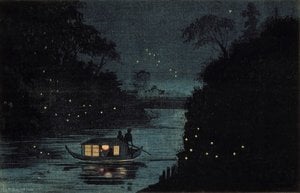
  7. Hunting for fireflies af Suzuki Harunobu

    Hunting for fireflies

    Suzuki Harunobu

    1768

  8. Standing Beauty af Hishikawa Moronobu

    Standing Beauty

    Hishikawa Moronobu

    1656 · Metropolitan Museum of Art, New York

Through time

A Ukiyo-e timeline in masterpieces

  1. 1656
  2. 1768
  3. 1785
  4. 1790
  5. 1800
  6. 1809
  7. 1825
  8. 1831
  9. 1855
  10. 1857
  11. 1858
  12. 1870
  13. 1873
  14. 1875

In figures

By the numbers

All of them, in order

List of the 39 famous Ukiyo-e kunstnere

  1. 1HokusaiHokusaiJapansk · 1760–1849
  2. 2Ando HiroshigeAndo HiroshigeJapansk · 1797–1858
  3. 3UtamaroUtamaroJapanese · 1753–1806
  4. 4Tsukioka YoshitoshiTsukioka YoshitoshiJapansk · 1839–1892
  5. 5Torii KiyonagaTorii KiyonagaJapansk · 1752–1815
  6. 6KuniyoshiKuniyoshiJapansk · 1798–1861
  7. 7Suzuki HarunobuSuzuki HarunobuJapansk · 1724–1770
  8. 8Hishikawa MoronobuHishikawa MoronobuJapansk · 1618–1694
  9. 9KunisadaKunisadaJapanese · 1786–1865
  10. 10Chobunsai EishiChobunsai EishiJapansk · 1756–1829
  11. 11Kawanabe KyōsaiKawanabe KyōsaiJapanese · 1831–1889
  12. 12Keisai EisenKeisai EisenJapanese · 1790–1848
  13. 13Utagawa Toyokuni IUtagawa Toyokuni IJapanese · 1769–1825
  14. 14Hiroshige I, Utagawa & Kiemon, TsuruyaHiroshige I, Utagawa & Kiemon, TsuruyaJapanese · 1797–1858
  15. 15Utagawa KunimasaUtagawa KunimasaJapanese · 1773–1810
  16. 16Nishikawa SukenobuNishikawa SukenobuJapanese · 1671–1750
  17. 17SharakuSharakuJapan ·
  18. 18UtashigeUtashigeJapanese ·
  19. 19Miyagawa ChōshunMiyagawa ChōshunJapanese · 1683–1753
  20. 20Goyō HashiguchiGoyō HashiguchiDutch · 1880–1921
  21. 21Isoda KoryūsaiIsoda KoryūsaiJapanese · 1735–1790
  22. 22Ogata GekkoOgata GekkoJapanese · 1859–1920
  23. 23Kobayashi KiyochikaKobayashi KiyochikaJapansk · 1847–1915
  24. 24Adachi GinkoAdachi GinkoJapanese · født 1853
  25. 25Toyohara ChikanobuToyohara ChikanobuJapanese · 1838–1912
  26. 26Utagawa ToyohiroUtagawa ToyohiroJapanese · 1773–1828
  27. 27Mizuno ToshikataMizuno ToshikataJapanese · 1866–1908
  28. 28Ishikawa ToyonobuIshikawa ToyonobuJapanese · 1711–1785
  29. 29Kogyo SakamakiKogyo SakamakiJapanese · 1869–1927
  30. 30HokkeiHokkei1780–1850
  31. 31SadatoraSadatoraJapanese ·
  32. 32Utagawa YoshitoraUtagawa Yoshitora
  33. 33Kunichika ToyoharaKunichika ToyoharaJapansk · 1835–1900
  34. 34KunisadaKunisadaJapansk · 1823–1880
  35. 35Utagawa Toyokuni IIUtagawa Toyokuni IIJapanese · 1777–1835
  36. 36Utagawa YoshitakiUtagawa YoshitakiJapanese · 1841–1899
  37. 37Utagawa Kunitsuna Ii, Ichiransai, SadashigeUtagawa Kunitsuna Ii, Ichiransai, SadashigeJapanese ·
  38. 38Utagawa YoshikazuUtagawa YoshikazuJapanese ·
  39. 39Shunkōsai HokushūShunkōsai HokushūJapanese ·

Your questions, answered

Frequently asked questions

Keep reading

Further reading on WahooArt.com

Other movements

Famous artists of other movements

Other periods

Famous artists of other periods

More rankings

Explore more