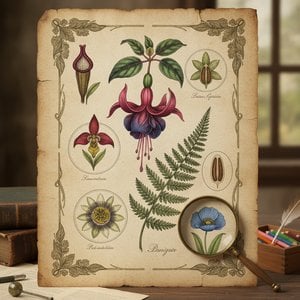
Mary Vaux Walcott tarafından yapılan (Untitled--Flower Study), usta bir sanatçı tarafından el ile boyanmış yağlı boya reprodüksiyon
Gerçek Boyutta Önizle AR ile önizle Baskı Satışına Geç Dijital Görsele Geç Paylaş
Detayları Gör Rehber Favorilere ekle İndir Benzer ürünler X-Işını Slayt Gösterisi Soru & Cevap Sunumu İndir İstatistikler

(Untitled--Flower Study) El boyaması yağlı boya reprodüksiyon

Boyutlar
25.0 x 17.0 cm

Watercolor study of clover by Mary Vaux Walcott ('Audubon of Botany'). Detailed botanical illustration showcasing delicate floral forms & naturalistic style. Explore this unique 19th-century artwork.

Mary Vaux Walcott (1860-1940), "Bitki Avcısı" olarak bilinen Amerikalı sanatçı ve doğacıdır. İnanılmaz güzel çiçek rengi yağlı boya tablolarıyla ve doğalizm katkılarıyla tanınır. Detaylı bitki sanat eserlerini keşfedin!

El Yapımı Yağlı Boya Reproduksiyon

Sanatçılarımız tarafından sipariş üzerine hazırlanan; istediğiniz boyut ve çerçevede, tuval üzerine el boyaması yağlı boya. ( Baskı Satışına Geç Dijital Görsele Geç)

Corner sample of the P118B picture frame: kalıplanmış polistiren, 5 cm wide and 3 cm thick
P118B ₺10
Corner sample of the P118H picture frame: kalıplanmış polistiren, 5 cm wide and 3 cm thick
P118H ₺10
Corner sample of the P118W picture frame: kalıplanmış polistiren, 5 cm wide and 3 cm thick
P118W ₺10
Corner sample of the P438Z picture frame: kalıplanmış polistiren, 5.5 cm wide and 3.5 cm thick
P438Z ₺10
Corner sample of the P508JH picture frame: kalıplanmış polistiren, 7 cm wide and 3.5 cm thick
P508JH ₺12
Corner sample of the P508YH picture frame: kalıplanmış polistiren, 7 cm wide and 3.5 cm thick
P508YH ₺12
Corner sample of the P805H picture frame: kalıplanmış polistiren, 5 cm wide and 3.5 cm thick
P805H ₺10
Corner sample of the P805Z picture frame: kalıplanmış polistiren, 5 cm wide and 3.5 cm thick
P805Z ₺10
Corner sample of the P919BZ picture frame: kalıplanmış polistiren, 7 cm wide and 3.5 cm thick
P919BZ ₺10
Corner sample of the P919G picture frame: kalıplanmış polistiren, 7 cm wide and 3.5 cm thick
P919G ₺10
Corner sample of the P919XJ picture frame: kalıplanmış polistiren, 7 cm wide and 3.5 cm thick
P919XJ ₺10
Corner sample of the P959ZH picture frame: kalıplanmış polistiren, 5 cm wide and 3 cm thick
P959ZH ₺10
Corner sample of the P968JZ picture frame: kalıplanmış polistiren, 6 cm wide and 4 cm thick
P968JZ ₺12
Corner sample of the W106C picture frame: masif ahşap, 5 cm wide and 3 cm thick
W106C ₺8
Corner sample of the W218G picture frame: masif ahşap, 5 cm wide and 3 cm thick
W218G ₺10
Corner sample of the W218JH picture frame: masif ahşap, 5 cm wide and 3 cm thick
W218JH ₺8
Corner sample of the W218Y picture frame: masif ahşap, 5 cm wide and 3 cm thick
W218Y ₺10
Corner sample of the W307PJ picture frame: masif ahşap, 6 cm wide and 3 cm thick
W307PJ ₺10
Corner sample of the W316G picture frame: masif ahşap, 6 cm wide and 3 cm thick
W316G ₺10
Corner sample of the W316PJ picture frame: masif ahşap, 6 cm wide and 3 cm thick
W316PJ ₺8
Corner sample of the W316Y picture frame: masif ahşap, 6 cm wide and 3 cm thick
W316Y ₺10
Corner sample of the W398PJ picture frame: masif ahşap, 5 cm wide and 3 cm thick
W398PJ ₺8
Corner sample of the W4111J picture frame: masif ahşap, 6.5 cm wide and 3.5 cm thick
W4111J ₺10
Corner sample of the W500HY picture frame: masif ahşap, 7 cm wide and 5 cm thick
W500HY ₺15
Corner sample of the W500JH picture frame: masif ahşap, 7 cm wide and 5 cm thick
W500JH ₺15
Corner sample of the W692G picture frame: masif ahşap, 8 cm wide and 4 cm thick
W692G ₺12
Corner sample of the W849H picture frame: masif ahşap, 5 cm wide and 3 cm thick
W849H ₺8
Corner sample of the W940BG picture frame: masif ahşap, 7.5 cm wide and 4.5 cm thick
W940BG ₺15
Corner sample of the W953PJ picture frame: masif ahşap, 6 cm wide and 3.5 cm thick
W953PJ ₺8

Standart
özel boyutlu
CM
INCH

Eserin orijinal oranlarıyla uyumlu, önceden belirlenmiş boyutlarımız arasından seçim yapın.

genişlik
yükseklik

Çerçevenize veya duvarınıza uygun olması için ihtiyacınız olan genişlik ve yüksekliği yazın. Bu eser el boyamasıdır; bu nedenle farklı bir formdaki boyutlar için sanatçı, resmin etrafına biraz daha fazla boya ekleyebilir veya kenarlardan biraz kırpabilir — seçim sizin. Boyama işlemi başlamadan önce onaylamanız için size bir dijital taslak gönderiyoruz. Bu sayfada gösterilen resim gerçek sonucu yansıtmamaktadır; gerçek sonucu yalnızca taslak göstermektedir.

Değiştirilebilecek örneklere dair: Yüzün müşteri fotoğrafıyla değiştirilmesi; Evcil hayvan eklenmesi (örneğin kedinin köpek ile değiştirilmesi); Arka plana gizli bir mesaj dahil edilmesi; Arka plan manzarasının veya öğelerinin değiştirilmesi.
Siparişten sonra, WahooArt.com ekibi talimatlar için müşteriye e-posta gönderecek ve bir taslak önizleme sunacaktır

Dünya Çapında Teslimat (); standart 5 hafta yerine 3/4 haftada. (9 Kasım). Kaliteden ödün verilmez.

Dünya Çapında Ücretsiz Ekspres Kargo
Yüksek Kaliteli Keten Kanvas
Tam Nakliye Sigortası
Gümrük Vergisi İadesi Garantisi
Gerçek Renk Uyumu Garantisi
100 Günlük İade Politikası (Sadece Kusurlu Ürünler İçin)
%100 Para İade Garantisi
Toplu Alım İndirimi

Toplam Tutar

₺ 13419

(Untitled--Flower Study)

Reproduksiyon Tekniği

Reproduksiyon Boyutu

-

Toplam Tutar

₺ 13419

Hızlı Bilgiler

  • Location: Smithsonian Institution
  • Medium: Watercolor on paper
  • Notable elements or techniques: Detailed botanical illustration; Layered watercolor washes
  • Title: (Untitled--Flower Study)
  • Movement: American Impressionism

A Delicate Dance of Observation: Mary Vaux Walcott’s “Untitled--Flower Study”

Mary Vaux Walcott, a name synonymous with meticulous botanical illustration and unwavering dedication to American conservation, achieved the moniker "the Audubon of Botany" – a testament to her unparalleled ability to capture the exquisite beauty of wildflowers with breathtaking precision. Born in Philadelphia in 1860 into a Quaker family deeply rooted in intellectual pursuits, Walcott’s artistic journey began unexpectedly at age eight when she received a set of watercolor paints as a gift. This simple act ignited a lifelong passion for translating the natural world onto paper, shaping her career and cementing her legacy as one of America's foremost botanical artists.
  • Subject Matter: The artwork presents a captivating study of three clover plants—a humble yet remarkably complex specimen—each rendered in varying stages of bloom. Walcott’s focus isn’t on grand landscapes or dramatic narratives; rather, she delves into the minute details of floral anatomy and foliage texture, revealing an astonishing level of observation.
  • Style & Technique: Embracing realism alongside a distinctly botanical aesthetic, Walcott employed watercolor paint on paper—a medium perfectly suited to conveying subtle tonal variations and capturing the ethereal quality of light filtering through petals. Her technique is characterized by layering washes of color, creating soft gradients that imbue the image with an atmosphere of tranquility and understated elegance.
  • Composition & Perspective: The vertical orientation emphasizes the plants as central subjects against a softly textured off-white background—a deliberate choice designed to heighten visual impact without distracting from the botanical subject matter. Lines delineate stems, leaves, and flower petals, establishing structural integrity while maintaining a naturalistic feel. Depth is achieved through overlapping elements and careful consideration of shading, fostering a sense of spatial realism.
Historical Context: Walcott’s work emerged during the late 19th century, coinciding with a burgeoning interest in scientific exploration and artistic representation of the natural world. Influenced by luminaries like John Audubon—whose detailed ornithological illustrations revolutionized scientific understanding—Walcott sought to emulate Audubon's commitment to accuracy and artistry. Her contributions to the Smithsonian Institution further solidified her position as a champion of conservation, demonstrating the profound connection between art and environmental stewardship. Symbolism & Emotional Impact: Beyond its technical brilliance, “Untitled--Flower Study” resonates with deeper symbolic significance. The clover itself—often associated with fertility, peace, and good fortune—represents resilience and renewal amidst simplicity. Walcott’s masterful rendering captures not just the visual splendor of these flowers but also conveys an emotional response to their beauty – a quiet reverence for the natural world and its inherent capacity for wonder. This artwork serves as a poignant reminder that profound artistic expression can arise from humble subjects, transforming them into emblems of enduring values.
  • Material: Watercolor paint on paper

Soru ve Cevaplar

Mary Vaux Walcott imzalı "(Untitled--Flower Study)" eserinin yönü nedir?

"(Untitled--Flower Study)" eserinin formatı Portrait şeklindedir. Bu bilgi, bir reprodüksiyonun nereye yerleştirileceğini planlarken faydalıdır.

Mary Vaux Walcott imzalı "(Untitled--Flower Study)", Contemporary Realism akımını sanatçının ana vatanıyla nasıl ilişkilendiriyor?

Contemporary Realism akımına ait "(Untitled--Flower Study)" adlı eser, Amerika Birleşik Devletleri doğumlu bir sanatçı tarafından yapılmıştır.

"(Untitled--Flower Study)" eserinde teknik ve üslup nasıl birleşiyor?

Mary Vaux Walcott imzalı "(Untitled--Flower Study)", Watercolor tekniğini Contemporary Realism üslubuyla birleştiriyor. Teknik ve akım, eserin yapılış biçimini ve tarzını tanımlar.


Sanatçı Özgeçmişi

Mary Vaux Walcott (1860-1940): A Life Blossoming in Watercolor

Mary Vaux Walcott, affectionately known as “the Audubon of Botany,” stands as a singular figure in American art history—a woman who defied societal expectations and fused artistic passion with scientific rigor to create an unparalleled legacy. Born in Philadelphia in 1860 into a Quaker family steeped in intellectual tradition, her early life foreshadowed the extraordinary path she would forge. Little did anyone realize that a simple set of watercolor paints gifted at age eight would ignite a lifelong devotion to capturing the delicate beauty of wildflowers and propel her to international acclaim.

Early Influences & Artistic Beginnings

Mary Morris Vaux’s artistic journey commenced with an instinctive fascination for color and form—qualities she honed through diligent observation and meticulous practice. Unlike many women of her era who pursued domestic pursuits, Vaux possessed a restless spirit and an unwavering determination to pursue her own interests. Her formal education focused on the humanities, fostering a deep appreciation for literature and philosophy alongside scientific inquiry. Crucially, her father encouraged her intellectual curiosity and nurtured her burgeoning talent—a rare combination that would prove instrumental in shaping her artistic vision. The family’s annual summer expeditions to the Canadian Rockies served as formative experiences, exposing her to breathtaking landscapes and inspiring her to translate their grandeur onto canvas. It was during these travels that she began experimenting with watercolor techniques, striving for realism while simultaneously conveying emotion—a stylistic hallmark of her oeuvre. Her initial sketches, signed “M.M. Vaux 4th month 1873,” reveal a remarkable sensitivity to detail and an early mastery of color blending—qualities that would characterize her later masterpieces.

The Rocky Mountain Landscape & Scientific Observation

The Canadian Rockies became Mary Vaux Walcott’s primary artistic laboratory, providing the backdrop for groundbreaking scientific research alongside breathtaking visual inspiration. Accompanied by her brothers, she undertook comprehensive studies of glacial movements, mineralogy, and alpine flora—activities that demanded both physical stamina and intellectual acuity. Unlike artists who merely sought aesthetic pleasure from nature, Vaux approached it with a scientist’s eye—measuring distances, charting contours, and documenting plant species with unwavering precision. Her meticulous observations informed her artistic renderings, resulting in images that were not only beautiful but also scientifically accurate—a distinction that cemented her reputation as “the Audubon of Botany.” The expedition to Mount Stephen in 1900 marked a pivotal moment in Vaux’s life—she became the first woman recorded to ascend this formidable peak, demonstrating courage and resilience alongside her artistic talent. Her detailed photographic documentation of the glacier complemented her watercolor paintings, offering invaluable insights into glacial recession—a phenomenon that foreshadowed the looming threat of climate change decades before it gained widespread recognition.

Botanical Illustration & Recognition

Mary Vaux Walcott’s contribution to botanical illustration transcends mere aesthetic beauty; it represents a revolutionary approach to documenting plant life. Rejecting conventional artistic conventions, she prioritized scientific accuracy alongside expressive artistry—a daring decision that distinguished her work from its contemporaries. Her method involved scaling plants to life size, meticulously rendering their intricate structures and vibrant colors with unparalleled detail—a technique that would become synonymous with her style. Recognizing the significance of her achievement, botanists eagerly sought her collaboration on projects aimed at documenting rare species—a testament to her reputation as a leading botanical artist. The publication of *North American Wild Flowers* in 1925—a monumental five-volume collection featuring over 400 of her illustrations—established her place among the titans of American art and cemented her legacy as “the Audubon of Botany.” This ambitious undertaking garnered critical acclaim and solidified her reputation for scientific rigor and artistic excellence.

A Lasting Legacy & Enduring Influence

Mary Vaux Walcott’s influence extends far beyond the realm of botanical illustration—she embodies a spirit of adventure, intellectual curiosity, and unwavering determination to pursue one's passions regardless of societal constraints. Her pioneering achievements serve as an inspiration for aspiring artists and scientists alike—demonstrating that creativity and scientific inquiry can coexist harmoniously. Beyond her artistic accomplishments, Vaux championed women’s rights and advocated for improved conditions on Native American reservations—affirming her commitment to social justice alongside her artistic pursuits. Her bequest to the Smithsonian Institution ensured that future generations would benefit from scientific research and publication—a final testament to her enduring legacy as a visionary artist and humanist. Mary Vaux Walcott's story continues to resonate today, reminding us of the transformative power of curiosity, courage, and an unwavering devotion to capturing the beauty and complexity of the natural world.
Mary Vaux Walcott

Mary Vaux Walcott

1860 - 1940 , Amerika Birleşik Devletleri

Kısa Bilgiler

  • Artistic Movement Or Style: Botanik İllüstrasyon
  • Artists Who Influenced This Artist: ['John James Audubon']
  • Date Of Birth: July 31, 1860
  • Date Of Death: August 22, 1940
  • Full Name: Mary Vaux Walcott
  • Nationality: Amerikalı
  • Notable Artworks:
    • Autumn Leaves
    • Gaillardia aristata
    • Rosa bourgeauiana
    • Dendromecon rigidum
    • Fremontodendron mexicanum
  • Place Of Birth: Philadelphia, USA