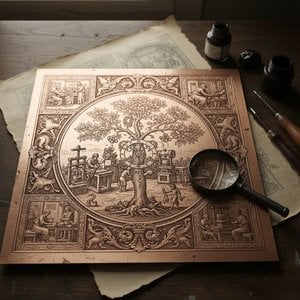
William Hogarth: En London Life i Pennor och Färg
William Hogarth, född 10 november 1697 i London, var mer än bara en konstnär; han var en visuell historiker, en skarp betraktare av mänsklig natur och en satirisk kommentator på de samhälleliga strömningarna under sin tid. Hans livsöde är oåtskilt knutet till själva väven av England under en period av betydande omvandling – dess växande ambitioner, underliggande oroer och genomträngande hyckleri, allt uttryckt med kraftfulla och detaljerade verk. Som son till en kämpande latinskolelärare fick Hogarth tidigt insikt i de sociala orättvisorna och en kärlek till lärdom som skulle forma hans konstnärliga vision. Hans tidiga yrkesliv inleddes som graverare, där han snabbt visade en talang som sträckte sig bortom ren teknisk skicklighet; han besatt en inneboende förmåga att observera nyanserna i mänskligt beteende och översätta dem till övertygande visuella berättelser. Trots att han längtade efter ett mer uttrycksfullt utlopp, studerade han vid St Martin’s Lane Academy och under Sir James Thornhill, där han absorberade influenser som skulle forma hans unika stil.
Den Födelse av Moderna Moraliska Ämnen
Hogarths verkliga innovation låg inte bara i *vad* han målade, utan *hur*. Han banade vägen för vad han kallade ”moderna moraliska ämnen” – serier av bilder som var utformade för att berätta en historia, ofta fyllda med en stark satirisk kant. Dessa var inte isolerade porträtt eller landskap; de var visuella romaner som vecklade ut sig inför betraktarens ögon, erbjöd skarpa kommentarer om samtida samhälle.
A Harlot’s Progress, skapad 1742, står som ett av hans mest kända exempel. Denna serie på sex målningar följer minutiöst Marys tragiska fall, en ung kvinna som anlände till London full av hopp men snabbt föll offer för stadens lockelser och faror. Varje scen målad med noggrannhet, fylld med symboliska element som avslöjar den moraliska förfall som omger henne. På samma sätt,
A Rake’s Progress, påbörjad 1733, kartlägger Tom Rakewells hänsynslösa nedgång, en man som slösar bort sin ärftliga förmögenhet på spel, dekadens och slutligen, vansinne. Dessa var inte bara varnande berättelser; de var skoningslösa porträtt av ett samhälle som kämpade med frågor om klass, moral och social rörlighet. Hogarths geni låg i hans förmåga att höja vardagliga scener – Londons pulserande gator, de överdådiga interiörer hos de rika, de förtvivlade liven hos de fattiga – till konstverk som resonerade djupt med sin publik. Han tvekade inte att skildra livets hårda realiteter, och presenterade dem med en blandning av humor och medlidande som tvingade betraktare att konfrontera obekväma sanningar om sig själva och sitt samhälle.
Teknik och Influenser: En Syntes av Stilar
Hogarths konstnärliga stil var en unik syntes av olika influenser. Han beundrade verklighetstrogenheten och berättande detaljerna i verk från holländska genrepaints som Pieter de Hooch, vilket återspeglas i hans noggranna skildringar av interiörer och vardagsliv. Franska satiriska tryck spelade också en roll i att forma hans syn på samhällskommentarer. Men Hogarth var inte bara en imitator; han syntesade dessa källor till något helt nytt och distinkt för honom själv. Hans teknik kännetecknades av ett mästerligt bruk av linjer och skuggningar, särskilt tydligt i sina tryck. Han använde en distinkt kors-sticksteknik som skapade djup och textur, och gav hans scener liv med otrolig klarhet. Han hade också en exceptionell öga för komposition, arrangerande figurer och objekt inom ramen för att skapa dynamiska och engagerande berättelser. Utöver konsten var Hogarth influerad av litterära verk, särskilt de av Jonathan Swift och Henry Fielding, vars satiriska skicklighet informerade hans egna samhällsbemärkningar. Han trodde att konsten inte bara skulle vara vacker utan också ha ett moralskt syfte, utmana betraktare att kritiskt tänka på världen omkring dem och sin plats i den.
Han sökte att hålla en spegel upp mot naturen, reflekterande både dess skönhet och dess skörhet med skoningslös ärlighet.
Arv och Bestående Inverkan
William Hogarths inflytande sträcker sig långt bortom konstens område under 1700-talet. Hans verk blev enormt populärt tack vare massproduktionen av tryck baserade på hans målningar, vilket gjorde hans satiriska kommentarer tillgängliga för en bredare publik än någonsin tidigare. Han anses ofta vara en föregångare till politisk teckning och serietidningskonst, och lade grunden för visuellt berättande i populärkulturen. Konstnärer som James Gillray och George Cruikshank var direkt influerade av hans stil. Även Charles Lamb, den berömda essänisten, erkände de narrativa krafterna i Hogarths bilder, och beskrev dem som ”böcker att läsa snarare än bara titta på”.
- Hogarth etablerade en distinkt brittisk konstidentitet.
- Hans verk ger ovärderliga insikter i det engelska samhället under 1700-talet.
- Han influerade generationer av konstnärer och satirister.
William Hogarth dog 1764, lämnande efter sig ett arv som fortfarande resonerar idag. Han är en nyckelperson i den brittiska konsthistorien, firad för sin innovativa syn på berättande, sina skoningslösa samhällskommentarer och hans bestående förmåga att fånga komplexiteten i mänskligt liv. Hans målningar och tryck är inte bara historiska artefakter; de är levande fönster in i en svunnen tid, som erbjuder tidslösa insikter i människans misslyckanden och brister.



 Förhandsvisa
 Byt till tryck
 Skicka
 Dela
Dela
 Visa detaljer

 Ladda ner
 Liknande objekt
 Röntgen
 Bildspel
 Statistik

 Visa mer






































 Glasalternativet är endast tillgängligt i storlekar under 110 cm.