
Förhandsvisa Förhandsgranska i AR Beställ handmålad reproduktion Byt till digital bild Skicka
Visa detaljer Guide Lägg till i favoriter Ladda ner Liknande objekt Röntgen Bildspel Frågor och svar Ladda ner presentation Statistik

Two Ruffed Grouse

Rubens Peale's 'Two Ruffed Grouse' captures two birds amidst lush underbrush. This 1864 oil painting showcases the artist’s skill and a glimpse into American wildlife art of the era.

The Artist Emerges</h2> Following the closure of his New York Museum Philadelphia United States of America Rubens Peale <h2>Ett liv som förenar konst Rubens Peale (1784-1865): Amerikansk konstnär och museidirektör från den kända familjen Peale. Känd för stilleben, porträtt och banbrytande naturhistoriska museer. Utforska hans konst och arv! Rubens Peale, amerikansk konst, stilleben, porträt

Giclée / Konsttryck

Giclée- eller canvasprint av museumskvalitet med snabb produktion och flexibla ytbehandlingsalternativ. ( Beställ handmålad reproduktion Byt till digital bild)

Corner sample of the P118B picture frame: formgjuten polystyren, 5 cm wide and 3 cm thick
P118B Skr10
Corner sample of the P118H picture frame: formgjuten polystyren, 5 cm wide and 3 cm thick
P118H Skr10
Corner sample of the P118W picture frame: formgjuten polystyren, 5 cm wide and 3 cm thick
P118W Skr10
Corner sample of the P438Z picture frame: formgjuten polystyren, 5.5 cm wide and 3.5 cm thick
P438Z Skr10
Corner sample of the P508JH picture frame: formgjuten polystyren, 7 cm wide and 3.5 cm thick
P508JH Skr12
Corner sample of the P508YH picture frame: formgjuten polystyren, 7 cm wide and 3.5 cm thick
P508YH Skr12
Corner sample of the P805H picture frame: formgjuten polystyren, 5 cm wide and 3.5 cm thick
P805H Skr10
Corner sample of the P805Z picture frame: formgjuten polystyren, 5 cm wide and 3.5 cm thick
P805Z Skr10
Corner sample of the P919BZ picture frame: formgjuten polystyren, 7 cm wide and 3.5 cm thick
P919BZ Skr10
Corner sample of the P919G picture frame: formgjuten polystyren, 7 cm wide and 3.5 cm thick
P919G Skr10
Corner sample of the P919XJ picture frame: formgjuten polystyren, 7 cm wide and 3.5 cm thick
P919XJ Skr10
Corner sample of the P959ZH picture frame: formgjuten polystyren, 5 cm wide and 3 cm thick
P959ZH Skr10
Corner sample of the P968JZ picture frame: formgjuten polystyren, 6 cm wide and 4 cm thick
P968JZ Skr12
Corner sample of the W106C picture frame: massivt trä, 5 cm wide and 3 cm thick
W106C Skr8
Corner sample of the W218G picture frame: massivt trä, 5 cm wide and 3 cm thick
W218G Skr10
Corner sample of the W218JH picture frame: massivt trä, 5 cm wide and 3 cm thick
W218JH Skr8
Corner sample of the W218Y picture frame: massivt trä, 5 cm wide and 3 cm thick
W218Y Skr10
Corner sample of the W307PJ picture frame: massivt trä, 6 cm wide and 3 cm thick
W307PJ Skr10
Corner sample of the W316G picture frame: massivt trä, 6 cm wide and 3 cm thick
W316G Skr10
Corner sample of the W316PJ picture frame: massivt trä, 6 cm wide and 3 cm thick
W316PJ Skr8
Corner sample of the W316Y picture frame: massivt trä, 6 cm wide and 3 cm thick
W316Y Skr10
Corner sample of the W398PJ picture frame: massivt trä, 5 cm wide and 3 cm thick
W398PJ Skr8
Corner sample of the W4111J picture frame: massivt trä, 6.5 cm wide and 3.5 cm thick
W4111J Skr10
Corner sample of the W500HY picture frame: massivt trä, 7 cm wide and 5 cm thick
W500HY Skr15
Corner sample of the W500JH picture frame: massivt trä, 7 cm wide and 5 cm thick
W500JH Skr15
Corner sample of the W692G picture frame: massivt trä, 8 cm wide and 4 cm thick
W692G Skr12
Corner sample of the W849H picture frame: massivt trä, 5 cm wide and 3 cm thick
W849H Skr8
Corner sample of the W940BG picture frame: massivt trä, 7.5 cm wide and 4.5 cm thick
W940BG Skr15
Corner sample of the W953PJ picture frame: massivt trä, 6 cm wide and 3.5 cm thick
W953PJ Skr8

Standardstorlek
skräddarsydd
CM
INCH

Välj bland våra förinställda storlekar som motsvarar konstverkets ursprungliga proportioner.

bredd
höjd

Ange den bredd och höjd du behöver för att passa din ram eller vägg. Ett tryck kan endast beskäras, aldrig göras större än originalbilden, vilket innebär att ett format med en annan proportion leder till att en del av bilden går förlorad. Vi skickar en digital mockup för godkännande innan vi påbörjar tryckningen. Bilden som visas på denna sida visar inte den faktiska beskärningen — det är endast mockuppen som gör det.

Leverans över hela världen () på 2 veckor istället för standard 4/5 veckor. (9 november)

Fri expressfrakt över hela världen
Högkvalitativ linnecanvas
Fullständig fraktförsäkring
Garantier för återbetalning av tullavgifter
Garantier för exakt färgåtergivning
100 dagars returrätt (endast vid fel)
100% pengarna tillbaka-garanti
Mängdrabatt erbjuds

Totalt pris

Skr 690

Two Ruffed Grouse

Giclée / Konsttryck

Storlek på reproduktion

-

Slutgiltigt pris

Skr 690

Kortfakta

  • Subject or theme: Birds in forest
  • Artist: Rubens Peale
  • Artistic style: Naturalistic
  • Movement: American Realism
  • Influences: Peale family
  • Medium: Oil on canvas

Konstquiz

Det finns endast ett korrekt svar på varje fråga.

Fråga 1:
What is the primary subject of "Two Ruffed Grouse in Underbrush"?
Fråga 2:
In what year was "Two Ruffed Grouse in Underbrush" painted?
Fråga 3:
Rubens Peale was known for his work in which of the following fields?
Fråga 4:
The painting utilizes which technique to create depth and realism?
Fråga 5:
What does the presence of the geranium in the painting symbolize?

A Moment of Woodland Serenity: Unpacking the Depths of Peale’s “Two Ruffed Grouse”

Rubens Peale's "Two Ruffed Grouse in Underbrush," painted in 1864, isn’t merely a depiction of two birds; it’s a carefully constructed tableau of American naturalism and the burgeoning spirit of scientific observation that defined the mid-19th century. The painting immediately draws the eye with its intimate portrayal of these elusive creatures nestled within a dense undergrowth—a scene brimming with quiet drama and subtle detail. Peale, a key figure in Philadelphia’s vibrant artistic and scientific community, masterfully blends elements of realism with an almost painterly softness, creating an image that feels both meticulously observed and deeply imbued with feeling.

Two Ruffed Grouse in Underbrush, 1864 by Rubens Peale

The Painter’s Process: Observation and the Pursuit of Natural Truth

Peale's approach to this work is particularly fascinating when considered within the context of his career. He wasn’t primarily a painter of grand landscapes or heroic figures; instead, he dedicated himself to documenting the natural world through meticulous observation and scientific illustration – a practice deeply rooted in his family history, tracing back to his father, Charles Willson Peale, a renowned naturalist and museum curator. “Two Ruffed Grouse” exemplifies this dedication. The painting’s realism is remarkable, achieved not through idealized representation but by painstakingly rendering the textures of feathers, foliage, and earth. Notice the subtle variations in color—the mottled browns and greys of the birds' plumage blending seamlessly with the muted tones of the underbrush. Peale employed a technique that prioritized capturing the essence of the subject rather than imposing an artistic interpretation, a hallmark of the Hudson River School movement but executed with a distinctly American sensibility.

Symbolism Woven into the Woodland Scene

Beyond its straightforward depiction of two ruffed grouse, the painting is rich in symbolic layers. The inclusion of the geranium—a vibrant splash of red against the predominantly earthy palette—introduces an element of unexpected beauty and perhaps even a touch of melancholy. Some art historians suggest that this deliberate juxtaposition highlights the delicate balance between nature’s raw beauty and the human desire to capture and preserve it. Furthermore, the birds themselves hold symbolic weight; in American folklore, grouse were often associated with good fortune and prosperity. The placement of the birds within the dense undergrowth also speaks to themes of concealment, resilience, and the quiet dignity of the natural world—a sentiment increasingly valued during a period of rapid industrialization and westward expansion.

A Legacy of Observation: Peale’s Influence and Enduring Appeal

Rubens Peale's "Two Ruffed Grouse in Underbrush" stands as a testament to the power of observation and the evolving role of art in documenting the natural world. It reflects a shift away from purely decorative painting towards a more scientific and nuanced understanding of nature—a trend that would profoundly influence American art throughout the 19th century. The painting’s quiet intimacy, coupled with its meticulous detail and subtle symbolism, continues to resonate with viewers today, offering a glimpse into a bygone era and reminding us of the enduring beauty and complexity of the American wilderness. Its inclusion in the Detroit Institute of Arts collection underscores its significance as a pivotal work in American art history.

Frågor och svar

Är "Two Ruffed Grouse" fri från upphovsrätt?

"Two Ruffed Grouse" av Rubens Peale är allmän egendom – upphovsrätten har löpt ut. Denna status avgör hur bilden av verket får återges.

Vilket år skapades "Two Ruffed Grouse" av Rubens Peale?

"Two Ruffed Grouse" av Rubens Peale skapades år 1864.

Hur kan jag få en digital fil av "Two Ruffed Grouse" av Rubens Peale?

"Two Ruffed Grouse" finns tillgänglig som en högupplöst digital bildnedladdning och kan köpas direkt på dess Digital bild i hög upplösning-sida.

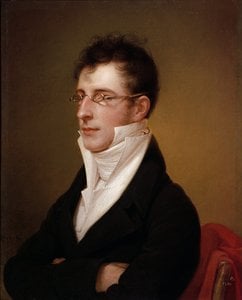
Konstnärsbiografi

Ett Liv Mellan Konst, Vetenskap och Museer

Rubens Peale steg fram ur en unik och bördig miljö – den välkända Peale-familjen i Philadelphia – en släktlinje synonym med konstnärligt begåvning och vetenskaplig nyfikenhet i tidiga Amerika. Född den 4 maj 1784 var hans liv bestämt att bli sammanflätat med det framväxande kulturella landskapet i ett nytt nation. Även om han inte uppnådde samma vida erkännande som sin far, Charles Willson Peale, eller sina bröder Raphaelle och Rembrandt, skar Rubens ut en betydande, om än mångfacetterad, väg för sig själv, en som blandade museumsadministration, entreprenöriella satsningar och slutligen ett sent blomstrande konstnärligt yrke. Hans berättelse är ett bevis på anpassningsförmåga till omständigheter och att finna kreativt uttryck även inför personliga utmaningar. Till skillnad från sina syskon som lätt omfamnade målningen kämpade Rubens med nedsatt syn från tidig ålder, vilket initialt hindrade något seriöst strävande efter konst. Han fick en formell utbildning och gick kurser vid University of Pennsylvania 1803, vilket antydde ett bredare intellektuellt nyfikenhet som skulle definiera mycket av hans karriär. Tidiga resor med sin familj till Europa 1802 avbröts av politisk oro, vilket hindrade en utökad inlevelse i europeiska konsttraditioner.

Från Museidirektör till Entreprenör

Trots begränsningarna som orsakades av hans synförmåga visade Rubens Peale snabbt en anmärkningsvärd fallenhet för organisation och allmän engagemang, färdigheter som skulle bli centrala för hans yrkesliv. Han inledde sin karriär djupt involverad i familjens mest ambitiösa projekt: Peale Museum i Philadelphia. Efter att ha efterträtt sin far som direktör från 1810 till 1821 hanterade han skickligt denna banbrytande institution, ett sannerligen märkvärdigt kabinett av nyfikenheter ägnat åt naturhistoria och konst. Denna erfarenhet ingav honom en djup förståelse för museumverksamhet och vikten av att göra kunskap tillgänglig för allmänheten. Hans ambition stannade inte där. Han medverkade i ledningen av Peale Museum i Baltimore med sin bror Rembrandt, genomförde innovativa strategier som gasbelysning – ett revolutionerande tillägg vid den tiden – för att locka kvällsbesökare och förbättra tittarupplevelsen. Detta framåtblickande tillvägagångssätt underströk hans engagemang för att modernisera museumupplevelsen. År 1825 startade Rubens på egen hand New York Museum of Natural History and Science. Denna oberoende satsning visade sig dock vara mer utmanande. Hård konkurrens från P.T. Barnums sensationella American Museum, tillsammans med de ekonomiska svårigheter som orsakades av Paniken 1837, ledde i slutändan till ekonomiska problem och tvungen försäljning av hans samling år 1843. Denna period markerade en vändpunkt, vilket fick honom att dra sig tillbaka från den livliga världen av museumsadministration.

En Sen Blomstring: Konstnären Uppstår

Efter stängningen av sitt New York Museum sökte Rubens Peale tröst och en ny riktning på Woodland Farm nära Schuylkill Haven, Pennsylvania. Det var här, i pensionen, som han oväntat återupptäckte sina konstnärliga böjelser. Efter att ha övergett målning till stor del på grund av synproblem omfamnade han nu stilleben som ett medium som passade hans förmågor och intressen perfekt. Denna sena-livs konstnärliga uppvaknande påverkades starkt av Peale-familjens bestående fascination för naturhistoria. Hans dukar började blomma ut med noggrant återgivna skildringar av frukter, grönsaker och blommor – ämnen som tillät honom att utöva sina skarpa observationsförmågor och fira naturens skönhet. Han sökte till och med vägledning från den ansedda landskapsmålaren Edward Moran, vilket ytterligare förfinade sin teknik och utvidgade sina konstnärliga horisonter. Anmärkningsvärt nog ägnade Rubens under de sista tio åren av sitt liv (1864-1865) cirka 130 målningar, ett bevis på hans nyfunna passion och hängivenhet. Dessa verk, som inte var vida kända under hans livstid, ger en unik inblick i sinnet hos en konstnär som fann sin röst sent i livet.

Arv och Historisk Betydelse

Rubens Peales arv sträcker sig långt bortom hans konstnärliga produktion. Han var en sann pionjär inom museumsadministration, vilket bidrog avsevärt till utvecklingen av offentliga institutioner som är dedikerade till naturvetenskap och konstutbildning. Hans innovativa användning av gasbelysning förvandlade museumupplevelsen och gjorde den mer inbjudande och tillgänglig för en bredare publik. Även om han kanske inte uppnådde samma nivå av berömmelse som sina artistbröder, var hans bidrag avgörande för att forma det kulturella landskapet i tidiga Amerika. Det betydande priset som betalades för Rembrandts Peales porträtt av Rubens med en pelargon – 4,07 miljoner dollar år 1985 – understryker den växande uppskattningen för amerikansk konst från tidigare tider och det bestående fascinerandet för Peale-familjen. Rubens Peale representerar ett fascinerande möte mellan artistisk ambition, vetenskaplig nyfikenhet och entreprenörsanda. Han personifierar den mångfacetterade karaktären hos intellektuellt liv i det unga USA och visar att framgång kan anta många former och att kreativt uttryck kan blomstra även under utmanande omständigheter. Hans berättelse är en påminnelse om att det aldrig är för sent att följa sina passioner och lämna ett bestående avtryck i världen.

Familjeinflytande

  • Charles Willson Peale: Rubens far, en framstående porträttmålare och naturforskare som grundade Philadelphia's Peale Museum.
  • Raphaelle Peale & Rembrandt Peale: Hans bröder, båda skickliga konstnärer i egenskap av sig själva.
  • Titian Ramsay Peale: En yngre bror utmärkt som en utforskare och naturforskare.
Rubens Peale

Rubens Peale

1784 - 1865 , USA

Kortfakta

  • Artistic Movement Or Style: Stilleben, Porträtt
  • Artists Who Influenced This Artist: ['Charles Willson Peale']
  • Date Of Birth: 4 maj 1784
  • Date Of Death: 17 juli 1865
  • Family Influence:
    • Charles Willson Peale
    • Raphaelle Peale
    • Rembrandt Peale
    • Titian Ramsay Peale
  • Full Name: Rubens Peale
  • Nationality: Amerikansk
  • Place Of Birth: Philadelphia, USA


































