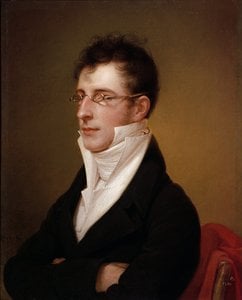
Ett Liv Mellan Konst, Vetenskap och Museer
Rubens Peale steg fram ur en unik och bördig miljö – den välkända Peale-familjen i Philadelphia – en släktlinje synonym med konstnärligt begåvning och vetenskaplig nyfikenhet i tidiga Amerika. Född den 4 maj 1784 var hans liv bestämt att bli sammanflätat med det framväxande kulturella landskapet i ett nytt nation. Även om han inte uppnådde samma vida erkännande som sin far, Charles Willson Peale, eller sina bröder Raphaelle och Rembrandt, skar Rubens ut en betydande, om än mångfacetterad, väg för sig själv, en som blandade museumsadministration, entreprenöriella satsningar och slutligen ett sent blomstrande konstnärligt yrke. Hans berättelse är ett bevis på anpassningsförmåga till omständigheter och att finna kreativt uttryck även inför personliga utmaningar. Till skillnad från sina syskon som lätt omfamnade målningen kämpade Rubens med nedsatt syn från tidig ålder, vilket initialt hindrade något seriöst strävande efter konst. Han fick en formell utbildning och gick kurser vid University of Pennsylvania 1803, vilket antydde ett bredare intellektuellt nyfikenhet som skulle definiera mycket av hans karriär. Tidiga resor med sin familj till Europa 1802 avbröts av politisk oro, vilket hindrade en utökad inlevelse i europeiska konsttraditioner.
Från Museidirektör till Entreprenör
Trots begränsningarna som orsakades av hans synförmåga visade Rubens Peale snabbt en anmärkningsvärd fallenhet för organisation och allmän engagemang, färdigheter som skulle bli centrala för hans yrkesliv. Han inledde sin karriär djupt involverad i familjens mest ambitiösa projekt: Peale Museum i Philadelphia. Efter att ha efterträtt sin far som direktör från 1810 till 1821 hanterade han skickligt denna banbrytande institution, ett sannerligen märkvärdigt kabinett av nyfikenheter ägnat åt naturhistoria och konst. Denna erfarenhet ingav honom en djup förståelse för museumverksamhet och vikten av att göra kunskap tillgänglig för allmänheten. Hans ambition stannade inte där. Han medverkade i ledningen av Peale Museum i Baltimore med sin bror Rembrandt, genomförde innovativa strategier som gasbelysning – ett revolutionerande tillägg vid den tiden – för att locka kvällsbesökare och förbättra tittarupplevelsen. Detta framåtblickande tillvägagångssätt underströk hans engagemang för att modernisera museumupplevelsen. År 1825 startade Rubens på egen hand New York Museum of Natural History and Science. Denna oberoende satsning visade sig dock vara mer utmanande. Hård konkurrens från P.T. Barnums sensationella American Museum, tillsammans med de ekonomiska svårigheter som orsakades av Paniken 1837, ledde i slutändan till ekonomiska problem och tvungen försäljning av hans samling år 1843. Denna period markerade en vändpunkt, vilket fick honom att dra sig tillbaka från den livliga världen av museumsadministration.
En Sen Blomstring: Konstnären Uppstår
Efter stängningen av sitt New York Museum sökte Rubens Peale tröst och en ny riktning på Woodland Farm nära Schuylkill Haven, Pennsylvania. Det var här, i pensionen, som han oväntat återupptäckte sina konstnärliga böjelser. Efter att ha övergett målning till stor del på grund av synproblem omfamnade han nu stilleben som ett medium som passade hans förmågor och intressen perfekt. Denna sena-livs konstnärliga uppvaknande påverkades starkt av Peale-familjens bestående fascination för naturhistoria. Hans dukar började blomma ut med noggrant återgivna skildringar av frukter, grönsaker och blommor – ämnen som tillät honom att utöva sina skarpa observationsförmågor och fira naturens skönhet. Han sökte till och med vägledning från den ansedda landskapsmålaren Edward Moran, vilket ytterligare förfinade sin teknik och utvidgade sina konstnärliga horisonter. Anmärkningsvärt nog ägnade Rubens under de sista tio åren av sitt liv (1864-1865) cirka 130 målningar, ett bevis på hans nyfunna passion och hängivenhet. Dessa verk, som inte var vida kända under hans livstid, ger en unik inblick i sinnet hos en konstnär som fann sin röst sent i livet.
Arv och Historisk Betydelse
Rubens Peales arv sträcker sig långt bortom hans konstnärliga produktion. Han var en sann pionjär inom museumsadministration, vilket bidrog avsevärt till utvecklingen av offentliga institutioner som är dedikerade till naturvetenskap och konstutbildning. Hans innovativa användning av gasbelysning förvandlade museumupplevelsen och gjorde den mer inbjudande och tillgänglig för en bredare publik. Även om han kanske inte uppnådde samma nivå av berömmelse som sina artistbröder, var hans bidrag avgörande för att forma det kulturella landskapet i tidiga Amerika. Det betydande priset som betalades för Rembrandts Peales porträtt av Rubens med en pelargon – 4,07 miljoner dollar år 1985 – understryker den växande uppskattningen för amerikansk konst från tidigare tider och det bestående fascinerandet för Peale-familjen.
Rubens Peale representerar ett fascinerande möte mellan artistisk ambition, vetenskaplig nyfikenhet och entreprenörsanda. Han personifierar den mångfacetterade karaktären hos intellektuellt liv i det unga USA och visar att framgång kan anta många former och att kreativt uttryck kan blomstra även under utmanande omständigheter. Hans berättelse är en påminnelse om att det aldrig är för sent att följa sina passioner och lämna ett bestående avtryck i världen.
Familjeinflytande
- Charles Willson Peale: Rubens far, en framstående porträttmålare och naturforskare som grundade Philadelphia's Peale Museum.
- Raphaelle Peale & Rembrandt Peale: Hans bröder, båda skickliga konstnärer i egenskap av sig själva.
- Titian Ramsay Peale: En yngre bror utmärkt som en utforskare och naturforskare.



 Förhandsvisa
 Switch to Print
 Skicka
 Dela
Dela
 Visa detaljer

 Ladda ner
 Liknande objekt
 Röntgen
 Bildspel
 Stats
Stats


 Visa mer