Förhandsvisa Förhandsgranska i AR Beställ handmålad reproduktion Byt till digital bild Skicka
Visa detaljer Guide Lägg till i favoriter Ladda ner Liknande objekt Röntgen Bildspel Frågor och svar Ladda ner presentation Statistik

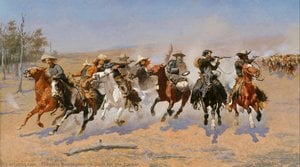
An Indian Trapper

Mått
124.0 x 86.0 cm

Discover "An Indian Trapper" by Frederic Remington – a captivating Western American art masterpiece depicting Native Americans and cowboys. Explore the iconic painting's details.

Upptäck Frederic Remingtons mästerverk! Fängslande målningar av cowboys, indianer & det försvinnande västern – en ikonisk amerikansk konstnär!

Giclée / Konsttryck

Giclée- eller canvasprint av museumskvalitet med snabb produktion och flexibla ytbehandlingsalternativ. ( Beställ handmålad reproduktion Byt till digital bild)

Corner sample of the P118B picture frame: formgjuten polystyren, 5 cm wide and 3 cm thick
P118B Skr10
Corner sample of the P118H picture frame: formgjuten polystyren, 5 cm wide and 3 cm thick
P118H Skr10
Corner sample of the P118W picture frame: formgjuten polystyren, 5 cm wide and 3 cm thick
P118W Skr10
Corner sample of the P438Z picture frame: formgjuten polystyren, 5.5 cm wide and 3.5 cm thick
P438Z Skr10
Corner sample of the P508JH picture frame: formgjuten polystyren, 7 cm wide and 3.5 cm thick
P508JH Skr12
Corner sample of the P508YH picture frame: formgjuten polystyren, 7 cm wide and 3.5 cm thick
P508YH Skr12
Corner sample of the P805H picture frame: formgjuten polystyren, 5 cm wide and 3.5 cm thick
P805H Skr10
Corner sample of the P805Z picture frame: formgjuten polystyren, 5 cm wide and 3.5 cm thick
P805Z Skr10
Corner sample of the P919BZ picture frame: formgjuten polystyren, 7 cm wide and 3.5 cm thick
P919BZ Skr10
Corner sample of the P919G picture frame: formgjuten polystyren, 7 cm wide and 3.5 cm thick
P919G Skr10
Corner sample of the P919XJ picture frame: formgjuten polystyren, 7 cm wide and 3.5 cm thick
P919XJ Skr10
Corner sample of the P959ZH picture frame: formgjuten polystyren, 5 cm wide and 3 cm thick
P959ZH Skr10
Corner sample of the P968JZ picture frame: formgjuten polystyren, 6 cm wide and 4 cm thick
P968JZ Skr12
Corner sample of the W106C picture frame: massivt trä, 5 cm wide and 3 cm thick
W106C Skr8
Corner sample of the W218G picture frame: massivt trä, 5 cm wide and 3 cm thick
W218G Skr10
Corner sample of the W218JH picture frame: massivt trä, 5 cm wide and 3 cm thick
W218JH Skr8
Corner sample of the W218Y picture frame: massivt trä, 5 cm wide and 3 cm thick
W218Y Skr10
Corner sample of the W307PJ picture frame: massivt trä, 6 cm wide and 3 cm thick
W307PJ Skr10
Corner sample of the W316G picture frame: massivt trä, 6 cm wide and 3 cm thick
W316G Skr10
Corner sample of the W316PJ picture frame: massivt trä, 6 cm wide and 3 cm thick
W316PJ Skr8
Corner sample of the W316Y picture frame: massivt trä, 6 cm wide and 3 cm thick
W316Y Skr10
Corner sample of the W398PJ picture frame: massivt trä, 5 cm wide and 3 cm thick
W398PJ Skr8
Corner sample of the W4111J picture frame: massivt trä, 6.5 cm wide and 3.5 cm thick
W4111J Skr10
Corner sample of the W500HY picture frame: massivt trä, 7 cm wide and 5 cm thick
W500HY Skr15
Corner sample of the W500JH picture frame: massivt trä, 7 cm wide and 5 cm thick
W500JH Skr15
Corner sample of the W692G picture frame: massivt trä, 8 cm wide and 4 cm thick
W692G Skr12
Corner sample of the W849H picture frame: massivt trä, 5 cm wide and 3 cm thick
W849H Skr8
Corner sample of the W940BG picture frame: massivt trä, 7.5 cm wide and 4.5 cm thick
W940BG Skr15
Corner sample of the W953PJ picture frame: massivt trä, 6 cm wide and 3.5 cm thick
W953PJ Skr8

Standardstorlek
skräddarsydd
CM
INCH

Välj bland våra förinställda storlekar som motsvarar konstverkets ursprungliga proportioner.

bredd
höjd

Ange den bredd och höjd du behöver för att passa din ram eller vägg. Ett tryck kan endast beskäras, aldrig göras större än originalbilden, vilket innebär att ett format med en annan proportion leder till att en del av bilden går förlorad. Vi skickar en digital mockup för godkännande innan vi påbörjar tryckningen. Bilden som visas på denna sida visar inte den faktiska beskärningen — det är endast mockuppen som gör det.

Leverans över hela världen () på 2 veckor istället för standard 4/5 veckor. (9 november)

Fri expressfrakt över hela världen
Högkvalitativ linnecanvas
Fullständig fraktförsäkring
Garantier för återbetalning av tullavgifter
Garantier för exakt färgåtergivning
100 dagars returrätt (endast vid fel)
100% pengarna tillbaka-garanti
Mängdrabatt erbjuds

Totalt pris

Skr 690

An Indian Trapper

Giclée / Konsttryck

Storlek på reproduktion

-

Slutgiltigt pris

Skr 690

Kortfakta

  • Artistic style: Realism
  • Notable elements: Cowboy, Native American
  • Medium: Oil on canvas
  • Artist: Frederic Remington
  • Influences: Old West

Konstquiz

Det finns endast ett korrekt svar på varje fråga.

Fråga 1:
What is the primary subject depicted in Frederic Remington’s ‘An Indian Trapper’?
Fråga 2:
In what year was Frederic Remington’s ‘An Indian Trapper’ painted?
Fråga 3:
Frederic Remington was a prominent artist associated with which artistic movement?
Fråga 4:
According to the image description, what is prominent in the background of the painting?
Fråga 5:
Frederic Remington’s work often depicted scenes from what era of American history?

An Indian Trapper: A Chronicle of the American West

Frederic Remington’s “An Indian Trapper,” painted in 1889, isn't merely a depiction of a solitary figure on horseback; it’s a potent distillation of the burgeoning mythology surrounding the American West during a period of profound transformation. This oil-on-canvas masterpiece captures a moment suspended between tradition and encroaching modernity, embodying both the romanticized vision of frontier life and the unsettling reality of displacement for Native American communities.

The scene unfolds within a vast, rugged landscape—a palette dominated by ochre browns, deep blues, and muted greens. The composition is carefully constructed to emphasize the figure’s isolation and connection to his environment. A lone Native American man, clad in traditional buckskin garments and adorned with a distinctive headdress, surveys the horizon from atop a powerful chestnut horse. His posture exudes quiet confidence and an intimate understanding of the land—a stark contrast to the often-portrayed image of the savage or untamed wilderness.

Remington’s Technique: Bridging Realism and Romanticism

Remington, initially trained as a journalist and illustrator for dime novels, possessed a remarkable ability to synthesize observation with artistic license. “An Indian Trapper” exemplifies this approach. While rooted in meticulous detail—notice the texture of the buckskin, the muscular build of the horse, and the subtle nuances of light and shadow—the painting transcends simple realism. Remington employs a slightly heightened palette and dramatic lighting to evoke a sense of grandeur and timelessness, aligning with the conventions of Romanticism.

His brushwork is loose and expressive, particularly in the depiction of the landscape, suggesting movement and vastness. The horse’s powerful stride is rendered with dynamic energy, while the man's stillness conveys a deep connection to his surroundings. Remington masterfully utilizes color to create depth and atmosphere, drawing the viewer into the heart of the scene.

Symbolism and Historical Context

“An Indian Trapper” emerged during a critical juncture in American history—the late 19th century witnessed escalating conflicts between settlers and Native American tribes following westward expansion. Remington’s work, while often celebrated for its romanticized portrayal of the West, is inextricably linked to this complex historical context. The painting can be interpreted as both an endorsement of the frontier spirit and a subtle commentary on the displacement of indigenous populations.

The figure's solitary stance reflects the increasing isolation experienced by Native Americans as their traditional ways of life were disrupted. The headdress, a symbol of leadership and spiritual authority, subtly hints at the cultural heritage being lost in the face of assimilation. Remington’s decision to depict the man on horseback—a mode of transportation increasingly associated with settlers—underscores this shift.

Emotional Resonance: A Legacy of Interpretation

Despite its historical complexities, “An Indian Trapper” continues to resonate deeply with viewers today. The painting evokes a sense of melancholy and contemplation, prompting reflection on themes of identity, displacement, and the enduring relationship between humans and the natural world. It’s a powerful reminder of a vanishing way of life—a poignant testament to the beauty and tragedy inherent in America's westward expansion.

Reproductions of this iconic artwork offer an accessible means of experiencing Remington’s vision, allowing viewers to appreciate the artistry and historical significance of this enduring masterpiece. Its evocative imagery continues to captivate audiences seeking a glimpse into the heart of the American West.

Frågor och svar

Kan jag se "An Indian Trapper" som ett bildspel i helskärm?

Ett bildspel finns tillgängligt på sidan Bildspel för "An Indian Trapper" av Frederic Remington.

Vem säljer handmålade kopior av "An Indian Trapper" av Frederic Remington?

Handmålade kopior av "An Indian Trapper" av Frederic Remington finns att köpa på denna webbplats: en handmålad oljereproduktion på linneväv, via deras sida för Handmålad reproduktion.

Hur hög är kontrasten i "An Indian Trapper" av Frederic Remington?

Ljus-mörker-kontrasten i "An Indian Trapper" är registrerad som Gentle. Kontrast beskriver hur starkt ljusa och mörka partier skiljer sig åt.


Konstnärsbiografi

A Chronicler of the Vanishing West: The Life and Art of Frederic Remington

Frederic Sackrider Remington, född i Canton, New York, den 4 oktober 1861, var ingen produkt av det västernland han så levande målade. Han var snarare en österlänning som skapade sin konstnärliga identitet genom fascination och en dedikerad studie av ett landskap som i stort sett hade försvunnit. Hans bakgrund antydde ett liv långt borta från dammiga stigar och kavalleriattacker – franska basiska arv blandat med starkt republikanska nya englandsrötter, en far som var krigskolonnell och tidningsredaktör, samt kopplingar till det kända Remington Arms-imperiet genom avlägsna släktingar. Trots detta var det en tidig exponering för militära teman, kombinerat med en rastlös anda och ett skarpt öga för berättande, som ledde honom på vägen mot att bli kanske den mest igenkännliga konstnären av den amerikanska västern. Hans barndom flyttades till Bloomington, Illinois, sedan tillbaka till Canton och slutligen till Ogdensburg, New York, men hans fantasi fanns fångad av berättelser om friluftsliv. Även om han initialt pekades i en militär utbildning vid Vermont Episcopal Institute, låg Remingtons sanna talang inte i att följa order, utan i att observera och tolka världen omkring honom genom konst. En kort vistelse vid Yale University bekräftade detta; fotboll och skissande hade mycket större attraktion än formell akademisk sysslor.

Från Illustratör till Målare: Skapandet av en Konstnärlig Vision

Remingtons konstnärliga resa började inte med storslagna dukar, utan med bläck och papper. Hans första publicerade verk, en teckning för *Yale Courant*, signalerade tidigt ett begåvningsfullt sinne för att fånga handling och berättelse. En avgörande resa till Montana 1881 tände hans livslånga besatthet av västern. Detta var inte bara en turists blick; Remington sökte att fördjupa sig i kulturen, observerade cowboys, indianer och landskapet självt. I början försökte han ranching och gruvdrift, men dessa visade sig vara misslyckade, vilket frigjorde honom att helt ägna sig åt konst. Återvändande till öst etablerade han snabbt sig själv som en illustratör för tidningar som *Harper’s Weekly* och *Collier’s*, hans dynamiska skildringar av västernscener fångade en nationell publik som längtade efter berättelser om gränslandet. Dessa illustrationer var inte bara rapportering; de var fyllda med drama, energi och en romantiserad syn på västern som resonerade djupt hos allmänheten. Genom detta arbete finslipade Remington sina färdigheter i komposition, fångande rörelse och förmedlande av känslor – kvaliteter som senare skulle definiera hans målningar. Han fick minimal formell utbildning bortsett från några skissklasser vid Yale och en kort period på Art Students League, utvecklade istället ett distinkt stil som karaktäriserades av energiska penseldrag, djärva färger och fokus på realism blandat med dramatiskt uttryck.

Att fånga en Försvinnande Värld: Teman och Stil

Remingtons konst är oåtskild från en specifik tidpunkt i amerikansk historia – den sista tiden av det gamla västern. Hans målningar bebos av ikoniska figurer: robusta cowboys som driver boskap, stoiska indianer som står inför förflyttning och U.S. Cavalry-soldater engagerade i både hjältemodiga strider och tragiska konflikter. Han tvekade inte att skildra de hårda realiteterna i gränslandets liv, men hans konst tenderar ofta till en romantiserad framställning, som betonar mod, äventyr och kollisionen av kulturer. Hans målningar är inte bara historiska dokument; de är suggestiva berättelser som utforskar teman om heroism, förlust och den oundvikliga frammarschen av utveckling. Remingtons stil utvecklades över tid, från mer täta, akademiskt influerade skildringar till mer lösa, uttrycksfulla penseldrag. Han var en mästare på att fånga rörelse – hästar som galopperar över slätter, cowboys som kämpar med boskap och soldater som stormar in i strid. Han använde ofta snabba skisser och fotografier som referensmaterial, men hans konst överskred alltid ren imitation, fylld med sin egen unika vision och emotionella intensitet. Kända verk som *My Ranch*, *Waiting in the Moonlight*, *Ridden Down* (1905) och *The Long-Horn Cattle Sign* (1908) exemplifierar hans förmåga att fånga både den stora och den sårbara aspekten av det amerikanska västern.

Arv och Bestående Inverkan

Frederic Remington dog oväntat 1909 i ålder av 48 år, lämnade efter sig en enorm verktygslåda som fortfarande fångar publikens uppmärksamhet idag. Hans inflytande på västernkonst är obestridligt; han målade inte bara västern, han *definierade* den för generationer av amerikaner. Han etablerade ett visuellt språk för gränslandet – en ikonografi av cowboys, indianer och kavalleri som blev djupt rotad i allmänhetens fantasi.
  • Hans verk inspirerade otaliga andra konstnärer, inklusive N.C. Wyeth och Zane Grey.
  • Frederic Remington Art Museum i Ogdensburg, New York, står som ett testamente till hans bestående arv, bevarar en omfattande samling av hans målningar, skulpturer och arkivmaterial.
  • Hans konst visas fortfarande i stora museer över hela landet, inklusive Metropolitan Museum of Art och Amon Carter Museum of American Art.
Remingtons skildringar, även om de ibland kritiseras för deras romantiserade framställning av västern, ger en värdefull inblick i en avgörande tid i amerikansk historia. Han fångade inte bara vad *var*, utan också vad människor *trodde* om västern – dess myter, dess legender och dess bestående attraktion. Han är ett kraftfullt symbol för den amerikanska andan – en skildrare av en försvinnande värld som förvandlade den till ett bestående konstnärligt arv.
Frederic Remington

Frederic Remington

1861 - 1909 , USA

Kortfakta

  • Artistic Movement Or Style: Västerländsk amerikansk konst
  • Artists Or Movements Influenced By This Artist:
    • N.C. Wyeth
    • Zane Grey
  • Date Of Birth: 4 oktober 1861
  • Date Of Death: 26 december 1909
  • Full Name: Frederic Sackrider Remington
  • Nationality: Amerikansk
  • Notable Artworks:
    • My Ranch
    • Waiting in the Moonlight
    • Ridden Down (1905)
    • The Long-Horn Cattle Sign
  • Place Of Birth: Canton, USA
Utforska konstverk sorterade efter tema, stil och egenskaper.