CONSULTAȚIE GRATUITĂ ÎN ARTE VIZUALE

x
Comandă reproducere pictată Comandă reproducere pictatăCumpără imaginea Cumpără imaginea TrimiteTrimite
Detalii despre lucrareDetalii despre lucrare Adaugă la favorite Adaugă la favorite DescarcăDescarcă SimilareSimilare RadiografieRadiografie DiaporamaDiaporama

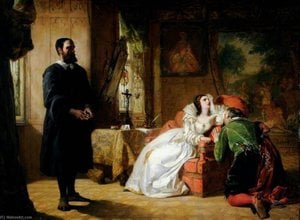
Katharina

William Powell Frith’s ‘Katharina’ is a captivating Victorian portrait showcasing a melancholic theatrical figure in rich detail. Explore Romanticism's drama & emotion through this oil painting.

William Powell Frith (1819-1909) a fost un pictor englez celebru pentru scene detaliate din viața victoriană, inclusiv "Derby Day" și "Râul feroveiar". Stilul său realist surprinde viețile cotidiene cu o observație minuțioasă.

Giclée / Imprimare artistică

Print giclée sau pe canvas de calitate muzeală, cu producție rapidă și opțiuni flexibile de finisare.

P118B $10
P118H $10
P118W $10
P438Z $10
P508JH $12
P508YH $12
P805H $10
P805Z $10
P919BZ $10
P919G $10
P919XJ $10
P959ZH $10
P968JZ $12
W106C $8
W218G $10
W218JH $8
W218Y $10
W307PJ $10
W316G $10
W316PJ $8
W316Y $10
W398PJ $8
W4111J $10
W500HY $15
W500JH $15
W692G $12
W849H $8
W940BG $15
W953PJ $8

Standard
custom
CM
INCH

Alegeți dintre dimensiunile noastre prestabilite, care respectă proporțiile originale ale operei de artă.

lățime
înălțime

Puteți introduce propriile dimensiuni pentru a se potrivi unui anumit cadru sau spațiu. Dacă dimensiunea selectată nu corespunde proporțiilor imaginii originale, vom decupa lucrarea de artă sau vom extinde imaginea cu margini oglindite sau cu o culoare uniformă. Un mockup digital va fi trimis pentru aprobarea dumneavoastră înainte de începerea producției.
Vă rugăm să rețineți că previzualizarea de pe ecran nu reflectă decuparea sau extinderea reală. Doar mockup-ul va arăta cu exactitate compoziția finală.
Deși dimensiunile personalizate sunt disponibile, vă recomandăm să selectați o dimensiune din lista predefinită pentru a păstra proporțiile originale.

Livrare în întreaga lume () în 2 săptămâni, în loc de cele 4/5 săptămâni standard. (6 Iulie)

why_choose_icon
Livrare expres gratuită la nivel mondial
why_choose_icon
Pânză de in de înaltă calitate
why_choose_icon
Asigurare completă pentru transport
why_choose_icon
Garanție de rambursare a taxelor vamale
why_choose_icon
Garanția fidelității culorilor
why_choose_icon
Politica de retur de 60 de zile (doar pentru defecte)
why_choose_icon
Garanție 100% de rambursare
why_choose_icon
Reducere la comenzi multiple

Preț total

-

reproduction

Katharina

Giclée / Imprimare artistică

Dimensiune reproducere

-

Preț total calculat

-

Informații rapide

  • Artist: William Frith
  • Subject or theme: Theatrical figure
  • Movement: Romanticism
  • Location: Cambridge University
  • Medium: Oil on canvas
  • Notable elements: Detailed, organic shapes
  • Influences: Wilkie

Test de cunoștințe despre artă

Fiecare întrebare are un singur răspuns corect.

Întrebare 1:
What is the primary artistic movement associated with William Powell Frith’s ‘Katharina’?
Întrebare 2:
The costume worn by the figure in 'Katharina' is most likely intended to represent:
Întrebare 3:
What technique is most evident in Frith’s use of lines and shading to create the figure's form?
Întrebare 4:
Based on the description, what is a key element of the background in ‘Katharina’?
Întrebare 5:
William Powell Frith was a member of which group of artists known for their depictions of Victorian life?

Descriere obiect de colecție

A Portrait of Melancholy: William Powell Frith’s “Katharina”

William Powell Frith's "Katharina," painted circa 1851, is more than just a portrait; it’s a carefully constructed tableau of Victorian theatricality and subtle emotional depth. This captivating work, housed within the collections of the University of Cambridge, offers a glimpse into the social fabric of mid-19th century London through the eyes of one enigmatic figure. Frith, a master of genre painting and panoramic narrative scenes, meticulously crafted this image to capture not just likeness but also atmosphere and implied story.

The subject herself is shrouded in an air of quiet contemplation. Dressed in a lavish, yet somewhat faded, theatrical costume—a rich crimson gown adorned with intricate lace and a delicate veil—Katharina appears poised on the cusp of performance or perhaps, simply lost in her own thoughts. Her gaze, directed slightly downward, suggests introspection rather than outward engagement. The lighting, soft and diffused, is crucial to the painting’s effect; it avoids harsh contrasts, instead creating subtle shadows that define the contours of her face and clothing, lending a sense of both vulnerability and dignity.

The Romantic Palette and Precise Technique

Frith's masterful command of oil paint is immediately apparent. He employs a rich, layered technique, building up color gradually to achieve remarkable textural detail. The fabric of the gown appears almost tactile—one can practically feel the weight of the velvet and the delicate rustle of the lace. The artist’s use of line is equally deliberate; precise outlines define the figure's features and drapery, creating a sense of solidity and volume that anchors the composition. Notice how he uses short, broken brushstrokes to capture the shimmer of light on the fabric and the intricate details of the veil.

The background, deliberately blurred and indistinct, serves not as a distraction but as an integral part of the painting’s narrative. It hints at an outdoor setting—perhaps a stage or garden—but ultimately emphasizes the central figure. The atmospheric perspective – the subtle fading of colors in the distance – adds depth without overwhelming the viewer's attention.

A Victorian Stage and Symbolic Resonance

"Katharina" is deeply rooted in the conventions of Victorian theatricality, reflecting Frith’s fascination with public life and social rituals. The costume itself is laden with symbolic meaning; it speaks to the world of performance, role-playing, and the constructed identities that were prevalent within Victorian society. The melancholic expression on Katharina's face suggests a deeper emotional complexity beneath the surface – perhaps a longing for something unattainable or a recognition of the transient nature of beauty and fame.

Considering Frith’s broader artistic output, “Katharina” aligns with his penchant for depicting scenes of social interaction and moral commentary. His meticulous attention to detail and his ability to capture both the outward appearance and the underlying emotions of his subjects make this painting a compelling example of Victorian genre art. It invites us to contemplate not only the beauty of the portrait but also the broader cultural context in which it was created.

Further Exploration & Legacy

For those seeking deeper insights into Frith’s work and “Katharina,” resources such as the Art UK website () offer valuable information, including high-resolution images and scholarly essays. Wikipedia provides a comprehensive biographical overview of Frith's life and career (). These resources, along with the Mercer Art Gallery’s exhibition catalogue, provide a rich context for appreciating this remarkable portrait.

Opere de artă similare


Biografie artist

Early Life and Artistic Beginnings

William Powell Frith, a name synonymous with the vibrant tapestry of Victorian England, was born on January 9, 1819, in Aldfield, a small village nestled near Ripon in Yorkshire. His early life, steeped in the traditions of his father’s hotel business, provided a grounding in observation and an appreciation for human interaction – qualities that would profoundly shape his artistic vision. While initially destined for a career as an auctioneer, Frith's innate talent for capturing the nuances of human experience quickly became apparent, prompting his family to encourage him towards a path in art. This decision led him to study at Sass’s Academy in Charlotte Street, London, a prestigious institution renowned for its rigorous training and emphasis on technical skill. Later, he further honed his craft at the Royal Academy Schools, absorbing the techniques and philosophies of established masters.

A Master of Genre Painting

Frith's artistic journey took a decisive turn when he embraced the burgeoning genre painting movement, a style that sought to depict everyday life with remarkable realism and social commentary. Unlike the grand historical narratives favored by some of his contemporaries, Frith focused on capturing the bustling scenes of Victorian society – from the crowded streets of London to the fashionable resorts of Ramsgate. His paintings weren’t merely representations; they were meticulously crafted stories, brimming with detail and imbued with a keen awareness of social dynamics. He quickly gained recognition for his ability to portray the diverse range of characters that populated Victorian England, capturing their personalities, costumes, and interactions with astonishing accuracy.

Influences and Techniques

Frith’s artistic development was significantly shaped by Sir David Wilkie, a 19th-century painter known for his masterful depictions of domestic scenes. Wilkie's focus on portraying the lives of ordinary people in intimate settings served as a crucial inspiration for Frith, who adopted a similar approach in his own work. However, Frith wasn’t simply imitating Wilkie; he developed his own distinctive style, characterized by an extraordinary attention to detail and a remarkable ability to manage large numbers of figures within a single composition. To achieve this level of precision, Frith famously utilized photographic studies created by Robert Howlett, a technique that allowed him to meticulously document the appearance of individuals and objects before translating them onto canvas.

Notable Works and Social Commentary

Frith’s career produced a remarkable body of work, each painting offering a unique glimpse into Victorian society. Perhaps his most celebrated achievement is *Ramsgate Sands* (1854), a vibrant depiction of seaside life that captures the energy and excitement of a popular resort town. Equally iconic is *The Derby Day* (1858), an expansive panorama of Epsom Downs Racecourse, meticulously rendered with hundreds of figures engaged in various activities – from gambling and socializing to admiring the horses. These works weren’t merely aesthetically pleasing; they served as powerful social commentaries, exposing the inequalities and complexities of Victorian society. *The Railway Station* (1862) offered a detailed portrayal of Paddington Station, while *The Sleeping Model* (1853), presented as his Diploma work at the Royal Academy, explored themes of beauty, mortality, and artistic creation. His final series, *The Race for Wealth* (1880), tackled issues of social mobility and ambition with a critical eye.

Legacy and Historical Significance

William Powell Frith’s legacy extends far beyond his individual paintings. He played a pivotal role in elevating genre painting to a respected art form, demonstrating its capacity for both artistic beauty and insightful social commentary. His meticulous attention to detail set a new standard for realism in Victorian art, while his ability to capture the essence of everyday life offered invaluable documentation of a rapidly changing society. Frith’s works continue to be exhibited and studied today, providing a captivating window into the sights, sounds, and social dynamics of 19th-century England. He remains a significant figure in British art history, celebrated for his artistic skill, his keen observation, and his enduring contribution to our understanding of Victorian life.

William Powell Frith

William Powell Frith

1819 - 1909 , Marea Britanie

Detalii rapide

  • Artistic Movement Or Style: Pictură de gen
  • Artists Or Movements Influenced By This Artist: ['The Clique']
  • Artists Who Influenced This Artist: ['David Wilkie']
  • Date Of Birth: 9 ianuarie 1819
  • Date Of Death: 2 noiembrie 1909
  • Full Name: William Powell Frith
  • Nationality: Englez
  • Notable Artworks:
    • Ramsgate Sands
    • Derby Day
    • Stație ferată
  • Place Of Birth: Aldfield, Anglia
Explorați opere de artă organizate pe teme, stiluri și caracteristici.