Early Life and Artistic Beginnings
William Powell Frith, a name synonymous with the vibrant tapestry of Victorian England, was born on January 9, 1819, in Aldfield, a small village nestled near Ripon in Yorkshire. His early life, steeped in the traditions of his father’s hotel business, provided a grounding in observation and an appreciation for human interaction – qualities that would profoundly shape his artistic vision. While initially destined for a career as an auctioneer, Frith's innate talent for capturing the nuances of human experience quickly became apparent, prompting his family to encourage him towards a path in art. This decision led him to study at Sass’s Academy in Charlotte Street, London, a prestigious institution renowned for its rigorous training and emphasis on technical skill. Later, he further honed his craft at the Royal Academy Schools, absorbing the techniques and philosophies of established masters.
A Master of Genre Painting
Frith's artistic journey took a decisive turn when he embraced the burgeoning genre painting movement, a style that sought to depict everyday life with remarkable realism and social commentary. Unlike the grand historical narratives favored by some of his contemporaries, Frith focused on capturing the bustling scenes of Victorian society – from the crowded streets of London to the fashionable resorts of Ramsgate. His paintings weren’t merely representations; they were meticulously crafted stories, brimming with detail and imbued with a keen awareness of social dynamics. He quickly gained recognition for his ability to portray the diverse range of characters that populated Victorian England, capturing their personalities, costumes, and interactions with astonishing accuracy.
Influences and Techniques
Frith’s artistic development was significantly shaped by Sir David Wilkie, a 19th-century painter known for his masterful depictions of domestic scenes. Wilkie's focus on portraying the lives of ordinary people in intimate settings served as a crucial inspiration for Frith, who adopted a similar approach in his own work. However, Frith wasn’t simply imitating Wilkie; he developed his own distinctive style, characterized by an extraordinary attention to detail and a remarkable ability to manage large numbers of figures within a single composition. To achieve this level of precision, Frith famously utilized photographic studies created by Robert Howlett, a technique that allowed him to meticulously document the appearance of individuals and objects before translating them onto canvas.
Notable Works and Social Commentary
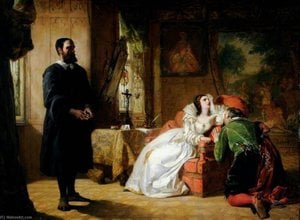
Frith’s career produced a remarkable body of work, each painting offering a unique glimpse into Victorian society. Perhaps his most celebrated achievement is *Ramsgate Sands* (1854), a vibrant depiction of seaside life that captures the energy and excitement of a popular resort town. Equally iconic is *The Derby Day* (1858), an expansive panorama of Epsom Downs Racecourse, meticulously rendered with hundreds of figures engaged in various activities – from gambling and socializing to admiring the horses. These works weren’t merely aesthetically pleasing; they served as powerful social commentaries, exposing the inequalities and complexities of Victorian society. *The Railway Station* (1862) offered a detailed portrayal of Paddington Station, while *The Sleeping Model* (1853), presented as his Diploma work at the Royal Academy, explored themes of beauty, mortality, and artistic creation. His final series, *The Race for Wealth* (1880), tackled issues of social mobility and ambition with a critical eye.
Legacy and Historical Significance
William Powell Frith’s legacy extends far beyond his individual paintings. He played a pivotal role in elevating genre painting to a respected art form, demonstrating its capacity for both artistic beauty and insightful social commentary. His meticulous attention to detail set a new standard for realism in Victorian art, while his ability to capture the essence of everyday life offered invaluable documentation of a rapidly changing society. Frith’s works continue to be exhibited and studied today, providing a captivating window into the sights, sounds, and social dynamics of 19th-century England. He remains a significant figure in British art history, celebrated for his artistic skill, his keen observation, and his enduring contribution to our understanding of Victorian life.
Întrebări și răspunsuri
Există o listă completă a operelor lui William Powell Frith?
Toate lucrările lui William Powell Frith de pe acest site web pot fi explorate în pagina Toate operele de artă a artistului.
Pot explora operele lui William Powell Frith pe baza unor cuvinte cheie?
Operele lui William Powell Frith pot fi explorate pe baza cuvintelor cheie, în pagina de După cuvinte cheie a artistului. Fiecare cuvânt cheie grupează operele aferente.
Cum pot găsi lucrările lui William Powell Frith dintr-o anumită paletă de culori?
Operele lui William Powell Frith pot fi explorate pe baza paletei cromatice în pagina de După paletă de culori a artistului.