Biografie artist
Early Life and Artistic Beginnings
Sir William George Gillies, born in Haddington, a charming market town nestled in East Lothian, Scotland, on September 21st, 1898, embarked on an artistic journey that would profoundly shape the landscape of Scottish art. His early years were marked by a deep connection to his native land – a connection that would become inextricably woven into the very fabric of his paintings. Initially enrolled at the Edinburgh College of Art, Gillies’ studies were abruptly interrupted by the exigencies of World War I, where he served with distinction as an engineer in the Royal Engineers. This experience, steeped in the realities of conflict and loss, undoubtedly left an indelible mark on his psyche and would later inform the somber undertones that occasionally permeate his work. Following the war’s conclusion, Gillies returned to complete his education at the Edinburgh College of Art, ultimately graduating and dedicating himself to a career as both a painter and a teacher – a dual role that profoundly shaped his artistic development and legacy.
A Journey Through Modernism: Cubism and Beyond
Gillies' artistic trajectory began with an enthusiastic exploration of Cubism in the early 1920s, spurred by his studies under André Lhote in Paris and a subsequent visit to Italy. This initial foray into the avant-garde movement is vividly reflected in works such as “Two Pots, Saucer and Fruit” (1933), where he skillfully employed Cézanne’s principles of spatial arrangement alongside the understated color palettes characteristic of artists like Braque and Picasso. However, Gillies possessed a deeply rooted sensibility that resisted rigid adherence to any single style. A pivotal moment arrived in 1934 when he encountered the evocative works of Paul Klee – an encounter that ignited within him a desire for greater imaginative freedom and a more childlike approach to composition. This influence is particularly evident in his later paintings, where bold colors and simplified forms create a sense of wonder and delight. Gradually, Gillies moved away from the strict constraints of Cubism, forging a distinctive style firmly rooted in Scottish landscape traditions and still life compositions.
The 1922 Group: A Hub of Innovation
In 1922, Gillies played a crucial role in establishing the “1922 Group,” alongside fellow artists such as William Crozier, William Geissler, and William MacTaggart. This collective served as more than just an exhibition society; it functioned as a vital incubator for emerging Scottish talent, providing a platform for their work to be showcased at the New Gallery in Edinburgh – a space that had previously been dominated by established artists. The “1922 Group” fostered a remarkable sense of community and collaboration within the Scottish art scene, encouraging experimentation and pushing the boundaries of artistic expression. It was a period of intense creativity and shared ambition, laying the groundwork for future generations of Scottish painters.
Themes and Artistic Expressions: Landscape, Still Life, and Loss
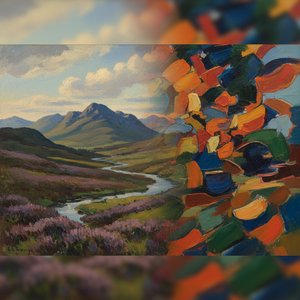
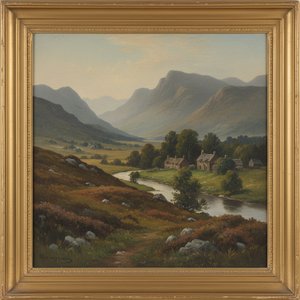
Gillies’ artistic output is characterized by two primary thematic concerns: landscapes and still lifes. He possessed an extraordinary ability to capture the essence of the Lothian, Fife, and Border regions of Scotland – translating their rugged beauty, atmospheric subtleties, and intimate details onto canvas with remarkable sensitivity. His landscapes are not merely depictions of scenery; they are imbued with a profound sense of place, reflecting his deep connection to the land and its history. Simultaneously, Gillies devoted considerable attention to still life compositions, often featuring ceramics crafted by his younger sister, Emma Smith Gillies – whose untimely death in 1936 profoundly impacted him. These still lifes, frequently dominated by muted tones and melancholic subjects, serve as poignant reminders of loss and the fragility of life. The influence of Klee is particularly apparent in these works, where a childlike quality and imaginative use of color are employed to evoke emotion and create a sense of intimacy.
Recognition and Legacy: A Lasting Impact
Throughout his distinguished career, Sir William George Gillies received numerous accolades recognizing his artistic merit and contributions to the Scottish art world. He was elected as an Associate of the Royal Scottish Academy in 1940 and subsequently became a full Academician in 1947. In 1957, he was awarded the Commander of the Order of the British Empire (CBE) for his services to art, followed by knighthood in 1970. His legacy extends far beyond his individual paintings; he served as Principal of the Edinburgh College of Art from 1959 until his retirement in 1966, shaping the artistic development of countless students and leaving an enduring mark on the institution. His works are now held in prestigious collections across Scotland and internationally, including the National Galleries of Scotland, Aberdeen Art Gallery, and the Royal Scottish Academy – a testament to the lasting impact of this remarkable artist. Gillies died peacefully at his home in Temple, Midlothian, on April 15th, 1973, leaving behind a body of work that continues to captivate and inspire viewers today.



 Previzualizare
 Comută pe Print
 Trimite
 Distribuie
 Detalii despre lucrare

 Descarcă
 Produse similare
 Radiografie
 Diapozitive automate
 Statistici


 Vezi mai mult






































 Opțiunea cu sticlă este disponibilă doar pentru dimensiuni de sub 110 cm


![Poplars Along The River Epte, Autumn [1891] — Claude Monet, Impressionism](/media/artworks/images-thumb/87/07/8707b2b24bc1c6d6106417dda55914f5.jpg)