x
PrevizualizarePrevizualizare Previzualizare ARPrevizualizare AR Comandă printul Comandă printulCumpără imaginea Cumpără imaginea TrimiteTrimite
Detalii despre lucrareDetalii despre lucrare Adaugă la favorite Adaugă la favorite DescarcăDescarcă Produse similareProduse similare RadiografieRadiografie Diapozitive automateDiapozitive automate

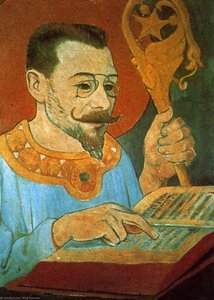
The Corydon shepherd

Discover "The Corydon Shepherd" by Paul Sérusier! A stunning Post-Impressionist landscape featuring a vibrant orange tree & rural charm. Explore this iconic artwork's unique style & timeless appeal.

Paul Sérusier (1864-1927) a fost pictor francez, pionier al artei abstracte și influent în mișcarea Nabis. Celebre sunt operele sale din stilul cloisonnism, precum "The Talisman", care au inspirat generații de artiști.

Reproducere pictată manual în ulei

Pictură în ulei pe pânză, realizată manual de artiștii noștri la dimensiunea și ramele dorite de dumneavoastră, pe comandă. (Comandă printul Comandă printulCumpără imaginea Cumpără imaginea)

P118B $10
P118H $10
P118W $10
P438Z $10
P508JH $12
P508YH $12
P805H $10
P805Z $10
P919BZ $10
P919G $10
P919XJ $10
P959ZH $10
P968JZ $12
W106C $8
W218G $10
W218JH $8
W218Y $10
W307PJ $10
W316G $10
W316PJ $8
W316Y $10
W398PJ $8
W4111J $10
W500HY $15
W500JH $15
W692G $12
W849H $8
W940BG $15
W953PJ $8

Standard
personalizat
CM
INCH

Alegeți dintre dimensiunile noastre prestabilite, care respectă proporțiile originale ale operei de artă.

lățime
înălțime

Puteți introduce propriile dimensiuni pentru a se potrivi unui anumit cadru sau spațiu. Dacă dimensiunea selectată nu corespunde proporțiilor imaginii originale, vom decupa opera de artă sau vom extinde pictura cu elemente suplimentare pictate manual. O simulare digitală vă va fi trimisă pentru aprobare înainte de începerea producției.
Vă rugăm să rețineți că previzualizarea de pe ecran nu reflectă decuparea sau extinderea reală. Doar macheta va arăta cu exactitate compoziția finală.
Deși sunt disponibile dimensiuni personalizate, vă recomandăm să selectați o dimensiune din lista predefinită pentru a păstra proporțiile originale.

Exemple de elemente ce pot fi personalizate: Înlocuiți fața cu fotografia clientului; Adăugați un animal de companie (de exemplu, înlocuiți pisica cu un câine); Includeți un mesaj ascuns în fundal; Schimbați peisajul sau elementele din fundal.
După plasarea comenzii, echipa WahooArt.com va contacta clientul prin e-mail pentru instrucțiuni și îi va furniza o previzualizare a machetei

Livrare în întreaga lume () în 3-4 săptămâni, în loc de cele 5 săptămâni standard. (29 August). Fără compromisuri în ceea ce privește calitatea.

why_choose_icon
Livrare expres gratuită la nivel mondial
why_choose_icon
Pânză de in de înaltă calitate
why_choose_icon
Asigurare completă pentru transport
why_choose_icon
Garanție de rambursare a taxelor vamale
why_choose_icon
Garanția fidelității culorilor
why_choose_icon
Politica de retur în 60 de zile (doar pentru defecte)
why_choose_icon
Garanție de rambursare 100%
why_choose_icon
Ofertă pentru comenzi multiple

Preț total

$ 272

reproduction

The Corydon shepherd

Tehnică de reproducere

Dimensiune reproducere

-

Preț total calculat

$ 272

Informații rapide

  • Artistic style: Symbolic
  • Movement: Post-Impressionism
  • Medium: Oil on canvas
  • Influences: Paul Gauguin
  • Location: Private Collection
  • Subject or theme: Rural life, Pastoral
  • Year: 1913

Test de cultură artistică

Fiecare întrebare are un singur răspuns corect.

Întrebare 1:
What artistic movement is Paul Sérusier primarily associated with?
Întrebare 2:
The painting 'The Corydon Shepherd' prominently features what visual element?
Întrebare 3:
What technique is Sérusier known for employing in his artwork?
Întrebare 4:
In what year was 'The Corydon Shepherd' created?
Întrebare 5:
What is a key characteristic of the painting’s mood and atmosphere?

The Corydon Shepherd - Paul Sérusier: A Pioneer of Breton Impressionism

Paul Sérusier’s “The Corydon Shepherd,” painted in 1888, stands as a cornerstone of Breton Impressionism and arguably the genesis of the influential Nabis movement. Created during his formative years alongside Paul Gauguin at Pont-Aven, this artwork transcends mere depiction; it embodies a profound exploration of landscape and spirituality, reflecting the burgeoning artistic currents challenging traditional academic conventions.

  • Subject Matter: The painting captures a tranquil rural scene featuring a shepherd guiding cattle across a grassy meadow. This idyllic portrayal harkens back to pastoral traditions while simultaneously rejecting detailed realism in favor of capturing mood and atmosphere—a hallmark of Impressionist philosophy.
  • Style & Technique: Sérusier’s masterful use of cloisonnism – a technique pioneered by Gauguin – distinguishes “The Corydon Shepherd.” Cloisonnism involves applying pigment onto raised surfaces separated by thin lines, creating a mosaic-like effect that prioritizes color and form over meticulous shading. Thick impasto brushstrokes dominate the composition, particularly on the foliage and tree trunk, lending textural richness and dynamism to the canvas.
  • Historical Context: Pont-Aven served as a crucible for artistic experimentation during the Belle Époque, attracting artists eager to forge new paths beyond Impressionism’s limitations. Sérusier's collaboration with Gauguin profoundly shaped his aesthetic sensibilities, establishing him as a key figure in challenging established norms and advocating for expressive abstraction.
  • Symbolism: The prominent orange tree serves as a central visual element and carries symbolic weight. Traditionally associated with fertility and vitality, it represents the regenerative power of nature—a theme prevalent throughout Breton landscape art. Its bold color contrasts sharply with the muted tones of the figures, emphasizing their insignificance against the grandeur of the natural world.
  • Emotional Impact: “The Corydon Shepherd” evokes a contemplative mood characterized by serenity and melancholy. The subdued lighting contributes to an atmosphere of quiet introspection, inviting viewers to contemplate the beauty and fragility of rural life—a sentiment deeply rooted in Breton folklore and artistic tradition.

Further research into Sérusier’s work reveals his unwavering dedication to capturing the essence of Breton landscape through innovative techniques and a profound engagement with spiritual contemplation. His influence extended beyond Pont-Aven, inspiring subsequent generations of artists who embraced abstraction and championed expressive color palettes—solidifying his legacy as one of the most significant figures in the development of modern art.

Useful Links: The Corydon Shepherd - Paul Sérusier — Google Arts & Culture

Artist Database: Paul Sérusier

Wikipedia Search: Paul Sérusier


Biografie artist

Early Life and Artistic Foundations

Paul Sérusier, a pivotal figure in the evolution of modern art, was born on November 9th, 1864, within the elegant surroundings of Paris. His lineage boasted a distinguished heritage – his father, a successful businessman involved in the burgeoning perfume industry, provided a privileged upbringing for young Paul. This early exposure to refined tastes and an appreciation for craftsmanship undoubtedly shaped his artistic sensibilities. Following a solid education at the Lycée Condorcet, where he excelled in both philosophy and science, Sérusier’s path led him towards the world of art. He enrolled at the Académie Julian, not as a conventional student seeking formal training, but rather as a seeker of alternative approaches to painting – a reaction against the rigid constraints of the established École des Beaux-Arts. It was during this period that he encountered and befriended fellow artists Maurice Denis and Édouard Vuillard, forging connections that would prove instrumental in shaping his artistic vision. A significant turning point arrived in the summer of 1888 when Sérusier ventured to Pont-Aven in Brittany – a region renowned as a haven for artists seeking inspiration amidst the rugged beauty of the landscape. Here, he encountered Paul Gauguin, an encounter that would profoundly influence his artistic trajectory. Gauguin’s guidance encouraged Sérusier to abandon traditional methods of representation, urging him to embrace pure color, simplify forms, and imbue his work with a sense of personal expression and symbolic meaning. This marked a decisive shift towards abstraction, laying the groundwork for his future innovations.

The Nabis Movement and Cloisonnism

Emerging from the crucible of Pont-Aven’s artistic community, Sérusier became a central figure in the formation of the “Nabis” – a collective name derived from the Hebrew word "nebiim," meaning "prophets." This group, comprised of artists including Pierre Bonnard, Maurice Denis, Henri-Gabriel Ibels, and Paul Ranson, sought to break free from the conventions of Impressionism and Post-Impressionism. The Nabis were united by a shared desire to explore new avenues in artistic expression, delving into symbolism, mysticism, and the occult – subjects often veiled within their paintings. Sérusier’s role as a leader within this movement was crucial; he championed a distinctive approach known as “cloisonnism.” This technique involved dividing the canvas into distinct areas of color, separated by bold, dark outlines—akin to the individual cells of a stained-glass window (hence "cloison," French for "cell"). The resulting effect was strikingly graphic and flattened, prioritizing visual impact over realistic representation. His seminal work, *Le Talisman* (1888), perfectly exemplifies this style, pushing the boundaries of abstraction and foreshadowing the developments of Synthetic Cubism. The painting’s vibrant colors and simplified forms created a powerful emotional resonance, capturing a sense of mystery and spiritual depth.

Key Works and Artistic Evolution

Sérusier's artistic journey spanned several decades, marked by continuous experimentation and refinement. His early works in Brittany—such as *L’Averse* (1893), now housed at the Musée d’Orsay in Paris—demonstrate a contemplative mood, characterized by muted colors and a focus on capturing the essence of the landscape. He also produced evocative portraits, notably his depiction of Paul Ranson (1890), which reveals a keen eye for psychological nuance. A particularly striking piece is *Les Bateaux* (1894), currently residing in the Muzeum Narodowe in Warsaw, showcasing his exploration of form and color within a dynamic composition. Later in his career, Sérusier turned to teaching at the École Ranson, where he instilled his principles of abstraction and expressive painting in a new generation of artists. His final book, *ABC de la peinture* (1921), served as a testament to his lifelong dedication to artistic exploration and education. Throughout these works, Sérusier consistently sought harmony between form and color, striving for an aesthetic that transcended mere representation—a pursuit deeply rooted in his belief that art could evoke emotions and convey spiritual truths.

Legacy and Influence

Paul Sérusier’s contribution to the development of modern art is undeniable. His pioneering work in abstraction, particularly through the technique of cloisonnism, profoundly influenced subsequent generations of artists. He demonstrated a willingness to challenge conventional artistic norms, paving the way for movements like Synthetic Cubism and Expressionism. His exploration of symbolism and his embrace of non-objective forms established him as a key figure in the transition from Impressionism to modern art. Sérusier’s legacy extends beyond his individual works; he played a vital role in shaping the artistic landscape of late 19th and early 20th century France, leaving an enduring mark on the course of art history. His influence can be seen in the work of artists who followed, demonstrating the lasting impact of his innovative approach to painting and his unwavering commitment to artistic expression.

Paul Sérusier

Paul Sérusier

1864 - 1927 , Franța

Detalii rapide

  • Artistic Movement Or Style: Post-Impresionism
  • Artists Or Movements Influenced By This Artist:
    • Nabis
    • Synthetism
    • Cloisonnism
  • Artists Who Influenced This Artist:
    • Paul Gauguin
    • Maurice Denis
  • Date Of Birth: 9 noiembrie 1864
  • Date Of Death: 7 octombrie 1927
  • Full Name: Louis-Paul-Henri Sérusier
  • Nationality: Francez
  • Notable Artworks:
    • L'Averse
    • Portret Paul Ranson
    • Melancolie
    • Șopârla
  • Place Of Birth: Paris, Franța
Explorați opere de artă organizate pe teme, stiluri și caracteristici.