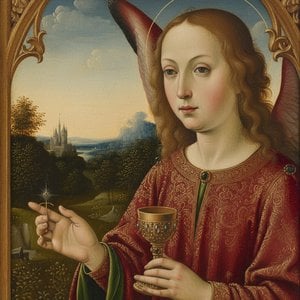
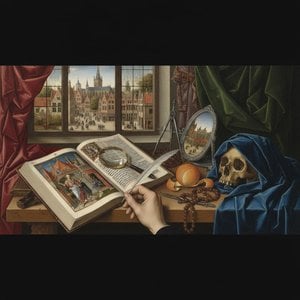
O Viață Luminată: Lumea lui Jan van Eyck
Jan van Eyck, un nume sinonim cu zorii picturii olandeze timpurii și utilizarea revoluționară a vopselei în ulei, rămâne o figură enigmatică în ciuda impactului său monumental asupra istoriei artei. Născut în jurul anului 1390 la Maastricht, situat în ceea ce este astăzi Olanda, Van Eyck a apărut dintr-o familie profund înrădăcinată în tradiția artistică – fratele său mai mare, Hubert, practica și el meseria de pictor, deși detaliile despre opera sa rămân obscure. Deși detaliile biografice precise sunt rare, în special cele referitoare la anii săi formativi, este clar că Jan a posedat un talent înnăscut și a urcat rapid la proeminență în cercurile artistice ale vremii sale. Până în 1422, stabilise deja un atelier la Haga, angajând asistenți și întreprinzând comenzi care semnalau măiestria sa în meserie. Acest succes timpuriu nu se baza doar pe abilitățile artistice; Van Eyck era un om de inteligență și încredere, calități care l-ar atrage curând în serviciul patronilor puternici.
Serviciul Curții Burgundiei: Diplomație și Înflorire Artistică
Un moment crucial în cariera lui Van Eyck a sosit odată cu numirea sa la curtea Burgundiei, mai întâi sub John al III-lea cel Milostiv și ulterior sub Filip cel Bun. Aceasta nu era doar o aranjare de patronaj; Van Eyck a fost încredințat misiuni diplomatice, demonstrând încrederea Ducelui în discreția și inteligența sa. Aceste călătorii prin Europa – inclusiv expediții în Portugalia și Spania – l-au expus la diverse culturi și influențe artistice, modelându-i subtil stilul în evoluție. Curtea i-a oferit nu numai securitate financiară, ci și acces la resurse care i-au permis lui Van Eyck să întreprindă proiecte ambițioase, depășind limitele a ceea ce era realizabil artistic. El nu era doar un pictor *pentru* elitele burgunde; a devenit parte integrantă a lumii lor, reflectând și sporind prestigiul acestora prin arta sa. Această poziție unică i-a oferit un nivel de libertate artistică rar întâlnit de pictorii epocii, permițându-i experimentarea și inovația care vor schimba pentru totdeauna cursul picturii.
Alchimia Uleiului: O Revoluție în Tehnică
Deși nu a fost inventatorul vopselei în ulei – utilizarea sa predatează pe Van Eyck – el este, fără îndoială, maestrul său desăvârșit. Înainte de inovațiile sale, tempera era mediul dominant, oferind capacități limitate de amestecare și un finisaj relativ mat. Van Eyck a deblocat întregul potențial al vopselei în ulei prin stratificarea meticuloasă a glazurilor translucide, obținând un nivel fără precedent de detaliu, luminozitate și realism. Această tehnică a permis gradații subtile de tonuri, culori mai bogate și crearea texturilor care imitau viața însăși. Efectul a fost transformator; suprafețele păreau să strălucească din interior, țesăturile aveau o calitate tactilă, iar portretele capturau nu numai asemănarea, ci și profunzimea psihologică. Măiestria sa nu era doar tehnică – era un proces alchimic, transformând pigmenții în ceva similar realității vii. Această inovație nu a trecut neobservată; a devenit fundația pentru generațiile de pictori care au urmat, schimbând fundamental peisajul artei occidentale.
Capodopere și Moștenire Durabilă
Moștenirea artistică a lui Van Eyck este consolidată de un corpus relativ mic, dar profund influent de lucrări.
Polipticul din Gent (1432), o pictură monumentală, reprezintă întreprinderea sa cea mai ambițioasă – un tapiserie complexă de simbolism religios și strălucire tehnică. La fel de renumit este *Portretul lui Giovanni Arnolfini și a Soției sale* (1434), o lucrare revoluționară în portretistica celebrată pentru realismul, detaliile intricate și simbolismul enigmatic. Alte lucrări notabile includ
Tripticul din Dresda, care demonstrează abilitatea sa de a descrie scene religioase cu o claritate remarcabilă, și izbitorul *Bărbat în Turbant Albastru*, o mărturie a capacității sale de a surprinde caracterul individual. Aceste picturi nu sunt doar reprezentări vizuale; ele sunt ferestre către o altă lume – o lume descrisă meticulos cu o atenție obsesivă la detalii. Influența lui Van Eyck se extinde dincolo de aceste lucrări iconice, modelând dezvoltarea picturii olandeze timpurii și inspirând nenumărați artiști de-a lungul secolelor. A murit în Bruges în 1441, lăsând în urmă o moștenire care continuă să rezoneze astăzi, amintindu-ne de puterea artei de a lumina experiența umană.
- Polipticul din Gent: O capodoperă complexă plină de simbolism religios și detalii uimitoare.
- Portretul lui Giovanni Arnolfini și a Soției sale: Un punct de cotitură în portretistica renascentistă, renumit pentru realismul său și atmosfera misterioasă.
- Tripticul din Dresda: Demonstrează măiestria lui Van Eyck în descrierea scenelor religioase cu o claritate excepțională.
- Bărbat în Turbant Albastru: Un portret captivant care evidențiază abilitatea artistului de a surprinde individualitatea și caracterul.



 Vezi în context
 Comandă pictură realizată manual
 Trimite
 Distribuie
 Detalii
 Guide
Guide

 Descarcă
 Produse similare
 Radiografie
 Diaporama
 Statistici

 Citește mai mult






































 Opțiunea cu sticlă este disponibilă doar pentru dimensiuni de sub 110 cm