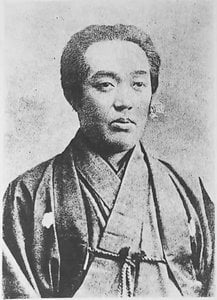
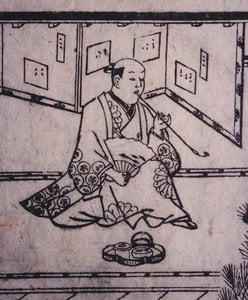
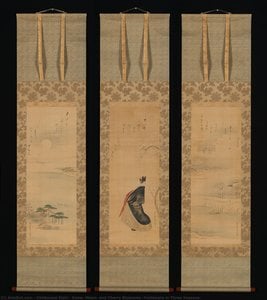
Ukiyo-e masters, in order

39 Famous Ukiyo-e Artistas: The Definitive Ranking

The most famous Ukiyo-e artista is Katsushika Hokusai (1760–1849), known for The Great Wave off Kanagawa, 1830 e A Grande Onda Off Kanagawa. Next come Hiroshige, Kitagawa Utamaro, Yoshitoshi e Torii Kiyonaga. This ranking of the 39 most famous Ukiyo-e artistas runs from Hishikawa Moronobu (born 1618) to Goyō Hashiguchi (born 1880), across 2 countries.

How this list is ranked. Artists whose works our catalogue files under Ukiyo-e, in the order of our fame ranking of artists. Artists without a Wikidata identifier born after 1955 are left out until verified. The Wikipedia figure next to each name is the number of our 32 languages in which Wikipedia has an article on the artist.

  1. The Great Wave off Kanagawa, 1830 de Katsushika Hokusai1Katsushika Hokusai
  2. Early Department from a Daimyo de Hiroshige2Hiroshige
  3. Utamaro Okita de Kitagawa Utamaro3Kitagawa Utamaro

The essentials

Ukiyo-e at a glance

  • 39Artistas
  • 1618–1880Anos de nascimento
  • 2Países de origem
  • 0Mulheres
  • 1Artistas vivos
  • 5.896Obras em nosso catálogo
Cidades com mais nascimentos
Edo (8), Tóquio (6), Tokyo (6), Osaka (2)

Ranked, with their masterpieces

The ranking: 39 Ukiyo-e Artistas and their key works

1of 39

Katsushika Hokusai

Born in Tóquio Wikipedia in 32/32 languages

Katsushika Hokusai

Aos seis anos, o menino já faz seus primeiros esboços, impulsionado por uma fome artística que seu pai, Nakajima Ise, reconhece, mas não consegue direcionar plenamente. Aos doze anos, ele entra no estúdio de Katsukawa Shunshō, aprendendo a precisão exigente da xilogravura ukiyo-e. Por volta de 1831, surge a série Trinta e seis vistas do Monte Fuji, alterando fundamentalmente o escopo da gravura japonesa.

Key works · The 100 most famous works

2of 39

Hiroshige

Japonesa Born in Edo *Ukiyo-e* Wikipedia in 30/32 languages

Hiroshige

His life unfolded during a period of relative peace and prosperity under the Tokugawa shogunate, yet also one marked by increasing social change and eventual westernization – forces that would ultimately contribute to the decline of ukiyo-e even as they amplified Hiroshige’s enduring legacy. Vincent van Gogh was particularly captivated by Hiroshige's prints, creating numerous copies that demonstrated his deep admiration for the Japanese master’s ability to convey emotion through landscape.

Pupil of Utagawa Toyohiro #26

Key works · The 100 most famous works

3of 39

Kitagawa Utamaro

Japonês Born in Kawagoe *Ukiyo-e* Wikipedia in 27/32 languages

Kitagawa Utamaro

Acredita-se que ele tenha nascido como Kitagawa Ichitarō por volta de 1753, embora seu local de nascimento permaneça incerto, com várias localidades sugeridas, incluindo Quioto, Osaka, Yoshiwara (Edo) e Kawagoe. Em 1782, Utamaro uniu forças com o editor Tsutaya Jūzaburō, marcando um momento crucial em sua carreira.

Key works · The 100 most famous works

4of 39

Yoshitoshi

Japonês Born in Edo Ukiyo-e Wikipedia in 15/32 languages

Yoshitoshi

Nascido Owariya Yonejiro em 30 de abril de 1839, o homem que viria a ser conhecido como Tsukioka Yoshitoshi entrou em um mundo em constante mutação. Criado no distrito de Shimbashi, na antiga Edo — hoje conhecida como Tóquio —, sua trajetória foi marcada por uma transição de identidade, tendo também utilizado o nome Taiso Yoshitoshi.

Pupil of Utagawa Kuniyoshi #6

Key works · The 100 most famous works

5of 39

Torii Kiyonaga

Born in Edo Wikipedia in 16/32 languages

Torii Kiyonaga

Nascido como Sekiguchi Shinsuke em 1752, no coração pulsante de Edo (a atual Tóquio), Torii Kiyonaga emergiu como um dos mestres mais celebrados do ukiyo-e, as “imagens do mundo flutuante”. Filho de um livreiro, a vida de juventude de Kiyonaga proporcionou-lhe acesso às correntes culturais da sociedade de Edo, fomentando uma apreciação por seus vibrantes distritos de entretenimento e pelos gostos refinados de seu povo.

Key works · The 100 most famous works

6of 39

Utagawa Kuniyoshi

Japonesa Born in Tóquio Ukiyo-e Wikipedia in 24/32 languages

Utagawa Kuniyoshi

Utagawa Kuniyoshi, nascido Yoshisaburō em 1º de janeiro de 1798, em Edo (atual Tóquio), é uma figura monumental no final da tradição ukiyo-e – as “imagens do mundo flutuante” que capturaram tão vívida a vida japonesa durante o período Edo.

Pupil of Utagawa Toyokuni I #13 · Teacher of Utagawa Yoshitora #32, Yoshitoshi #4, Kawanabe Kyōsai #11

Key works · The 100 most famous works

7of 39

Hozumi Harunobu

Japonesa Born in Edo Ukiyo-e Wikipedia in 21/32 languages

Hozumi Harunobu

Nascido por volta de 1725, sua história familiar foi marcada pelo deslocamento; tanto seu pai, Shigekazu, quanto seu avô, Shigemitsu, foram exilados de Edo para Kyoto. Ele bebeu dos estilos de Torii Kiyomitsu e Ishikawa Toyonobu, ao mesmo tempo em que absorvia elementos das escolas Kawamata e Kanō.

Key works · The 100 most famous works

8of 39

Hishikawa Moronobu

Japonesa Born in Hota Ukiyo-e Wikipedia in 20/32 languages

Hishikawa Moronobu

Hishikawa Moronobu, nascido em Edo (a moderna Tóquio) em 1618, ergue-se como uma figura fundamental na história da arte japonesa. O período Edo (1603-1868) testemunhou um florescimento da cultura urbana, impulsionado pela prosperidade econômica e por uma relativa paz.

Key works · The 100 most famous works

9of 39

Kunisada Utagawa

Japanese Born in Edo Ukiyo-e Wikipedia in 17/32 languages

Kunisada Utagawa

Utagawa Kunisada, nascido Sumida Shōgorō IX no vibrante distrito de Honjo, no Japão, ergue-se como, indiscutivelmente, o artista ukiyo-e mais celebrado do século XIX. Sua produção prolífica e um sucesso comercial sem precedentes consolidaram sua posição como um titã entre seus contemporâneos — Hiroshogia, Hokusai e Kuniyoshi — estabelecendo-o como o campeão incontestável da xilogravura colorida durante o período Edo.

Pupil of Utagawa Toyokuni I #13

Key works · The 100 most famous works

10of 39

Chobunsai Eishi

Japonesa Born in Tóquio Ukiyo-e, Bijin-ga Wikipedia in 11/32 languages

Chobunsai Eishi

Chobunsai Eishi (1756-1829), também conhecido como Hosoda Tokitomi, destaca-se como uma figura fundamental no vibrante mundo da arte japonesa do período Edo. Seus primeiros anos foram definidos pelo serviço na corte Tokugawa, um cargo que ele renunciou em 1789 para se dedicar inteiramente à sua paixão: capturar a beleza requintada das mulheres e as narrativas evocativas da literatura clássica.

Key works · The 100 most famous works

11of 39

Kawanabe Kyōsai

Japanese Born in Koga Ukiyo-e, Caricature, Manga pioneer Wikipedia in 10/32 languages

Kawanabe Kyōsai

In 1874, he helped create what is considered the first manga magazine, Eshinbun Nipponchi, alongside Kanagaki Robun.

Pupil of Utagawa Kuniyoshi #6

Key works · The 100 most famous works

12of 39

Keisai Eisen

Japanese Born in Edo Bunsei Era Ukiyo-e Wikipedia in 15/32 languages

Keisai Eisen

This shift defined the aesthetic of the Bunsei era (1818–1830), a period often characterized by its decadent and psychologically complex atmosphere.

Key works · The 100 most famous works

13of 39

Utagawa Toyokuni I

Japanese Born in Shiba Ukiyo-e Wikipedia in 13/32 languages

Utagawa Toyokuni I

Unlike some artists blessed with immediate, innate talent, Toyokuni appears to have been a dedicated student, meticulously absorbing the techniques and aesthetics of those who preceded him. He wasn't simply copying their styles but rather dissecting them, understanding their strengths, and ultimately synthesizing them into something uniquely his own. While Sharaku is often lauded by modern art historians for his psychological insight, it was Toyokuni who captured the hearts of the Edo public.

Teacher of Utagawa Kunimasa #15, Utagawa Kuniyoshi #6, Utagawa Toyokuni II #35

Key works · The 100 most famous works

14of 39

Hiroshige I

Japanese Born in Tóquio Ukiyo-e

Hiroshige I

A página do artista no AllPaintingsStore.com oferece uma visão abrangente de sua vida e obra, incluindo suas colaborações marcantes com tsuruya kiemon.

Key works · The 100 most famous works

15of 39

Utagawa Kunimasa

Japanese Born in Aizu Utagawa School

Utagawa Kunimasa

Toyokuni's influence ensured Kunimasa wouldn’t simply replicate his mentor’s style but would forge a path toward originality, blending stylistic elements into a cohesive artistic vision. This formative connection established a foundation for Kunimasa’s future endeavors, shaping his perspective on artistic expression and influencing his creative choices throughout his career. Utagawa Kunimasa's influence extends far beyond his own lifetime.

Key works · The 100 most famous works

16of 39

Nishikawa Sukenobu

Japanese Born in Kyoto Ukiyo-e Wikipedia in 9/32 languages

Nishikawa Sukenobu

These works demonstrate his versatility as an artist and underscore his commitment to exploring diverse artistic mediums—a testament to his intellectual curiosity and artistic ambition. Legacy & Recognition: Nishikawa Sukenobu’s enduring legacy resides in his contribution to Japanese art history, particularly his groundbreaking portrayal of women. Influence on Subsequent Artists: Sukenobu’s influence extended far beyond his own lifetime, inspiring subsequent generations of printmakers like Suzuki Harunobu and Kitao Shigemasa.

Key works · The 100 most famous works

17of 39

Sharaku

Japan ukiyo-e Wikipedia in 19/32 languages

Sharaku

Sharaku's technique involved the use of woodblock prints, sometimes employing extravagant methods such as the dusting of mica in the backgrounds to create a glittering effect. His reputation rests largely on his earlier prints, while his later output is often considered to have a declining artistry. His portraits are noted for their ability to capture the psychology of a character through heightened theatrical gestures and expressive, almost caricature-like exaggerations.

Key works · The 100 most famous works

18of 39

Utashige

Japanese Ukiyo-e

Utashige

This quiet revolution – a departure from the more flamboyant styles of his predecessors – established Hiroshige as a uniquely sensitive and poetic artist, whose work continues to inspire awe and contemplation centuries later. Hiroshige’s prints are not simply images; they are windows into the soul of Japan. Following this triumph, he embarked on One Hundred Famous Views of Edo (1856–1858), a vertical-format series that celebrated his hometown with an unprecedented level of detail and emotional depth.

Key works · The 100 most famous works

19of 39

Miyagawa Chōshun

Japanese Born in Miyagawa Ukiyo-e Wikipedia in 9/32 languages

Miyagawa Chōshun

The works of Chōshun are instantly recognizable for their evocative atmosphere and tender execution. This sense of physical weight and warmth contributed to a realism that was both captivating and deeply human. His pupils, including his son Miyagawa Isshō and the talented Miyagawa Chōki, carried forward his dedication to depicting the tastes and textures of urban life.

Key works · The 100 most famous works

20of 39

Goyō Hashiguchi

Dutch Born in Kagoshima Post-Impressionism

Goyō Hashiguchi

Goyō’s initial foray into the art world wasn't through printmaking but rather illustration. In 1907 he won recognition for an ukiyo-e oil painting in the first Bunten show, but felt unfulfilled by public acceptance and returned to woodblock printing. Despite his frail health, exacerbated by beriberi, Goyō continued to produce prints at a remarkable pace from 1915 until his untimely death in 1921 at the age of forty-one.

Key works · The 100 most famous works

21of 39

Isoda Koryūsai

Japanese Born in Tokyo Ukiyo-e Wikipedia in 10/32 languages

Isoda Koryūsai

In the vibrant, bustling heart of the Edo period, a golden age of Japanese creativity, few names resonate with as much elegance and prolific energy as Isoda Koryūsai.

Key works · The 100 most famous works

22of 39

Ogata Gekko

Japanese Born in Tokyo Ukiyo-e, Nihonga Wikipedia in 9/32 languages

Ogata Gekko

His most celebrated series, “One Hundred Views of Mount Fuji” (1896-1905), exemplifies his mastery. Rather than simply depicting the iconic mountain as a static subject, Gekko captured its ever-changing moods and vistas with an astonishing range of perspectives and atmospheric conditions. The First Sino-Japanese War (1894-1895) provided him with opportunities to document this tumultuous period in Japanese history, producing powerful and evocative prints that captured the spirit of national pride and resilience.

Key works · The 100 most famous works

23of 39

Kobayashi Kiyochika

Born in Tóquio Wikipedia in 10/32 languages

Kobayashi Kiyochika

Nascido em Tóquio em 1847, em meio aos dias de declínio do período Edo no Japão, Kobayashi Kiyochika emergiu como uma figura fundamental na transição artística da nação. Inicialmente alinhado ao Xogunato Tokugawa, ele navegou habilmente pelas turbulências políticas que seguiram a Restauração, encontrando, por fim, sua voz como o artista que documentaria o novo Japão.

Pupil of Kawanabe Kyōsai #11

Key works · The 100 most famous works

25of 39

Toyohara Chikanobu

Japanese Shin-hanga

Toyohara Chikanobu

In the twilight of the Edo period and the dawn of a modernizing Japan, few artists captured the profound tension between tradition and transformation as masterfully as Toyohara Chikanobu. Born in 1838, an era of profound cultural shifts, Chikanobu—often recognized by his art name Yōshū Chikanobu —emerged as a monumental figure in the world of Japanese woodblock printing.

Key works · The 100 most famous works

26of 39

Utagawa Toyohiro

Japanese Born in Toyooka Ukiyo-e Wikipedia in 8/32 languages

Utagawa Toyohiro

In the vibrant tapestry of the Edo period, few names resonate with the quiet elegance and technical mastery of Utagawa Toyohiro.

Key works · The 100 most famous works

27of 39

Mizuno Toshikata

Japanese Born in Tokyo Ukiyo-e, Kuchi-e

Mizuno Toshikata

Unlike the often-dramatic compositions favored by Yoshitoshi, Toshikata's works are imbued with an understated elegance and a profound sense of sentimentality. He skillfully employed subtle gradations of tone to create atmospheric effects and to convey nuanced emotional states. During the Sino-Japanese War (1894-1895), Toshikata further established himself as a war artist, producing lithographs that offered a nuanced perspective on the conflict – moving beyond simplistic depictions of battles to capture the human cost of war and the anxieties of a nation at odds with its neighbors.

Key works · The 100 most famous works

28of 39

Ishikawa Toyonobu

Japanese Born in Tokyo Ukiyo-e (Lacquer Print Art) Wikipedia in 7/32 languages

Ishikawa Toyonobu

A hallmark of these compositions was a deliberate stillness, an impassivity in the faces of the subjects reminiscent of the Kaigetsudō school's aesthetic.

Key works · The 100 most famous works

29of 39

Kogyo Sakamaki

Japanese Noh Theatre Prints

Kogyo Sakamaki

He was awarded a prize at the Panama Pacific International Exposition in San Francisco in 1915 for his woodcut “The Horse Market at Kiso,” cementing his reputation as one of Japan's foremost printmakers. Technique & Style: Sakamaki employed a distinctive watercolor -like technique, layering translucent washes to achieve luminous effects that captured the subtle nuances of Noh theatre—a stylistic innovation that distinguished him from his contemporaries.

Key works · The 100 most famous works

30of 39

Hokkei

Born in Tokyo Wikipedia in 8/32 languages

Hokkei

This ambitious project, undertaken in the 1840s, represents a culmination of his artistic sensibilities. The Tale of Genji, considered one of the greatest works of Japanese literature, depicts the complex lives and romantic entanglements within the Heian court. He was undoubtedly influenced by earlier masters of ukiyo-e, particularly Kanenobu and the traditions of Edo period painting.

Pupil of Katsushika Hokusai #1

Key works · The 100 most famous works

31of 39

Sadatora

Japanese Born in Tokyo Ukiyo-e

Sadatora

In the vibrant, pulsing heart of Edo-period Japan, where the concept of ukiyo —the floating world—defined the very essence of existence, Utagawa Sadatora emerged as a master of capturing the ephemeral. His formative years were spent under the rigorous and inspiring tutelage of masters such as Utagawa Yoshitora and Kunisada. Through works such as Women Visiting a Shrine or his celebrated seasonal studies, Sadatora continues to invite us into a world where beauty is most potent precisely because it is fleeting, reminding us to find stillness within the ever-changing winds of life.

Key works · The 100 most famous works

32of 39

Utagawa Yoshitora

Utagawa Yoshitora

Utagawa Yoshitora, a name resonating within the vibrant world of ukiyo-e, stands as a compelling figure whose career bridged traditional Japanese artistry with an increasingly globalized aesthetic. While his work may not be as widely recognized as that of Hokusai or Kuniyoshi, Yoshitora’s contributions are increasingly appreciated by scholars and collectors alike.

Key works · The 100 most famous works

33of 39

Kunichika Toyohara

Japonês Born in Edo Ukiyo-e (Yakusha-e, Bijinga) Wikipedia in 10/32 languages

Kunichika Toyohara

Toyohara Kunichika, um renomado mestre das xilogravuras japonesas, nasceu em 30 de junho de 1835. Reconhecido por seu talento excepcional desde muito jovem, ele tornou-se discípulo de Utagawa Kunisada, o principal gravador de Tóquio, aos treze anos de idade. A profunda compreensão de Kunichika sobre o drama Kabuki conduziu sua produção principal ao gênero yakusha-e, xilogravuras que capturavam a essência dos atores de Kabuki e cenas de peças populares.

Key works · The 100 most famous works

35of 39

Utagawa Toyokuni II

Japanese Ukiyo-e Wikipedia in 4/32 languages

Utagawa Toyokuni II

This ambitious undertaking demanded exceptional artistic skill and logistical organization, cementing Hiroshige’s reputation as a visionary artist who could transform ordinary scenes into sublime expressions of beauty. He skillfully employed Prussian blue, a pigment imported from Europe during this period, to render distant mountains with breathtaking realism —a bold departure from traditional Japanese monochrome prints.

Pupil of Utagawa Toyokuni I #13

Key works · The 100 most famous works

36of 39

Utagawa Yoshitaki

Japanese Born in Osaka Ukiyo-e Wikipedia in 4/32 languages

Utagawa Yoshitaki

He mastered the complex techniques of nishiki-e (錦絵), utilizing multiple woodblocks to achieve a full spectrum of hues – a significant advancement over earlier monochrome or limited-color prints. The influence of Kuniyoshi is evident in Yoshitaki’s bold outlines and dramatic lighting, but he developed a distinctly personal style characterized by a remarkable sensitivity to human expression. Ichiyosai Yoshitaki’s prolific output provides an invaluable window into 19th-century Japanese society.

Key works · The 100 most famous works

37of 39

Utagawa Kunitsuna Ii, Ichiransai, Sadashige

Japanese Ukiyo-e

Utagawa Kunitsuna Ii, Ichiransai, Sadashige

Pinpointing Kunitsuna’s artistic lineage proves challenging due to the limited documentation surrounding his early career. He also appears to have been influenced by the emerging trends in Western art, particularly in his use of perspective and shading – though he never fully abandoned the traditional conventions of ukiyo-e. However, scholars believe he was heavily influenced by earlier masters of bijin-ga such as Kitagawa Utamaro and Keisai Eisen.

Key works · The 100 most famous works

38of 39

Utagawa Yoshikazu

Japanese Born in Edo Ukiyo-e, Yokohama-e Wikipedia in 3/32 languages

Utagawa Yoshikazu

As with most Ukiyo-e artists of his time, Yoshikazu employed the traditional collaborative process of woodblock printing. The influence of Kuniyoshi is noticeable in his use of dramatic lighting and bold outlines, though Yoshikazu developed a more restrained and observational style.

Pupil of Utagawa Kuniyoshi #6

Key works · The 100 most famous works

39of 39

Shunkōsai Hokushū

Japanese Born in Osaka Kamigata-e Wikipedia in 3/32 languages

Shunkōsai Hokushū

Shunkōsai Hokuchō (春曙斎 北頂), born around 1802 in Osaka, Japan, stands as a fascinating figure within the vibrant tapestry of Edo-period art history. The Osaka Style Emerges: Unlike the Edo-period’s dominant trend of producing prints in Tokyo, Hokuchō remained firmly rooted in Osaka. While Hokuchō may not command the same level of fame as Hokusai or Hiroshige, his quiet mastery of tsukuri-e and his profound understanding of theatrical emotion solidified his place as a pivotal figure in Osaka’s artistic heritage.

Pupil of Katsushika Hokusai #1

Key works · The 100 most famous works

The paintings behind the names

Famous Ukiyo-e works and the artists who made them

  1. The Great Wave off Kanagawa, 1830 de Katsushika Hokusai

    The Great Wave off Kanagawa, 1830

    Katsushika Hokusai

    1834 · Grand Palais, Paris

  2. Early Department from a Daimyo de Hiroshige

    Early Department from a Daimyo

    Hiroshige

    Nakagawa-machi Bato Hiroshige Museum of Art, Nagasaki

  3. Utamaro Okita de Kitagawa Utamaro

    Utamaro Okita

    Kitagawa Utamaro

  4. Tokugawa Iemitsu Recebendo Senhores em Audiência de Yoshitoshi

    Tokugawa Iemitsu Recebendo Senhores em Audiência

    Yoshitoshi

    1875 · Museu de Arte do Condado de Los Angeles

  5. Two Beauties after the Bath de Torii Kiyonaga

    Two Beauties after the Bath

    Torii Kiyonaga

    701 · Metropolitan Museum of Art, Nova York

  6. Musashi on the back of a whale de Utagawa Kuniyoshi

    Musashi on the back of a whale

    Utagawa Kuniyoshi

  7. The Courtesan Osen de Hozumi Harunobu

    The Courtesan Osen

    Hozumi Harunobu

  8. Standing Beauty de Hishikawa Moronobu

    Standing Beauty

    Hishikawa Moronobu

    1656 · Metropolitan Museum of Art, Nova York

Through time

A Ukiyo-e timeline in masterpieces

  1. 1656
  2. 1785
  3. 1800
  4. 1809
  5. 1825
  6. 1834
  7. 1855
  8. 1857
  9. 1858
  10. 1870
  11. 1873
  12. 1875
  13. 1880
  14. 1888

In figures

By the numbers

All of them, in order

List of the 39 famous Ukiyo-e artistas

  1. 1Katsushika HokusaiKatsushika Hokusai1760–1849
  2. 2HiroshigeHiroshigeJaponesa · 1797–1858
  3. 3Kitagawa UtamaroKitagawa UtamaroJaponês · 1753–1806
  4. 4YoshitoshiYoshitoshiJaponês · 1839–1892
  5. 5Torii KiyonagaTorii Kiyonaga1752–1815
  6. 6Utagawa KuniyoshiUtagawa KuniyoshiJaponesa · 1798–1861
  7. 7Hozumi HarunobuHozumi HarunobuJaponesa · 1724–1770
  8. 8Hishikawa MoronobuHishikawa MoronobuJaponesa · 1618–1694
  9. 9Kunisada UtagawaKunisada UtagawaJapanese · 1786–1865
  10. 10Chobunsai EishiChobunsai EishiJaponesa · 1756–1829
  11. 11Kawanabe KyōsaiKawanabe KyōsaiJapanese · 1831–1889
  12. 12Keisai EisenKeisai EisenJapanese · 1790–1848
  13. 13Utagawa Toyokuni IUtagawa Toyokuni IJapanese · 1769–1825
  14. 14Hiroshige IHiroshige IJapanese · 1797–1858
  15. 15Utagawa KunimasaUtagawa KunimasaJapanese · 1773–1810
  16. 16Nishikawa SukenobuNishikawa SukenobuJapanese · 1671–1750
  17. 17SharakuSharakuJapan ·
  18. 18UtashigeUtashigeJapanese ·
  19. 19Miyagawa ChōshunMiyagawa ChōshunJapanese · 1683–1753
  20. 20Goyō HashiguchiGoyō HashiguchiDutch · 1880–1921
  21. 21Isoda KoryūsaiIsoda KoryūsaiJapanese · 1735–1790
  22. 22Ogata GekkoOgata GekkoJapanese · 1859–1920
  23. 23Kobayashi KiyochikaKobayashi Kiyochika1847–1915
  24. 24Adachi GinkoAdachi GinkoJapanese · nascido(a) em 1853
  25. 25Toyohara ChikanobuToyohara ChikanobuJapanese · 1838–1912
  26. 26Utagawa ToyohiroUtagawa ToyohiroJapanese · 1773–1828
  27. 27Mizuno ToshikataMizuno ToshikataJapanese · 1866–1908
  28. 28Ishikawa ToyonobuIshikawa ToyonobuJapanese · 1711–1785
  29. 29Kogyo SakamakiKogyo SakamakiJapanese · 1869–1927
  30. 30HokkeiHokkei1780–1850
  31. 31SadatoraSadatoraJapanese ·
  32. 32Utagawa YoshitoraUtagawa Yoshitora
  33. 33Kunichika ToyoharaKunichika ToyoharaJaponês · 1835–1900
  34. 34KunisadaKunisadaJaponês · 1823–1880
  35. 35Utagawa Toyokuni IIUtagawa Toyokuni IIJapanese · 1777–1835
  36. 36Utagawa YoshitakiUtagawa YoshitakiJapanese · 1841–1899
  37. 37Utagawa Kunitsuna Ii, Ichiransai, SadashigeUtagawa Kunitsuna Ii, Ichiransai, SadashigeJapanese ·
  38. 38Utagawa YoshikazuUtagawa YoshikazuJapanese ·
  39. 39Shunkōsai HokushūShunkōsai HokushūJapanese ·

Your questions, answered

Frequently asked questions

Keep reading

Further reading on WahooArt.com

Other movements

Famous artists of other movements

Other periods

Famous artists of other periods

More rankings

Explore more