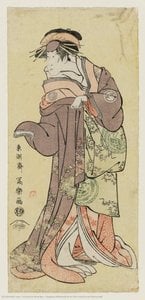
Sharaku: As 100 Pinturas Mais Famosas

Kabuki Actor Ōtani Oniji III as Yakko Edobei (1794) é a pintura mais famosa de Sharaku, guardada pelo Metropolitan Museum of Art em Nova York. Bandō Hikosaburō III as Kudōzaemon Suketsune (1795) e Iwai Hanshirō IV as O-Han of the Shinanoya (1795) são as próximas duas obras que o mundo melhor conhece. Dos 147 trabalhos de Sharaku em nosso catálogo, aqui estão os 100 que colecionadores e visitantes de museus mais observam, com o ano, o museu e a história de cada um.

Classificado de acordo com o nosso índice de popularidade, que combina buscas, visitas e pedidos de cada obra. Atualizado em Outubro 2026. Cada obra-prima nesta página pode ser encomendada como uma reprodução em óleo pintada à mão, com qualidade de museu, ou como uma impressão de fine art, no tamanho de sua escolha.

Retrato de Sharaku
Sharaku
Movimento
Ukiyo-e
Obras em nosso catálogo
147
Mais famosas
Kabuki Actor Ōtani Oniji III as Yakko Edobei (1794)
Mais obras em
Metropolitan Museum of Art

Top 10: as pinturas mais conhecidas de Sharaku

Kabuki Actor Ōtani Oniji III as Yakko Edobei (1794) de Sharaku
1

Kabuki Actor Ōtani Oniji III as Yakko Edobei

1794 · Woodblock Print · Metropolitan Museum of Art, Nova York

In the fleeting moments of the Edo period, few artists captured the raw, unbridled energy of human emotion as piercingly as Tōshūsai Sharaku. His masterpiece, Kabuki Actor Ōtani Oniji III as Yakko Edobei, serves as a breathtaking window into the heart of Kabuki theater, frozen in time since 1794. This woodblock print does not merely depict a performer; it captures a psychological crescendo. The actor, portrayed with startling realism, is…

Bandō Hikosaburō III as Kudōzaemon Suketsune (1795) de Sharaku
2

Bandō Hikosaburō III as Kudōzaemon Suketsune

1795 · Woodblock Print

In the fleeting, vibrant world of the Edo period, few images capture the raw, theatrical intensity of the stage quite like Tōshūsai Sharaku’s 1795 masterpiece, Bandō Hikosaburō III as Kudōzaemon Suketsune. This monochrome woodblock print is not merely a portrait; it is a psychological study of a moment frozen in time. The subject, the celebrated Kabuki actor Bandō Hikosaburō III, is captured mid-performance, embodying the formidable character of Kudōzaemon Suketsune.…

Iwai Hanshirō IV as O-Han of the Shinanoya (1795) de Sharaku
3

Iwai Hanshirō IV as O-Han of the Shinanoya

1795 · Woodblock Print

In the fleeting, vibrant world of Edo-period Japan, few artists captured the raw, theatrical essence of human emotion as piercingly as Tōshūsai Sharaku. His masterpiece, Iwai Hanshirō IV as O-Hano of the Shinanoya, serves as a breathtaking window into the Kabuki stage of 1795. This woodblock print does not merely depict an actor in costume; it captures a moment of profound character study. The subject, portrayed with a striking three-quarter…

Nakajima Wadaemon I as Tanbaya Hachiemon (1794) de Sharaku
4

Nakajima Wadaemon I as Tanbaya Hachiemon

1794 · Woodblock Print

In the fleeting moments of the Edo period, few artists captured the raw, unvarnished essence of human emotion as strikingly as Tōshūsai Sharaku. His masterpiece, Nakajima Wadaemon I as Tanbaya Hachiemon, serves as a profound window into the theatrical soul of 1794 Japan. This woodblock print does not merely depict an actor; it captures a psychological state. The subject, portrayed with Sharaku’s signature intensity, sits in a moment of palpable…

Iwai Hanshirō IV as Kōtō no Naishi (1795) de Sharaku
5

Iwai Hanshirō IV as Kōtō no Naishi

1795 · Woodblock Print

In the fleeting history of Japanese ukiyo-e, few names command as much intrigue and reverence as Tōshūsai Sharaku. His brief, explosive appearance on the art scene—lasting a mere ten months between 1794 and 1795—left behind a legacy that continues to haunt and fascinate the modern collector. This particular masterpiece, Iwai Hanshirō IV as Kōtō no Naishi, serves as a profound testament to Sharaku’s unparalleled ability to capture the raw, psychological…

Morita Kan'ya VIII as Genkaibō Ajari (1794) de Sharaku
8

Morita Kan'ya VIII as Genkaibō Ajari

1794 · Woodblock Print

In the fleeting moments of the Edo period, few artists captured the raw, electric energy of the Kabuki stage as profoundly as Tōshūsai Sharaku. His masterpiece, Morita Kan'ya VIII as Genkaibō Ajari, serves as a breathtaking window into a vanished era of Japanese theatrical splendor. This woodblock print is not merely a portrait; it is a captured heartbeat, a frozen instant of high drama where the boundary between performer and…

Matsumoto Koshiro IV as the Fish Peddler Gorobei de Sharaku
9

Matsumoto Koshiro IV as the Fish Peddler Gorobei

Woodblock Print · Metropolitan Museum of Art, Nova York

To stand before a portrait in the style of Tōshūsai Sharaku is to confront not merely an image, but a moment suspended between life and memory. This depiction of Matsumoto Koshiro IV as the fish peddler Gorobei captures the very essence of the Edo period's vibrant, yet often melancholic, undercurrents. The print possesses an almost startling immediacy; it feels less like an artistic rendering and more like a captured breath…

Nakamura Nakazō II, also called Sakaiya Shūkaku (1794) de Sharaku
10

Nakamura Nakazō II, also called Sakaiya Shūkaku

1794 · Woodblock Print

This woodblock print presents a portrait of Nakamura Nakazō II, also called Sakaiya Shūkaku. The subject was a prominent Japanese kabuki actor, captured during a period of significant theatrical activity in Edo. The work is attributed to the artist Toshusai Sharaku, a figure whose brief and intense presence in the ukiyo-e genre remains a subject of much interest. This specific piece dates to 1794.

O restante do ranking de Sharaku, de 11 a 100

The Actor Sawamura Sojuro III (1795) de Sharaku
#16

The Actor Sawamura Sojuro III

1795 · Metropolitan Museum of Art

In the fleeting history of Japanese Ukiyo-e, few names evoke as much mystery and intense fascination as Tōshūsai Sharaku. His brief, explosive appearance on the art scene—lasting a…

Leve para casa →
Ebisu (1795) de Sharaku
#21

Ebisu

1795

In the fleeting, brilliant ten-month career of Tōshūsai Sharaku, few works capture the vibrant pulse of Japanese folklore as effectively as his 1795 masterpiece, Ebisu. This woodblock print…

Leve para casa →

Pinturas de Sharaku por período

Os temas que Sharaku mais pintou

Os quatro temas que mais se repetem entre estas obras-primas, com o melhor exemplo de cada um.

Onde ver as pinturas de Sharaku

Os 5 museus que detêm a maioria das pinturas desta página.

Museu Cidade Obras de Sharaku Pinturas desta lista
Metropolitan Museum of Art, Nova YorkMetropolitan Museum of Art Nova York 36 Kabuki Actor Ōtani Oniji III as Yakko Edobei, Matsumoto Koshiro IV as the Fish Peddler Gorobei, Bandō Mitsugorō II as Ishii Genzō in the Play "Hana Ayame Bunroku Soga"
Brooklyn Museum, BrooklynBrooklyn Museum Brooklyn 3 Segawa Kikujuro Iii as Oshizu, Wife of Tanabe Bunzo, Kubuki Actor Ichikawa Ebizō as Takemura Sadanoshin, Daizo the Substitute
Art Institute of Chicago, ChicagoArt Institute of Chicago Chicago 1 Otafuku Throwing Black Beans to Chase Away the Demons on New Year's Eve
Tokyo National Museum, TóquioTokyo National Museum Tóquio 1 Kabuki Actor Ōtani Tokuji as Monogusa Tarō
Toledo Museum of Art, ToledoToledo Museum of Art Toledo 1 Onoe Matsusuke as Ashikaga TukaujiPublished by Tsutaya Juzaburo

Sharaku ao longo dos anos: as obras-primas de cada ano

Entre 1794 e 1795, totalizando 2 anos, Sharaku pintou todas as obras datadas nesta página: aqui estão elas, ano a ano.

  1. 1794
    Kabuki Actor Ōtani Oniji III as Yakko Edobei (1794) de Sharaku
    #1 de 100

    Kabuki Actor Ōtani Oniji III as Yakko Edobei

    Metropolitan Museum of Art

    In the fleeting moments of the Edo period, few artists captured the raw, unbridled energy of human emotion as piercingly as Tōshūsai Sharaku. His masterpiece, Kabuki Actor Ōtani…

  2. 1794
    Nakajima Wadaemon I as Tanbaya Hachiemon (1794) de Sharaku
    Nº 4 de 100

    Nakajima Wadaemon I as Tanbaya Hachiemon

    In the fleeting moments of the Edo period, few artists captured the raw, unvarnished essence of human emotion as strikingly as Tōshūsai Sharaku. His masterpiece, Nakajima Wadaemon I…

  3. 1794
  4. 1794
    Morita Kan'ya VIII as Genkaibō Ajari (1794) de Sharaku
    #8 de 100

    Morita Kan'ya VIII as Genkaibō Ajari

    In the fleeting moments of the Edo period, few artists captured the raw, electric energy of the Kabuki stage as profoundly as Tōshūsai Sharaku. His masterpiece, Morita Kan'ya…

  5. 1794
    Nakamura Nakazō II, also called Sakaiya Shūkaku (1794) de Sharaku
    Nº 10 de 100

    Nakamura Nakazō II, also called Sakaiya Shūkaku

    This woodblock print presents a portrait of Nakamura Nakazō II, also called Sakaiya Shūkaku. The subject was a prominent Japanese kabuki actor, captured during a period of significant…

  6. 1794
  7. 1794
  8. 1794
    Nakajima Wadaemon I as Migawari no Jizō (1794) de Sharaku
    Nº 20 de 100

    Nakajima Wadaemon I as Migawari no Jizō

    This striking woodblock print, created by the enigmatic artist Tōshūsai Sharaku in 1794, offers a captivating portrait of Nakajima Wadaemon I embodying the role of Migawari no Jizō.…

  9. 1794
  10. 1794
  11. 1794
  12. 1794
  13. 1795
    Bandō Hikosaburō III as Kudōzaemon Suketsune (1795) de Sharaku
    #2 de 100

    Bandō Hikosaburō III as Kudōzaemon Suketsune

    In the fleeting, vibrant world of the Edo period, few images capture the raw, theatrical intensity of the stage quite like Tōshūsai Sharaku’s 1795 masterpiece, Bandō Hikosaburō III…

  14. 1795
    Iwai Hanshirō IV as O-Han of the Shinanoya (1795) de Sharaku
    Nº 3 de 100

    Iwai Hanshirō IV as O-Han of the Shinanoya

    In the fleeting, vibrant world of Edo-period Japan, few artists captured the raw, theatrical essence of human emotion as piercingly as Tōshūsai Sharaku. His masterpiece, Iwai Hanshirō IV…

  15. 1795
    Iwai Hanshirō IV as Kōtō no Naishi (1795) de Sharaku
    #5 de 100

    Iwai Hanshirō IV as Kōtō no Naishi

    In the fleeting history of Japanese ukiyo-e, few names command as much intrigue and reverence as Tōshūsai Sharaku. His brief, explosive appearance on the art scene—lasting a mere…

  16. 1795
  17. 1795
  18. 1795
  19. 1795
    The Actor Sawamura Sojuro III (1795) de Sharaku
    Posição 16 de 100

    The Actor Sawamura Sojuro III

    Metropolitan Museum of Art

    In the fleeting history of Japanese Ukiyo-e, few names evoke as much mystery and intense fascination as Tōshūsai Sharaku. His brief, explosive appearance on the art scene—lasting a…

  20. 1795
  21. 1795
    Segawa Kikunojo III in an Unidentified Role (1795) de Sharaku
    Nº 18 de 100

    Segawa Kikunojo III in an Unidentified Role

    Metropolitan Museum of Art

    In the fleeting moments of the Edo period, few names ignite as much curiosity as Tōshūsai Sharaku. His brief, explosive career—lasting a mere ten months between 1794 and…

  22. 1795
    Ebisu (1795) de Sharaku
    Posição 21 de 100

    Ebisu

    In the fleeting, brilliant ten-month career of Tōshūsai Sharaku, few works capture the vibrant pulse of Japanese folklore as effectively as his 1795 masterpiece, Ebisu. This woodblock print…

  23. 1795
  24. 1795
  25. 1795

Pinturas de Sharaku: perguntas frequentes

Qual é a pintura mais famosa de Sharaku?Mostrar a resposta

Kabuki Actor Ōtani Oniji III as Yakko Edobei (1794), Metropolitan Museum of Art, Nova York. Seguem-se Bandō Hikosaburō III as Kudōzaemon Suketsune (1795) e Iwai Hanshirō IV as O-Han of the Shinanoya (1795).

Quais são as 10 pinturas mais famosas de Sharaku?Mostrar a resposta

Kabuki Actor Ōtani Oniji III as Yakko Edobei, Bandō Hikosaburō III as Kudōzaemon Suketsune, Iwai Hanshirō IV as O-Han of the Shinanoya, Nakajima Wadaemon I as Tanbaya Hachiemon, Iwai Hanshirō IV as Kōtō no Naishi, Bandō Hikosaburō III as Godai Saburō Chikatada, Osagawa Tsuneyo II as Okinu, wife of Chōemon, Morita Kan'ya VIII as Genkaibō Ajari, Matsumoto Koshiro IV as the Fish Peddler Gorobei e Nakamura Nakazō II, also called Sakaiya Shūkaku. O ranking acima apresenta o ano e o museu de cada uma.

Quantas pinturas de Sharaku existem?Mostrar a resposta

Nosso catálogo lista 147 obras de Sharaku, datadas de 1794 a 1795.

Onde posso ver as pinturas mais famosas de Sharaku?Mostrar a resposta

A maioria deles está em Metropolitan Museum of Art (Nova York), Brooklyn Museum (Brooklyn) e Art Institute of Chicago (Chicago). A tabela acima lista os museus um a um.

Em que período Sharaku pintou as suas obras mais conhecidas?Mostrar a resposta

Em 1794: 49 das 100 obras nesta página datam dessa época, entre elas Kabuki Actor Ōtani Oniji III as Yakko Edobei.

Qual é a pintura mais antiga e a mais recente de Sharaku?Mostrar a resposta

A obra mais antiga nesta página é de Kabuki Actor Ōtani Oniji III as Yakko Edobei (1794), e a mais recente é de Bandō Hikosaburō III as Kudōzaemon Suketsune (1795).

Quais temas Sharaku pintou?Mostrar a resposta

Kabuki actor (17), Woodblock print (17) e Portrait (11), entre as 100 obras nesta página.

Sobre o que Sharaku pintou e com o que?Mostrar a resposta

Woodblock Print: 29 de um total de 100 obras nesta página.

A qual movimento pertence a arte de Sharaku?Mostrar a resposta

Ukiyo-e, como mostram as pinturas nesta página.

Quais pinturas de Sharaku o Metropolitan Museum of Art possui?Mostrar a resposta

Kabuki Actor Ōtani Oniji III as Yakko Edobei, Matsumoto Koshiro IV as the Fish Peddler Gorobei e Bandō Mitsugorō II as Ishii Genzō in the Play "Hana Ayame Bunroku Soga" estão entre as 19 obras nesta página pertencentes ao Metropolitan Museum of Art, Nova York.

Onde posso comprar uma reprodução de Sharaku?Mostrar a resposta

Sim. Todas as pinturas desta página podem ser encomendadas como uma reprodução em óleo pintada à mão com qualidade de museu ou como uma impressão de fine art, no tamanho de sua escolha, a partir da própria página da pintura.

Sharaku: biografia

The Enigmatic Presence of Sharaku

Sharaku was a Japanese ukiyo-e print designer active between 1794 and 1795. His prolific output focused primarily on yakusha-e, which are portraits of kabuki actors. These works often emphasized the dynamism and energy of the subjects, frequently utilizing a realism that highlighted unflattering details such as wrinkles or large noses. His compositions often featured a focus on facial expressions, sometimes presenting a single figure or contrasting different types of faces.

The artist's career was brief, spanning approximately ten months. His work is categorized into four distinct periods:

Artistic Style and Legacy

Sharaku's technique involved the use of woodblock prints, sometimes employing extravagant methods such as the dusting of mica in the backgrounds to create a glittering effect. His portraits are noted for their ability to capture the psychology of a character through heightened theatrical gestures and expressive, almost caricature-like exaggerations.

Despite the mystery surrounding his true identity, his work has been recognized for its mastery of the medium. His reputation rests largely on his earlier prints, while his later output is often considered to have a declining artistry. His subjects included kabuki actors, sumo wrestlers, and warriors.

Todas as 147 obras de Sharaku →