Visualizar na paredeVisualizar na parede Ver em RAVer em RA Comprar impressão Comprar impressãoComprar pintura feita à mão Comprar pintura feita à mão CompartilharCompartilhar
DetalhesDetalhes Adicionar aos favoritos Adicionar aos favoritos Baixar imagemBaixar imagem SemelhantesSemelhantes Raio XRaio X SlideshowSlideshow

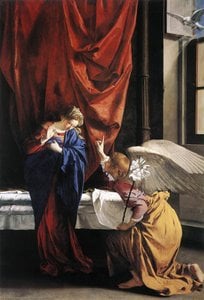
Annunciation

Witness the Annunciation by Domenico Beccafumi, a captivating Baroque masterpiece showcasing divine grace and purity. Explore rich colors, dramatic lighting & intricate detail.

Domenico Beccafumi (1486-1551) foi um pintor sienês inovador do Maneirismo, conhecido por suas pinturas dramáticas e detalhes ornamentados, especialmente em afrescos como "O Massacre dos Inocentes" e a decoração da Catedral de Siena.

Adquira uma imagem digital de alta resolução e aprimorada, muito superior à prévia online.

Cada arquivo é meticulosamente preparado por nossos especialistas internos, utilizando ferramentas avançadas e retoques manuais de alta precisão. Garantimos que cada imagem apresente clareza excepcional, fidelidade de cores e detalhes minuciosos.

O arquivo final é entregue por e-mail em até 72 horas, otimizado para uso imediato em ambientes profissionais, editoriais e de impressão. Esta é a mesma qualidade utilizada por estúdios de design de alto nível, editoras e galerias.

Imagem Digital

Baixe um arquivo de alta resolução para exibição pessoal, impressão e projetos criativos. (Comprar impressão Comprar impressãoComprar pintura feita à mão Comprar pintura feita à mão)

Preço Total

$ 24,90

Incluído em cada compra de imagem digital

Entrega Digital Especializada e Garantida

Ao escolher o WahooArt.com, você não está apenas adquirindo uma imagem — você está recebendo uma obra de arte digital profissionalmente aprimorada, elaborada com precisão e com garantia de satisfação. Aqui está tudo o que acompanha seu pedido, automaticamente:

shipping_icon
Entrega rápida por e-mail

O seu arquivo de imagem digital em alta resolução será enviado por e-mail em até 72 horas após o pedido — pronto para uso imediato.

canvas_icon
Arquivo Digital com IA Otimizado

Sua obra de arte é otimizada profissionalmente por meio de ferramentas avançadas de IA e edição manual, garantindo o máximo de detalhes, clareza e precisão de cores.

insurance_icon
Reenvio gratuito vitalício

Apagou ou perdeu o seu ficheiro acidentalmente? Não se preocupe – nós reenviamos para si a qualquer momento, gratuitamente.

tax_icon
Sem Taxas de Importação - Sempre

Desfrute da sua obra de arte instantaneamente, sem taxas alfandegárias, impostos ou custos de entrega — downloads digitais são sempre isentos de taxas.

color_icon
Garantia de Fidelidade de Cores

Garantimos que sua imagem digital reflita as cores originais com a maior fidelidade possível, utilizando ferramentas profissionais e gerenciamento de cores.

return_icon
Garantia de Satisfação de 100 Dias

Se você não estiver satisfeito com sua imagem digital, nós a revisaremos ou reembolsaremos 100% dentro de 100 dias — sem perguntas.

guarantee_icon
Garantia de Reembolso 100%

Não está satisfeito? Receba o reembolso total em até 100 dias após o recebimento do seu arquivo digital — sem perguntas.

discount_icon
Descontos para pedidos em lote

Compre 3 imagens, economize 10% - Compre 5, economize 15% - Compre 10+, economize 20%. Ideal para projetos criativos, galerias e agências.

Informações Rápidas

  • Subject or theme: Religious scene, Annunciation
  • Influences: Sienese school of painting
  • Movement: Renaissance-Mannerism
  • Medium: Oil painting
  • Artist: Domenico di Pace Beccafumi
  • Title: Annunciation

Quiz de Arte

Cada pergunta possui apenas uma resposta correta.

Pergunta 1:
What artistic style best characterizes Domenico Beccafumi’s ‘Annunciation’?
Pergunta 2:
The composition of the artwork primarily utilizes what geometric structure to guide the viewer's eye?
Pergunta 3:
What symbolic meaning is most directly associated with the flowers presented by the angel in the artwork?
Pergunta 4:
Based on the description, what material is primarily used to create this artwork?

A Vision of Divine Announcement: Domenico Beccafumi's "Annunciation"

This captivating artwork presents a scene steeped in Christian theology – the Annunciation. It depicts the pivotal moment when the Archangel Gabriel announces to the Virgin Mary that she will conceive and bear Jesus, the Son of God. Painted by Domenico di Pace Beccafumi, one of the last significant figures of the Sienese school, this piece offers a unique perspective on a universally recognized biblical narrative.

Style & Technique: A Provincial Mannerism

Beccafumi’s style is characterized as provincial Mannerism. Unlike the more refined and classical approaches prevalent in Florence at the time, Beccafumi's work retains a distinct medieval sensibility. The painting employs oil on canvas or wood panel – traditional materials for the period – allowing for rich pigment application and subtle blending. Notice the dramatic use of light and shadow, a hallmark of Baroque influence even within this Mannerist context. Strong highlights illuminate Mary’s face and garments, creating a focal point while darker tones define the richly decorated architectural setting. The perspective is intentionally flattened, contributing to a sense of depth through receding elements and atmospheric haze. The brushwork reveals texture and volume, adding dynamism to the scene.

Symbolism & Composition: A Pyramid of Grace

Beyond its narrative function, the artwork is rich in symbolic detail. The flowers presented by the angel are traditional symbols of purity and humility, qualities associated with Mary. The angel himself embodies divine grace and serves as a messenger of God’s will. The composition itself is carefully structured around a pyramidal form, with Mary at the base and the angel positioned above her, guiding the viewer's eye upwards towards the heavens. This arrangement reinforces the hierarchical relationship between humanity and the divine. Observe how lines are used to define not only the architecture – arches, columns, drapery – but also to suggest movement in the flowing robes of both figures and the angel’s wings.

Historical Context & Beccafumi's Legacy

Domenico di Pace Beccafumi (1486-1551) was a key figure within the Sienese artistic tradition, which had historically rivaled Florence. His work represents a fascinating bridge between the Renaissance and Mannerism, retaining elements of medieval eccentricity while incorporating some Baroque dramatic flair. He stands out for his unique style that deviates from the dominant trends in Florentine art, showcasing a provincial quality marked by emotional intensity and a non-linear approach to perspective. Beccafumi’s “Annunciation,” like much of his oeuvre, offers a glimpse into a distinct artistic vision – one that celebrates both religious devotion and individual expression within the context of 16th-century Italy.


Biografia do Artista

Domenico Beccafumi (1486 – 1551): A Sienese Visionary

Domenico di Pace Beccafumi, a name that resonates less immediately than those of his Florentine contemporaries, nonetheless occupies a pivotal position in the narrative of Italian Renaissance art. Born around 1486 in Montaperto, near Siena, Beccafumi’s artistic journey was one of remarkable development, culminating in a style that bridged the High Renaissance and the burgeoning complexities of Mannerism. His story isn't simply about technical skill; it is about a deeply individual vision—a sensibility steeped in the traditions of his Sienese heritage yet boldly reaching towards new expressive possibilities. His origins were humble: the son of Giacomo di Pace, a peasant who worked for Lorenzo Beccafumi, his talent was recognized by Lorenzo Beccafumi, who adopted him and provided for his initial artistic training with Mechero, a local Sienese artist. This early grounding in the Sienese school would prove foundational, even as he ventured beyond its established conventions. The Sienese tradition, already diverging from the classical ideals embraced elsewhere in Italy, fostered an environment where emotional intensity and decorative detail were valued, qualities that would become hallmarks of Beccafumi’s unique style.

Early Influences and Artistic Training

Domenico's formative years instilled within him a profound appreciation for Sienese artistic sensibilities—a preference for expressive color palettes and intricate ornamentation that distinguished it from the more restrained aesthetic of Florence during this period. Recognizing his exceptional aptitude, Lorenzo Beccafumi took on Domenico as his protégé, securing him instruction with Mechero, a respected Sienese painter who honed his skills in mastering traditional techniques. This mentorship proved crucial in shaping Beccafumi’s artistic approach—one characterized by meticulous observation and an unwavering commitment to faithfully conveying the emotional essence of his subjects. The influence of Fra Bartolommeo and Pacchiarotto, prominent figures within Siena's artistic landscape, further enriched Domenico’s understanding of visual expression, encouraging him to explore innovative compositional strategies and stylistic nuances.

Rome: Encountering Renaissance Giants

Around 1509, Domenico embarked on a transformative journey to Rome—a pivotal moment exposing him to the epicenter of artistic innovation during the High Renaissance. He encountered the monumental works of Raphael and Michelangelo firsthand, absorbing their groundbreaking advancements in anatomy, perspective, and dramatic staging. Unlike many artists of his generation who sought to emulate these masters with slavish imitation, Beccafumi skillfully synthesized Roman influences through his own distinctive lens—a process that resulted in a style markedly different from prevailing trends. He didn’t merely *copy* the grandeur of St. Peter's Basilica or the idealized beauty of Raphael’s Madonnas; he filtered these inspirations through the bedrock of Sienese tradition, resulting in an aesthetic that retained its provincial character while simultaneously embracing new expressive horizons. This careful balance—a fusion of classical ideals with medieval sensibilities—became a defining feature of Beccafumi's oeuvre.

The Flourishing Style: Mannerism Takes Root

Beccafumi’s artistic style evolved rapidly during his Roman sojourn, transitioning from the harmonious elegance of High Renaissance painting to the unsettling dynamism and psychological complexity of Mannerism. This stylistic shift manifested in a deliberate rejection of classical balance—favoring distorted figures, exaggerated poses, and jarring color combinations that conveyed emotional turmoil rather than serene contemplation. Artists like Il Sodoma and Peruzzi had already begun experimenting with these techniques during Beccafumi’s time in Rome, but Domenico pushed Mannerist principles to their furthest limits—creating images that defied conventional expectations and challenged viewers' perceptions of reality. His paintings pulsated with an inner energy—a palpable sense of unease and psychological depth—reflecting a profound engagement with the anxieties of his era. This stylistic innovation cemented Beccafumi’s reputation as one of the most daring and influential artists of his time, securing his place among the vanguard of Mannerist aesthetics.

Monumental Frescoes and Artistic Legacy

Domenico Beccafumi's artistic legacy rests primarily upon his monumental frescoes—particularly those adorning the Oratory of St. Benedict in Siena—which stand as enduring testaments to his mastery of technique and expressive vision. The Trinity Triptych, housed in the Pinacoteca Nazionale di Siena, exemplifies Beccafumi’s ability to convey religious devotion with both grandeur and intimacy—a feat achieved through masterful use of color and composition. Similarly, *The Annunciation*, also at the Pinacoteca Nazionale, showcases his distinctive stylistic approach—characterized by a subtle distortion of perspective and an evocative depiction of emotion. However, Domenico's most ambitious undertaking was undoubtedly his direction of the pavement for Siena Cathedral between 1517 and 1544—a project that spanned over half a century and involved intricate designs inlaid with marble and mosaics. He skillfully employed innovative techniques to depict biblical narratives—Ahab, Elijah, Melchisedec, Abraham, and Moses—creating images that captivated audiences and solidified Siena’s artistic prestige. Domenico Beccafumi died in Siena in 1551, marking a symbolic end to the city's illustrious tradition of painting. He remains a compelling figure—a testament to the enduring power of individual vision within the broader currents of art history, securing his place as one of the last undiluted representatives of the Sienese School and profoundly influencing subsequent generations of artists.
domenico di pace beccafumi

domenico di pace beccafumi

1486 - 1551 , Itália

Breve Biografia

  • Artistic Movement Or Style: Mannerismo
  • Artists Who Influenced This Artist:
    • Raphael
    • Michelangelo
  • Date Of Birth: c. 1486
  • Date Of Death: May 18, 1551
  • Full Name: Domenico di Pace Beccafumi
  • Nationality: Italiano
  • Notable Artworks:
    • Trinity Triptych
    • The Annunciation
  • Place Of Birth: Montaperto, Itália