Visualizar em escala Visualizar em RA Alternar para Impressão Ver Imagem Digital Enviar
Ver detalhes Guia de Obras do Aluno Adicionar aos favoritos Baixar imagem Semelhantes Raio X Apresentação de slides Estatísticas

The Annunciation

Discover Titian’s "The Annunciation" (1557), a Baroque masterpiece! Explore its dramatic lighting, dynamic composition & rich colors of this Venetian painting.

Descubra Titian Ramsay Peale II (1799-1885), artista e naturalista americano que uniu a arte do Renascimento com observação científica. Explore suas obras!

Reprodução em Óleo Feita à Mão

Óleo sobre tela pintado à mão no tamanho e moldura de sua escolha, feito sob encomenda pelos nossos artistas. ( Alternar para Impressão Ver Imagem Digital)

Corner sample of the P118B picture frame: poliestireno moldado, 5 cm wide and 3 cm thick
P118B €10
Corner sample of the P118H picture frame: poliestireno moldado, 5 cm wide and 3 cm thick
P118H €10
Corner sample of the P118W picture frame: poliestireno moldado, 5 cm wide and 3 cm thick
P118W €10
Corner sample of the P438Z picture frame: poliestireno moldado, 5.5 cm wide and 3.5 cm thick
P438Z €10
Corner sample of the P508JH picture frame: poliestireno moldado, 7 cm wide and 3.5 cm thick
P508JH €12
Corner sample of the P508YH picture frame: poliestireno moldado, 7 cm wide and 3.5 cm thick
P508YH €12
Corner sample of the P805H picture frame: poliestireno moldado, 5 cm wide and 3.5 cm thick
P805H €10
Corner sample of the P805Z picture frame: poliestireno moldado, 5 cm wide and 3.5 cm thick
P805Z €10
Corner sample of the P919BZ picture frame: poliestireno moldado, 7 cm wide and 3.5 cm thick
P919BZ €10
Corner sample of the P919G picture frame: poliestireno moldado, 7 cm wide and 3.5 cm thick
P919G €10
Corner sample of the P919XJ picture frame: poliestireno moldado, 7 cm wide and 3.5 cm thick
P919XJ €10
Corner sample of the P959ZH picture frame: poliestireno moldado, 5 cm wide and 3 cm thick
P959ZH €10
Corner sample of the P968JZ picture frame: poliestireno moldado, 6 cm wide and 4 cm thick
P968JZ €12
Corner sample of the W106C picture frame: madeira maciça, 5 cm wide and 3 cm thick
W106C €8
Corner sample of the W218G picture frame: madeira maciça, 5 cm wide and 3 cm thick
W218G €10
Corner sample of the W218JH picture frame: madeira maciça, 5 cm wide and 3 cm thick
W218JH €8
Corner sample of the W218Y picture frame: madeira maciça, 5 cm wide and 3 cm thick
W218Y €10
Corner sample of the W307PJ picture frame: madeira maciça, 6 cm wide and 3 cm thick
W307PJ €10
Corner sample of the W316G picture frame: madeira maciça, 6 cm wide and 3 cm thick
W316G €10
Corner sample of the W316PJ picture frame: madeira maciça, 6 cm wide and 3 cm thick
W316PJ €8
Corner sample of the W316Y picture frame: madeira maciça, 6 cm wide and 3 cm thick
W316Y €10
Corner sample of the W398PJ picture frame: madeira maciça, 5 cm wide and 3 cm thick
W398PJ €8
Corner sample of the W4111J picture frame: madeira maciça, 6.5 cm wide and 3.5 cm thick
W4111J €10
Corner sample of the W500HY picture frame: madeira maciça, 7 cm wide and 5 cm thick
W500HY €15
Corner sample of the W500JH picture frame: madeira maciça, 7 cm wide and 5 cm thick
W500JH €15
Corner sample of the W692G picture frame: madeira maciça, 8 cm wide and 4 cm thick
W692G €12
Corner sample of the W849H picture frame: madeira maciça, 5 cm wide and 3 cm thick
W849H €8
Corner sample of the W940BG picture frame: madeira maciça, 7.5 cm wide and 4.5 cm thick
W940BG €15
Corner sample of the W953PJ picture frame: madeira maciça, 6 cm wide and 3.5 cm thick
W953PJ €8

Padrão
sob medida
CM
INCH

Escolha entre os nossos tamanhos pré-definidos que respeitam as proporções originais da obra de arte.

largura
altura

Digite a largura e a altura de que necessita, para se ajustar à sua moldura ou à sua parede. Esta obra é pintada à mão, por isso, para um tamanho com uma proporção diferente, o artista pode pintar um pouco mais ao redor da imagem ou cortar um pouco — você escolhe. Enviamos-lhe uma maquete digital para aprovação antes de a pintura começar. A imagem exibida nesta página não mostra o resultado real — apenas a maquete mostra.

Exemplos do que pode ser personalizado: Substituir o rosto pela foto do cliente; Adicionar um animal de estimação (ex: substituir gato por cão); Incluir uma mensagem oculta no fundo; Alterar a paisagem ou elementos do fundo.
Após o pedido, a equipa WahooArt.com enviará um e-mail ao cliente para solicitar instruções e fornecer uma prévia do esboço.

Entrega mundial () em 3 a 4 semanas, em vez das 5 semanas padrão. (24 Outubro). Sem comprometer a qualidade.

Envio expresso gratuito para todo o mundo
Tela de Linho Premium
Seguro de transporte total
Garantia de Reembolso de Impostos Alfandegários
Garantia de Fidelidade de Cor
Política de Devolução em 100 Dias (Apenas para Defeitos)
Garantia de reembolso de 100%
Desconto para múltiplas unidades

Preço Total

€ 261

The Annunciation

Técnica de Reprodução

Dimensões da Reprodução

-

Preço Total

€ 261

Detalhes Rápidos

  • Dimensions: 280 x 21 cm
  • Notable elements: Pyramidal comp.
  • Medium: Oil on Canvas
  • Location: Palace of Capodimonte
  • Influences: Renaissance
  • Year: 1557

Teste de Conhecimentos Artísticos

Cada pergunta possui apenas uma resposta correta.

Questão 1:
What artistic movement is most closely associated with ‘The Annunciation’?
Questão 2:
The composition of 'The Annunciation' primarily utilizes which structural element?
Questão 3:
What is the dominant color palette used in ‘The Annunciation’?
Questão 4:
Which of the following best describes the lighting technique employed in ‘The Annunciation’?
Questão 5:
Considering Titian Ramsay Peale II’s background and artistic influences, what is a key characteristic of his work evident in ‘The Annunciation’?

The Annunciation: A Baroque Dialogue of Grace and Revelation

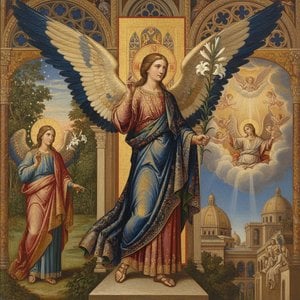
Titian Ramsay Peale II’s “The Annunciation,” painted in 1557, is more than just a depiction of a pivotal biblical moment; it's a carefully constructed tableau brimming with the emotional intensity and dramatic lighting characteristic of late Renaissance – specifically, Baroque – art. This masterful work transports us to a space both sacred and subtly unsettling, inviting contemplation on themes of divine grace, human humility, and the profound mystery at the heart of faith. Peale’s interpretation diverges from purely literal representation, opting instead for a heightened emotionalism that resonates powerfully with viewers centuries later.

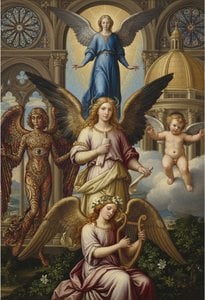
The scene unfolds within an undefined, almost dreamlike space – a dark void punctuated by subtle architectural elements suggesting a modest dwelling. The focus immediately draws the eye to the kneeling woman, Mary, rendered in exquisite detail. Her posture conveys both vulnerability and profound absorption; her hands clasped together, her gaze fixed upward with an expression of awe and gentle surprise. This isn’t merely a passive recipient of divine news but a figure actively engaged in a momentous encounter. The artist skillfully uses light to sculpt her form, highlighting the delicate contours of her face and emphasizing the weight of this revelation.

A Symphony of Color and Movement

Peale's palette is dominated by rich browns, deep golds, and muted reds – colors that evoke a sense of solemnity and reverence. These warm tones are juxtaposed with cooler blues and purples in the swirling clouds above, creating a dynamic interplay between earthly humility and celestial splendor. The drapery, particularly the voluminous robes of the angel, is rendered with meticulous attention to detail, utilizing layered impasto – thick applications of paint that create a tactile, almost sculptural effect. This technique not only adds depth and texture but also contributes to the overall sense of drama and movement within the composition.

The use of curved lines—particularly in the flowing drapery and the wings of the angel—is paramount to the painting’s dynamic feel. These lines guide the viewer's eye through the scene, creating a sense of continuous motion and upward aspiration. The positioning of the ascending cherubs further reinforces this feeling of ascension, symbolizing the divine presence reaching down to earth. The pyramidal composition, anchored by Mary’s kneeling form and culminating in the angel and celestial elements, provides stability while simultaneously directing the eye upwards towards the heavens.

Symbolism and Artistic Echoes

“The Annunciation” is rich in symbolic meaning. The angel, rendered with powerful wings and a commanding presence, represents divine grace and the messenger of God’s will. Mary's posture embodies humility and receptivity – she is not demanding answers but humbly accepting the extraordinary news. The architectural details, though subtly suggested, hint at the familiar setting of Nazareth, grounding the miraculous event in a tangible reality. The painting draws heavily on the artistic traditions of the High Renaissance, particularly the works of Raphael and Leonardo da Vinci, yet Peale imbues it with a distinctly Baroque sensibility – a heightened emotionalism, dramatic lighting, and an emphasis on movement and dynamism.

Furthermore, it’s important to consider Peale's lineage. As the son of Charles Willson Peale, a pivotal figure in early American art and founder of the first museum, Titian Ramsay Peale II inherited a legacy of scientific observation and artistic exploration. This influence is evident in his meticulous detail and his commitment to capturing both the beauty and the complexity of the natural world – as seen in his extensive wildlife paintings. “The Annunciation” thus represents a fascinating synthesis of High Renaissance ideals with New World sensibilities, creating an artwork that is both timelessly beautiful and deeply rooted in its historical context. It’s a powerful testament to the enduring appeal of religious iconography and the artist's ability to translate profound spiritual themes into visually arresting form.

Perguntas e Respostas

Como o movimento e a época se encontram em "The Annunciation" de Titian Ramsay Peale II?

"The Annunciation" pertence ao movimento Baroque, e seu criador trabalhou na era Século XIX.

As cores de "The Annunciation" de Titian Ramsay Peale II são vibrantes ou suaves?

"The Annunciation" de Titian Ramsay Peale II é registrado com uma saturação Subtle Color e uma intensidade Monochromatic.

"The Annunciation" é típico do que Titian Ramsay Peale II costumava criar?

Entre os temas registrados de Titian Ramsay Peale II — titian's venetian mastery, divine grace and humility, counter-reformation piety, symbolic celestial vision, iconic annunciation depiction, key work in artist's output, emphasis on color & emotion — "The Annunciation" traz seu próprio foco em annunciation, angel, virgin mary, divine revelation, religious art, baroque painting, spiritual encounter, celestial.


Biografia do Artista

Um Eco Renascentista no Novo Mundo

Titian Ramsay Peale II ocupa um nicho fascinante, frequentemente negligenciado, na paisagem da arte americana do século XIX. Nascido na Filadélfia em 1799, ele foi imerso numa linhagem artística como o filho mais novo de Charles Willson Peale, uma figura central na pintura de retratos no início da América e fundador do primeiro museu da nação. Embora o legado de seu pai pairasse grande, Titian forjou seu próprio caminho, profundamente enraizado nos ideais estéticos do Alto Renascimento, particularmente aqueles emanados de Veneza. Ele não estava meramente replicando estilos; ele canalizava uma sensibilidade artística profunda, imbuindo suas telas com detalhes meticulosos e uma paleta vibrante que o diferenciava de muitos de seus contemporâneos. Sua vida se desenrolou em um cenário de identidade americana crescente, mas seu coração artístico permaneceu ligado aos mestres clássicos, criando uma tensão cativante entre a reverência ao Velho Mundo e a expressão do Novo Mundo.

Do Caderno de Estudos do Naturalista à Tela do Pintor

Os primeiros anos de Peale foram marcados por uma dupla fascinação pela arte e história natural – uma combinação fomentada pelas múltiplas atividades de seu pai. Ele acompanhou expedições, notavelmente a jornada de Stephen Harriman Long para as Montanhas Rochosas em 1819-20, documentando a flora e fauna com um olhar artístico cada vez mais refinado. Este período não se tratava apenas de registrar observações; era sobre *compreender* forma, luz e textura – habilidades que provariam ser inestimáveis quando ele voltou sua atenção total para a pintura. Seu trabalho como naturalista informou sua arte, emprestando uma precisão científica às suas representações do mundo natural, mas também imbuindo-as de uma ressonância emocional que transcendia a mera documentação. Ele não estava apenas mostrando como as coisas eram; ele estava revelando sua beleza inerente e significado espiritual. Essa dedicação a ambas as disciplinas é evidente em peças como “O Tributo”, uma renderização dramática que mostra um domínio magistral da luz e sombra reminiscente de Rubens, e "Ninfa e Pastor", misturando natureza, mitologia e beleza sensual.

Influências Venezianas e Visões Sagradas

A influência do colorismo veneziano – a ênfase em cores ricas e luminosas e efeitos atmosféricos defendidos por artistas como Ticiano (de quem ele tirou seu primeiro nome) – é inegável na obra de Peale. Ele não estava simplesmente copiando esses mestres; ele estava internalizando seus princípios e adaptando-os à sua própria visão artística. Isso é particularmente evidente em suas obras religiosas, como “Santuário do Altar com Quatro Santos” e "Adoração dos Pastores". Essas pinturas não são meras representações de cenas bíblicas; elas são experiências imersivas, atraindo o espectador para um mundo de contemplação espiritual por meio de composições cuidadosamente orquestradas e um uso magistral da cor para evocar emoção. A atenção meticulosa aos detalhes nessas obras fala não apenas de sua habilidade técnica, mas também de uma profunda reverência pelo seu assunto. “A Beleza”, um retrato impressionante, demonstra ainda mais sua capacidade de capturar a forma humana e o caráter com elegância e refinamento.

Redescoberta e Significado Duradouro

Por grande parte do século XX, Titian Ramsay Peale II permaneceu amplamente obscurecido nas narrativas da história da arte. Seu trabalho não se encaixava perfeitamente nas tendências predominantes, e sua dedicação a um estilo clássico parecia anacrônico em uma paisagem artística em rápida mudança. No entanto, os anos recentes testemunharam uma crescente reavaliação de suas contribuições. Estudiosos e colecionadores estão reconhecendo a mistura única de sensibilidades americanas e tradições europeias que caracteriza suas pinturas. A redescoberta de seu trabalho não se trata apenas de preencher lacunas na história da arte; é sobre obter uma compreensão mais profunda das forças culturais complexas que moldaram a América do século XIX. Peale representa uma ponte entre mundos, um testemunho do poder duradouro dos ideais clássicos e um lembrete de que a inovação artística muitas vezes surge de combinações inesperadas de influências. Suas pinturas, agora encontradas em coleções como as da WahooArt, Galeria Uffizi e Palazzo Pitti, oferecem um vislumbre cativante de um canto esquecido da história da arte americana – um canto iluminado pelo brilho radiante do Renascimento. A dedicação de Peale à precisão científica combinada com uma sensibilidade artística profundamente enraizada no ideal clássico o torna uma figura singular na história da arte americana.
Titian Ramsay Peale II

Titian Ramsay Peale II

1799 - 1885 , Estados Unidos da América

Informações Rápidas

  • Artistas Que Influenciaram:
    • Titian
    • Mestres venezianos
  • Data Da Morte: 1885
  • Data De Nascimento: 1799
  • Local De Nascimento: Filadélfia, EUA
  • Movimento Artístico: Alto Renascimento
  • Nacionalidade: Americana
  • Nome Completo: Titian Ramsay Peale II
  • Obras Notáveis:
    • Altar Shrine...
    • Adoração dos...
    • A Beleza
Explore obras de arte organizadas por temas, estilos e características.