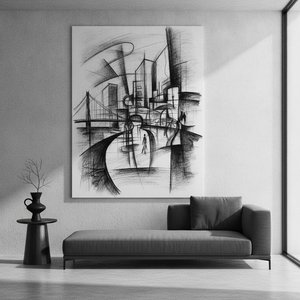
Se i rommet Se i AR Bestill håndmalt reproduksjon Gå til digitalt bilde Del som digitalt kort
Detaljer Studentguide Legg til i favoritter Last ned Liknende objekter Røntgen Lysbildefremvisning Besøksstatistikk

Galaxy

Vija Celmins' 'Galaxy' is a mesmerizing monochrome lithograph capturing the vastness of space with meticulous detail and subtle tonal variations, evoking awe and wonder.

Explore Vija Celmins' hyperrealistic art: ocean depths, starry skies & intricate details rendered with meticulous precision. A Latvian-American icon.

Kunstverket som vises på denne siden er beskyttet av opphavsretten, noe som betyr at vi ikke har juridisk tillatelse til å lage eller selge identiske reproduksjoner. Denne beskyttelsen håndheves i henhold til internasjonale avtaler som for eksempel Bernerkonvensjonen og av nasjonale lover, inkludert de som er fastsatt i Amerikansk opphavsrettslov – Tittel 17.

Denne metoden er i fullt samsvar med opphavsrettslige regler, da den ikke innebærer kopiering eller duplisering av det beskyttede kunstverket. I stedet er det snakk om en kreativ nytolkning – et nytt maleri som er inspirert av originalen, men ikke identisk med den.

Giclée / Kunsttrykk

Giclée- eller lerretsprint av museumskvalitet med rask produksjon og fleksible valgmuligheter for etterbehandling. ( Bestill håndmalt reproduksjon Gå til digitalt bilde)

Corner sample of the P118B picture frame: moulded polystyrene, 5 cm wide and 3 cm thick
P118B Nkr10
Corner sample of the P118H picture frame: moulded polystyrene, 5 cm wide and 3 cm thick
P118H Nkr10
Corner sample of the P118W picture frame: moulded polystyrene, 5 cm wide and 3 cm thick
P118W Nkr10
Corner sample of the P438Z picture frame: moulded polystyrene, 5.5 cm wide and 3.5 cm thick
P438Z Nkr10
Corner sample of the P508JH picture frame: moulded polystyrene, 7 cm wide and 3.5 cm thick
P508JH Nkr12
Corner sample of the P508YH picture frame: moulded polystyrene, 7 cm wide and 3.5 cm thick
P508YH Nkr12
Corner sample of the P805H picture frame: moulded polystyrene, 5 cm wide and 3.5 cm thick
P805H Nkr10
Corner sample of the P805Z picture frame: moulded polystyrene, 5 cm wide and 3.5 cm thick
P805Z Nkr10
Corner sample of the P919BZ picture frame: moulded polystyrene, 7 cm wide and 3.5 cm thick
P919BZ Nkr10
Corner sample of the P919G picture frame: moulded polystyrene, 7 cm wide and 3.5 cm thick
P919G Nkr10
Corner sample of the P919XJ picture frame: moulded polystyrene, 7 cm wide and 3.5 cm thick
P919XJ Nkr10
Corner sample of the P959ZH picture frame: moulded polystyrene, 5 cm wide and 3 cm thick
P959ZH Nkr10
Corner sample of the P968JZ picture frame: moulded polystyrene, 6 cm wide and 4 cm thick
P968JZ Nkr12
Corner sample of the W106C picture frame: solid wood, 5 cm wide and 3 cm thick
W106C Nkr8
Corner sample of the W218G picture frame: solid wood, 5 cm wide and 3 cm thick
W218G Nkr10
Corner sample of the W218JH picture frame: solid wood, 5 cm wide and 3 cm thick
W218JH Nkr8
Corner sample of the W218Y picture frame: solid wood, 5 cm wide and 3 cm thick
W218Y Nkr10
Corner sample of the W307PJ picture frame: solid wood, 6 cm wide and 3 cm thick
W307PJ Nkr10
Corner sample of the W316G picture frame: solid wood, 6 cm wide and 3 cm thick
W316G Nkr10
Corner sample of the W316PJ picture frame: solid wood, 6 cm wide and 3 cm thick
W316PJ Nkr8
Corner sample of the W316Y picture frame: solid wood, 6 cm wide and 3 cm thick
W316Y Nkr10
Corner sample of the W398PJ picture frame: solid wood, 5 cm wide and 3 cm thick
W398PJ Nkr8
Corner sample of the W4111J picture frame: solid wood, 6.5 cm wide and 3.5 cm thick
W4111J Nkr10
Corner sample of the W500HY picture frame: solid wood, 7 cm wide and 5 cm thick
W500HY Nkr15
Corner sample of the W500JH picture frame: solid wood, 7 cm wide and 5 cm thick
W500JH Nkr15
Corner sample of the W692G picture frame: solid wood, 8 cm wide and 4 cm thick
W692G Nkr12
Corner sample of the W849H picture frame: solid wood, 5 cm wide and 3 cm thick
W849H Nkr8
Corner sample of the W940BG picture frame: solid wood, 7.5 cm wide and 4.5 cm thick
W940BG Nkr15
Corner sample of the W953PJ picture frame: solid wood, 6 cm wide and 3.5 cm thick
W953PJ Nkr8

Standardformat
tilpasset
CM
INCH

Velg mellom våre forhåndsdefinerte størrelser som bevarer kunstverkets opprinnelige proporsjoner.

bredde
høyde

Du kan oppgi egne mål for å tilpasse en spesifikk ramme eller et bestemt område. Dersom den valgte størrelsen ikke samsvarer med det originale bildets proporsjoner, vil vi enten beskjære kunstverket eller utvide bildet med en speilet eller ensfarget kant. En digital mockup vil bli sendt til din godkjenning før produksjonen starter.
Vennligst merk at forhåndsvisningen på skjermen ikke gjenspeiler den faktiske beskjæringen eller utvidelsen. Kun mockuppen vil vise den endelige komposisjonen nøyaktig.
Selv om tilpassede størrelser er tilgjengelige, anbefaler vi å velge et mål fra den forhåndsdefinerte listen for å bevare de originale proporsjonene.

Verdensomspennende levering () på 2 uker i stedet for standard 4/5 uker. (10 October)

Gratis ekspressfrakt over hele verden
Lerretsduk av høykvalitets lin
Full transportforsikring
Garanti for refusjon av toll og importavgifter
Garantert fargeekthet
100 dagers returrett ved fabrikasjonsfeil
100% pengene tilbake-garanti
Mengderabatt

Totalpris

Nkr 632

Galaxy

Giclée / Kunsttrykk

Format på reproduksjon

-

Totalpris

Nkr 632

Kort om verket

  • Artist: Vija Celmins
  • Movement: Minimalist
  • Title: Galaxy
  • Influences:
    • Morandi
    • Morley
  • Year: 1975
  • Subject or theme: Cosmic expanse
  • Location: Various collections

Kunstquiz

Det er kun ett riktig svar på hvert spørsmål.

Spørsmål 1:
What is the primary subject matter of Vija Celmins’ ‘Galaxy’?
Spørsmål 2:
Vija Celmins is primarily known for her work in which medium?
Spørsmål 3:
The artwork ‘Galaxy’ was created in what year?
Spørsmål 4:
What artistic influence is most prominently cited as impacting Vija Celmins’ early work?
Spørsmål 5:
Based on the description, what is a key characteristic of ‘Galaxy’ that contributes to its overall mood?

Vija Celmins’ “Galaxy”: A Silent Universe in Graphite

Vija Celmins' "Galaxy," created in 1975, isn’t merely a depiction of the cosmos; it’s an invitation to contemplate our place within its vastness. This remarkable monochrome lithograph, part of a series exploring celestial phenomena, transcends simple representation and delves into the very essence of observation and memory. Celmins, born in Riga, Latvia, and deeply influenced by Giorgio Morandi's quiet still lifes, possessed a singular ability to distill complex subjects – here, the infinite expanse of space – into meticulously rendered, almost meditative forms. The work speaks volumes about her unique approach: an unwavering commitment to detail combined with a profound understanding of how light and shadow can evoke emotion.

The image itself presents a breathtakingly simplified galaxy. A dense field of tiny, uniformly sized graphite dots dominates the composition, representing countless stars scattered across an inky blackness. These aren’t vibrant bursts of color or swirling nebulae; instead, they are subtle gradations of grey, creating a sense of depth and texture that mimics the grainy surface of photographic paper – a deliberate nod to the medium's inherent qualities. A slightly elongated, hazy shape at the center suggests a galactic core, while faint, diffused lines hint at spiral arms, though these forms remain remarkably understated. The absence of sharp edges or dramatic contrasts contributes to an atmosphere of quiet contemplation, inviting the viewer to lose themselves in the subtle beauty of the scene.

The Process: Graphite and Memory

Celmins’ technique is central to the work's power. She began by creating detailed pencil drawings from astronomical photographs, painstakingly capturing every nuance of light and shadow. These drawings served as the foundation for the lithograph, a process that demanded immense patience and precision. Lithography itself relies on transferring an image through a stone or resin plate using ink, resulting in incredibly smooth tonal variations – a perfect match for Celmins’ meticulous approach. The result is a surface that feels both tactile and ethereal, simultaneously grounded in observation and imbued with the artist's personal memory of the source material.

It’s important to note that Celmins largely abandoned painting in the 1970s, shifting her focus entirely to graphite drawings. This decision wasn’t a rejection of color but rather an exploration of a different set of possibilities – a way to capture the essence of subjects through their tonal relationships and subtle textures. The monochrome palette forces us to engage with the image on a purely visual level, stripping away distractions and allowing us to focus on the fundamental elements of form, light, and shadow.

Symbolism and Scale: A Human Perspective

“Galaxy” isn’t simply a representation of space; it's an exploration of scale and perspective. The sheer density of stars suggests the immensity of the universe, while their diminutive size reminds us of our own insignificance within that grand scheme. Celmins’ choice to render these celestial bodies as tiny dots creates a powerful metaphor for human perception – we can only ever grasp fragments of the whole, relying on memory and interpretation to construct a coherent understanding.

Furthermore, the work evokes a sense of timelessness. The stark monochrome palette and the meticulous detail suggest an almost archaeological quality, as if Celmins is excavating a record of the universe from the depths of her own memory. It’s a meditation on the enduring power of observation and the human desire to understand our place in the cosmos – a sentiment that resonates deeply with viewers across generations.

A Legacy of Precision: Vija Celmins' Impact

Vija Celmins is now recognized as one of the most significant contemporary artists working today. Her meticulous graphite drawings, often depicting seemingly mundane subjects like ocean waves, salt flats, and night skies, are celebrated for their extraordinary detail, quiet beauty, and profound emotional resonance. “Galaxy” stands as a testament to her unique vision – a silent universe rendered in graphite, inviting us to contemplate the mysteries of space and the enduring power of human observation. Reproductions of this piece offer a remarkable opportunity to bring this evocative artwork into any setting, fostering a sense of wonder and connection to the vastness beyond.

Spørsmål og svar

Finnes det verk som ligner på "Galaxy"?

Kunstverk som ligner på "Galaxy" av Vija Celmins er samlet på verkets Lignende verk-side.

I hvilket år ble "Galaxy" av Vija Celmins skapt?

"Galaxy" av Vija Celmins ble skapt i 1975.

Hvilken følelse er "Galaxy" forbundet med?

Den emosjonelle tonen som er registrert for "Galaxy" av Vija Celmins, er Mysterious. Den oppsummerer følelsen verket uttrykker.

Hvilken størrelse og hvilket format anbefales for trykk av "Galaxy"?

For "Galaxy" er den anbefalte trykkinnstillingen størrelse Medium og Landscape orientering.

Hvor gammel var Vija Celmins da hen laget "Galaxy"?

Vija Celmins laget "Galaxy" i en alder av 37. Kunstneren ble født i 1938, og verket er datert 1975.

Hvem har skapt "Galaxy"?

Kunstneren bak "Galaxy" er Vija Celmins. Verket er katalogisert under Vija Celmins sitt navn.

Hvilken metning og intensitet har "Galaxy" av Vija Celmins?

"Galaxy" av Vija Celmins er gjengitt med en Muted metning og en Monochromatic intensitet.


Kunstnerbiografi

Early Life and Influences

  • Born: October 25, 1938, in Riga, Latvia
  • Family History: Fled Soviet occupation of Latvia in 1940, initially to Germany then relocated to the United States (Indianapolis, Indiana) in 1948.
  • Early Artistic Development: Found solace and encouragement in drawing due to language barriers upon arriving in the US.
  • Education: Attended John Herron School of Art in Indianapolis; received a BFA in 1962 and an MFA from UCLA in 1965.
  • Key Influences: Early exposure to Italian monotone still life painter Giorgio Morandi significantly impacted her artistic approach. Also influenced by Malcolm Morley and Jasper Johns during her early career.

Evolution of Artistic Style and Themes

  • Early Pop Art Period (1960s): Initially explored pop sculptures and representational paintings featuring commonplace objects like TVs, lamps, and pencils. These works often incorporated themes of violence and conflict.
  • Transition to Graphite Drawings (1970s-1980s): Abandoned painting for over a decade, focusing on meticulously detailed graphite pencil drawings depicting natural phenomena – the ocean surface, spiderwebs, lunar landscapes, rocks, and shells. This period marked a shift towards photorealism.
  • Return to Painting & Printmaking (1980s-Present): Returned to painting in 1981, incorporating woodcuts, charcoal, and eraser techniques. Explored negative space and subtle tonal variations.
  • Recurring Themes: Celmins' work consistently explores themes of vastness, detail, perception, and the relationship between representation and reality. Her depictions of natural elements often evoke a sense of awe and mystery.

Major Works and Recognition

  • Notable Series: Ocean series (paintings and prints), Night Sky series (drawings), Spiderweb drawings, Rock drawings.
  • Key Artwork Examples: "Tulip Car #1" (photograph), "Galaxy," "Mount Holyoke," "Concentric Bearings A."
  • Solo Exhibitions: Has been the subject of over forty solo exhibitions since 1965, including major retrospectives at prestigious institutions such as the Museum of Modern Art, Whitney Museum of American Art, Los Angeles County Museum of Art, Institute of Contemporary Arts (London), and Centre Pompidou (Paris).
  • Awards & Honors: Received numerous awards and grants throughout her career.

Historical Significance and Legacy

  • Pioneer of Photorealism: Celmins is considered a significant figure in the photorealistic movement, known for her exceptional technical skill and meticulous attention to detail.
  • Exploration of Perception: Her work challenges viewers' perceptions of reality by recreating natural phenomena with astonishing accuracy while simultaneously creating a sense of detachment and abstraction.
  • Influence on Contemporary Art: Celmins’ influence can be seen in the work of contemporary artists who explore themes of representation, perception, and the relationship between art and science.
  • Critical Acclaim: Her work has been widely praised by critics for its technical mastery, conceptual depth, and evocative power.
Vija Celmins

Vija Celmins

1938 - , Latvia

Kort om kunstneren

  • Full Name: Vija Celmins
  • Nationality: Latvian-American
  • Date Of Birth: 1938
  • Place Of Birth: Riga, Latvia
  • Notable Artworks:
    • Ocean
    • Tulip Car #1
    • Night Sky 2 Reversed
    • Concentric Bearings A
    • Mount Holyoke
    • Galaxy
    • Sky
    • Ocean surface woodcut (1992)
  • Artistic Movement Or Style: Photorealism
  • Artists Who Influenced This Artist:
    • Giorgio Morandi
    • Jasper Johns
    • Malcolm Morley