Gratis kunstkonsultasjon

x
Bestill maleri Bestill maleriKjøp digitalt bilde Kjøp digitalt bilde SendSend
DetaljerDetaljer Legg til i favoritter Legg til i favoritter Last ned bildetLast ned bildet Liknende objekterLiknende objekter RøntgenRøntgen LysbildefremvisningLysbildefremvisning

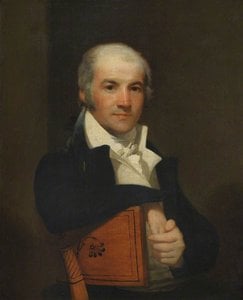
James Munroe

Experience Neoclassical dignity with Gilbert Stuart's 1821 portrait of James Monroe, capturing quiet reflection and American history's essence; discover this masterpiece today.

Gilbert Stuart (1755-1828): Amerikas mest kjente portrettkunstner! Utforsk hans neoklassiske stil, ikonisk Washington-portrett og arv i amerikansk kunst.

Giclée / Kunsttrykk

Giclée- eller lerretsprint av museumskvalitet med rask produksjon og fleksible valgmuligheter for etterbehandling.

P118B $10
P118H $10
P118W $10
P438Z $10
P508JH $12
P508YH $12
P805H $10
P805Z $10
P919BZ $10
P919G $10
P919XJ $10
P959ZH $10
P968JZ $12
W106C $8
W218G $10
W218JH $8
W218Y $10
W307PJ $10
W316G $10
W316PJ $8
W316Y $10
W398PJ $8
W4111J $10
W500HY $15
W500JH $15
W692G $12
W849H $8
W940BG $15
W953PJ $8

Standard
custom
CM
INCH

Velg mellom våre forhåndsdefinerte størrelser som bevarer kunstverkets opprinnelige proporsjoner.

bredde
høyde

Du kan oppgi egne mål for å tilpasse en spesifikk ramme eller et bestemt område. Dersom den valgte størrelsen ikke samsvarer med det originale bildets proporsjoner, vil vi enten beskjære kunstverket eller utvide bildet med en speilet eller ensfarget kant. En digital mockup vil bli sendt til din godkjenning før produksjonen starter.
Vennligst merk at forhåndsvisningen på skjermen ikke gjenspeiler den faktiske beskjæringen eller utvidelsen. Kun mockuppen vil vise den endelige komposisjonen nøyaktig.
Selv om tilpassede størrelser er tilgjengelige, anbefaler vi å velge et mål fra den forhåndsdefinerte listen for å bevare de originale proporsjonene.

Verdensomspennende levering () på 2 uker i stedet for standard 4/5 uker. (2 July)

why_choose_icon
Gratis ekspressfrakt over hele verden
why_choose_icon
Lerretsduk av høykvalitets lin
why_choose_icon
Full forsikring under transport
why_choose_icon
Garanti for refusjon av toll og importavgifter
why_choose_icon
Garantert korrekt fargegjengivelse
why_choose_icon
60 dagers returrett (kun ved feil)
why_choose_icon
100% pengene tilbake-garanti
why_choose_icon
Rabatt ved flere kjøp

Totalpris for bestilling

-

reproduction

James Munroe

Giclée / Kunsttrykk

Størrelse på reproduksjon

-

Endelig pris

-

Kort om verket

  • Artist: Gilbert Stuart
  • Notable elements or techniques: Formal portraiture
  • Artistic style: Realistic
  • Location: Private Collection
  • Year: 1821
  • Title: James Munroe
  • Movement: Neoclassicism

Kunstighetsquiz

Det er kun ett riktig svar på hvert spørsmål.

Spørsmål 1:
What is the primary subject of Gilbert Stuart’s painting, ‘James Munroe’?
Spørsmål 2:
The painting utilizes a neoclassical style characterized by:
Spørsmål 3:
According to the image description, what is James Munroe wearing?
Spørsmål 4:
Where was Gilbert Stuart trained during his formative years?
Spørsmål 5:
What is the significance of the red curtain in the background of the painting?

Beskrivelse av samleobjektet

A Portrait of Dignified Reflection: Gilbert Stuart’s James Monroe

Gilbert Stuart's depiction of James Monroe, completed in 1821, stands as a testament to the artist’s mastery of neoclassical portraiture and his ability to capture not just likeness but also an essence of character. This painting, housed in prominent collections like those of John Doggett and Abel Phillips, offers a glimpse into the intellectual landscape of early American history—a period defined by burgeoning republican ideals and ambitious aspirations for national identity.

Subject Matter and Composition

The portrait portrays Monroe seated at a table adorned with a crimson curtain backdrop – a deliberate choice that speaks to Stuart’s understanding of visual symbolism. Monroe himself is presented in formal attire, embodying the aristocratic elegance favored during Stuart's era while simultaneously conveying an air of quiet contemplation. His hands folded calmly on the tabletop suggest deliberation and seriousness, drawing the viewer’s gaze inward toward his inner thoughts. The inclusion of a book reinforces this impression, hinting at Monroe’s scholarly pursuits and intellectual engagement—a crucial aspect of his legacy as a diplomat and statesman. Stuart skillfully utilizes pyramidal composition to stabilize the figure and create a sense of balance, emphasizing Monroe's dignified posture and conveying an aura of composure.

Neoclassical Style and Technique

Stuart adhered rigorously to the principles of Neoclassicism, reflecting the artistic sensibilities prevalent in Europe during his time. This style prioritized clarity, restraint, and idealized beauty—characteristics evident in Stuart’s meticulous rendering of Monroe's features. He employed a glazing technique – applying thin layers of translucent paint over subsequent coats – to achieve luminous skin tones and subtle gradations of color. The artist meticulously observed anatomical accuracy, demonstrating an impressive understanding of human form. Furthermore, Stuart skillfully utilized chiaroscuro—the dramatic interplay between light and shadow—to sculpt Monroe’s face and drapery, enhancing the portrait's depth and creating a captivating visual experience for the viewer.

Historical Context and Symbolism

Painted during Monroe’s presidency (1813-1825), this portrait captures him at a pivotal moment in American history – as he navigated the complexities of westward expansion and solidified the nation’s position on the international stage. The crimson curtain symbolizes grandeur, nobility, and perhaps even ambition—qualities associated with Monroe's leadership. Stuart’s portrayal transcends mere representation; it aims to convey Monroe’s intellectual integrity and moral fortitude—traits considered essential for upholding republican virtue. By placing Monroe within a carefully constructed visual environment, Stuart subtly reinforces the artist’s belief in portraying subjects as embodiments of noble ideals.

Emotional Impact and Legacy

Gilbert Stuart's James Monroe transcends mere likeness, offering viewers an invitation to contemplate the character and intellect of one of America’s founding fathers. The painting’s serene composition and masterful technique evoke a sense of quiet dignity and contemplative reflection—qualities that resonate powerfully with audiences today. It serves as a reminder of Stuart’s enduring contribution to portraiture and his ability to transform visual art into a vehicle for conveying profound human qualities. As a beautifully executed reproduction, this artwork continues to inspire admiration for both artistic excellence and the spirit of intellectual curiosity.

Om kunstneren

Gilbert Stuart (1755–1828): America’s Foremost Portraitist

Gilbert Stuart, born December 3rd, 1755, in Saunderstown, Rhode Island—a village nestled within North Kingstown—was undeniably one of the most celebrated portrait painters of his era and remains an icon of American artistic heritage. His legacy isn't merely about capturing likenesses; it’s about distilling the essence of individuals into enduring images that speak volumes about their character and place in history. He was a Scottish immigrant whose father established Rhode Island’s first snuff mill, shaping Stuart’s early life with entrepreneurial spirit and exposure to artistic pursuits from a young age. ### Early Life and Artistic Beginnings From his formative years onward, Stuart demonstrated an exceptional talent for drawing—a skill that blossomed even as a child. By fourteen, he produced “Dr. Hunter’s Spaniels,” showcasing remarkable promise and establishing him as a prodigious artist within his community. His travels to Scotland around 1771 under the tutelage of Cosmo Alexander provided crucial foundational training in technique and composition, though his studies were interrupted by Alexander's untimely death in 1775. Further artistic refinement occurred in London with Benjamin West—a prominent American painter residing there—between 1775 and 1780. This period solidified Stuart’s stylistic development and secured recognition within the Royal Academy, a pivotal step toward establishing his reputation as a professional artist. ### Artistic Career and Major Works Stuart's career faced considerable challenges during the American Revolution, prompting him to relocate to England in 1775. Despite these difficulties, he swiftly achieved success with “The Skater” (1782), an artwork that cemented his position as a rising star within the artistic landscape. However, Stuart’s magnum opus—the unfinished portrait of George Washington—stands apart from all others. Begun in 1796 and never completed to Stuart's satisfaction, this image has become arguably the most recognizable depiction of America’s first president, appearing on U.S. currency and postage stamps for over a century. Stuart produced numerous copies of this portrait for patrons across America and Europe—a testament to its enduring appeal and his masterful execution. Beyond Washington, he painted portraits of luminaries such as John Adams, Thomas Jefferson, James Madison, and many influential figures from the Federalist elite, capturing their personalities with unparalleled sensitivity. ### Artistic Style and Influences Stuart’s artistic style was characterized by a Neoclassical approach—a movement that championed classical forms and ideals—emphasizing realism and meticulously portraying the likeness and character of his subjects. He skillfully employed dramatic use of light and shadow to heighten the impact of his paintings, creating compositions that were both aesthetically pleasing and psychologically profound. Cosmo Alexander’s early instruction instilled in Stuart a disciplined technique and compositional understanding, while Benjamin West’s influence profoundly shaped Stuart's artistic sensibilities—particularly his grasp of portraiture and its expressive potential. Crucially, Stuart’s own observations and interactions with his subjects fueled the psychological depth and realism that define his celebrated works. ### Historical Significance and Legacy Gilbert Stuart is rightfully regarded as America’s foremost portraitist, playing an indispensable role in documenting the formative years of the United States. The Athenaeum Portrait of George Washington—a symbol of American identity and leadership—continues to captivate audiences worldwide. His portraits offer invaluable insights into the lives and appearances of influential figures from the late 18th and early 19th centuries, preserving their memories for posterity. Stuart established a distinctive American style of portraiture that blended European artistic traditions with uniquely American sensibilities—a contribution that ensures his legacy endures as one of the greatest artists in American history. His paintings reside in major museums across the United States and Europe, guaranteeing that future generations will appreciate the brilliance of this remarkable artist.
Gilbert Stuart

Gilbert Stuart

1755 - 1828 , Storbritannia

Kort om kunstneren

  • Artistic Movement Or Style: Neoklassisisme
  • Artists Or Movements Influenced By This Artist: ['George Washington']
  • Artists Who Influenced This Artist:
    • Cosmo Alexander
    • Benjamin West
  • Date Of Birth: December 3, 1755
  • Date Of Death: July 9, 1828
  • Full Name: Gilbert Charles Stuart
  • Nationality: Amerikaner
  • Notable Artworks:
    • George Washington (The Athenaeum Portrait)
    • John Adams
  • Place Of Birth: North Kingstown, Rhode Island
Utforsk kunstverk organisert etter temaer, stiler og kjennetegn.