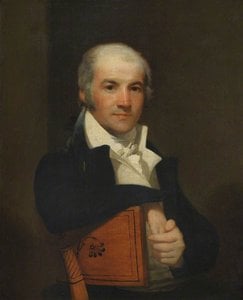
Gilbert Stuart: Et liv i portrettkunst
- Født: 3. desember 1755, Saunderstown, Rhode Island
- Død: 9. juli 1828, Boston, Massachusetts
- Nasjonalitet: Amerikansk
- Stilretning: Nyklassisisme
- Kjent for: Portrettmaleri, særlig portretter av fremtredende skikkelser i tidlig amerikansk historie.
Tidlig liv og utdanning
- Gilbert Stuart ble født inn i en familie med skotske røtter; hans far, også ved navn Gilbert, var en oppfinner som etablerte den første snusbønnen i Rhode Island.
- Hans kunstneriske talent kom til syne i ung alder, og han utviste eksepsjonelle ferdigheter allerede som barn.
- Som 14-åring malte han "Dr. Hunter's Spaniels", et verk som viste tidlig lovende potensial.
- Han reiste til Skottland rundt 1771 for å studere under Cosmo Alexander, men vendte tilbake etter Alexanders død i 1775.
- Videre opplæring fant sted i London hos Benjamin West, en fremtredende amerikansk maler bosatt i England, fra 1775 til 1780. Denne perioden var avgjørende for utviklingen av hans kunstneriske stil og for å vinne anerkjennelse innen Royal Academy.
Kunstnerisk karriere og hovedverker
- Stuarts karriere møtte utfordringer under den amerikanske revolusjonen, noe som førte til at han flyttet til England i 1775.
- Han oppnådde tidlig suksess med "The Skater" (1782), et portrett som etablerte hans rykte.
- Hans mest berømte verk er det ufullendte portrettet av George Washington, kjent som Athenaeum-portrettet (påbegynt i 1796). Dette bildet har blitt ikonisk og pryder både amerikanske pengesedler og frimerker. Stuart produserte en rekke kopier av dette portrettet for mæcener over hele Amerika og Europa.
- Han malte portretter av flere andre fremtredende skikkelser, inkludert John Adams, Thomas Jefferson, James Madison og mange medlemmer av den føderalistiske eliten.
- Stuarts stil var preget av en nyklassisk tilnærming, med vekt på realisme og evnen til å fange både likhet og karakter hos sine motiver. Han benyttet ofte en dramatisk bruk av lys og skygge for å forsterke portrettenes virkning.
Innflytelse og utvikling
- Cosmo Alexander ga ham den tidlige opplæringen i teknikk og komposisjon.
- Benjamin Wests innflytelse var betydelig og formet Stuarts forståelse av portrettkunst og kunstneriske prinsipper.
- Den nyklassiske bevegelsen, med sitt fokus på klassiske former og idealer, preget hans stil sterkt.
- Stuarts egne observasjoner og samspill med sine motiver bidro til den psykologiske dybden og realismen i hans portretter. Han etterstrebte ikke bare å fange et ytre utseende, men også karakteren og personligheten til de han malte.
Historisk betydning og arv
- Gilbert Stuart regnes som en av Amerikas fremste portrettmalere, og spilte en avgjørende rolle i å dokumentere de tidlige årene til USA.
- Athenaeum-portrettet av George Washington har blitt et varig symbol på amerikansk identitet og lederskap.
- Hans portretter gir verdifull historisk innsikt i livene og utseendet til fremtredende personer fra slutten av det 18. og begynnelsen av det 19. århundre.
- Stuarts verker er representert i store museer over hele USA og Europa, noe som sikrer at hans arv fortsetter å verdsettes av kommende generasjoner.
- Han etablerte en distinkt amerikansk portrettstil som forente europeiske teknikker med en unikt amerikansk sanselighet.
Spørsmål og svar
Finnes det en oversikt over alle motivene Gilbert Stuart malte?
Siden Motivatlas kartlegger Gilbert Stuart sine kunstverk etter motiv.
Hva er fødestedet og fødselsåret til Gilbert Stuart?
Gilbert Stuart ble født i North Kingstown i 1755.
Kan jeg sortere Gilbert Stuart sine kunstverk etter farge?
Gilbert Stuart sine verk kan utforskes etter farge på kunstnerens Sorter etter farge-side.