


Muziejų lygio „giclée“ arba drobos spausdinimas: greita gamyba ir lankstios apdailos parinktys. ( Pirkti rankomis tapytą paveikslą Pirkti vaizdą)
Pasirinkite iš mūsų nustatytų dydžių, atitinkančių originalaus meno kūrinio proporcijas.

Galite nurodyti savo matmenis, kad vaizdas atitiktų konkretų rėmą ar erdvę. Jei pasirinktas dydis nesutaps su originalaus paveikslėlio proporcijomis, mes arba apkirpsime kūrinį, arba išplėsime vaizdą naudojant veideliu atspindėtą arba vientisą šoną. Skaitmeninis maketas bus išsiųstas jums patvirtinti prieš pradedant gamybą.
Atkreipkite dėmesį, kad ekrane matomas vaizdinys neatspindi tikrojo apkirpimo ar išplėtimo. Tik maketas tiksliai parodytų galutinę kompoziciją.
Nors galima rinktis ir individualius dydžius, rekomenduojame pasirinkti vieną iš išanksti nustatytų matmenų, kad būtų išlaikytos originalios proporcijos.
Pristatymas visame pasaulyje () per 2 weeks, o ne įprastas 4/5 savaičių laikotarpis. (6 rugsėjis)


A Harlot's Progress, plate 1
Reprodukcijos matmenys
William Hogarth's “A Harlot’s Progress,” specifically Plate 1, stands as a cornerstone of English art history and social commentary. Executed in etching and engraving on copper around 1730-31, this print transcends mere visual representation; it’s a meticulously crafted narrative designed to provoke reflection on societal hypocrisy and the perilous path toward moral decline.
The composition itself is deliberately unsettling. A crowded street dominates the background, populated by figures engaged in various activities – a gentleman observing the unfolding drama from horseback, an older woman attempting to offer guidance (perhaps subtly manipulative), and Hackabout herself, vulnerable and exposed. The arched doorway above serves as a visual barrier, emphasizing the isolation of Hackabout’s predicament.
Beyond its narrative content, “A Harlot’s Progress” is laden with symbolic significance. The older woman embodies temptation and exploitation—a critique of societal institutions that fail to protect vulnerable individuals. The horseman represents authority and power, highlighting the disparity between those who uphold moral standards and those who succumb to vice. Hogarth's intention wasn’t merely to depict a scandalous affair; he aimed to expose the corrosive effects of social pressures on individual conscience.
The print’s emotional impact is palpable—a blend of observation, pity, and judgment. It compels viewers to confront uncomfortable truths about human behavior and societal failings. Hogarth's stylistic choices – his meticulous attention to detail, his dramatic use of light and shadow, and his unflinching portrayal of moral decay – cemented “A Harlot’s Progress,” Plate 1 as a seminal work of English art and continues to resonate with audiences today.


1697 - 1764 , Didžioji Britanija

Explore the profound artistry of black and white photography. From historical mastery to the interplay of light and shadow, discover how monochrome captures timeless emotion and form through a sophisticated lens of art history.

Master the nuances of Giclée printing with our expert guide. Discover how pigment-based inks and museum-grade substrates create fade-resistant, high-fidelity art reproductions designed for discerning collectors seeking unparalleled quality and longevity.
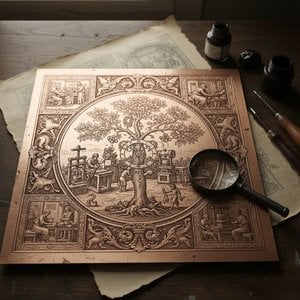
Explore the intricate world of etching and intaglio printmaking. Discover how masters use acid and metal to create profound textures and lines, from Romanticism to modern era, through an expert lens of art history and technical mastery.

 Peržiūrėti realybėje
 Pasidalinti
 Dalintis
 Išsamiau

 Atsisiųsti
 Panašūs eksponatai
 Rentgeno nuotrauka
 Automatinė diorama

 Skaityti daugiau




































 Stiklo variantas prieinamas tik pasirinkus dydį iki 110 cm


