Peržiūrėti realybėje Peržiūrėti AR Perejti prie spausdinimo Perejti prie skaitmeninio vaizdo Pasidalinti
Išsamiau Pridėti į mėgstamiausius Atsisiųsti Panašūs eksponatai Rentgeno nuotrauka Automatinė diorama Statistika

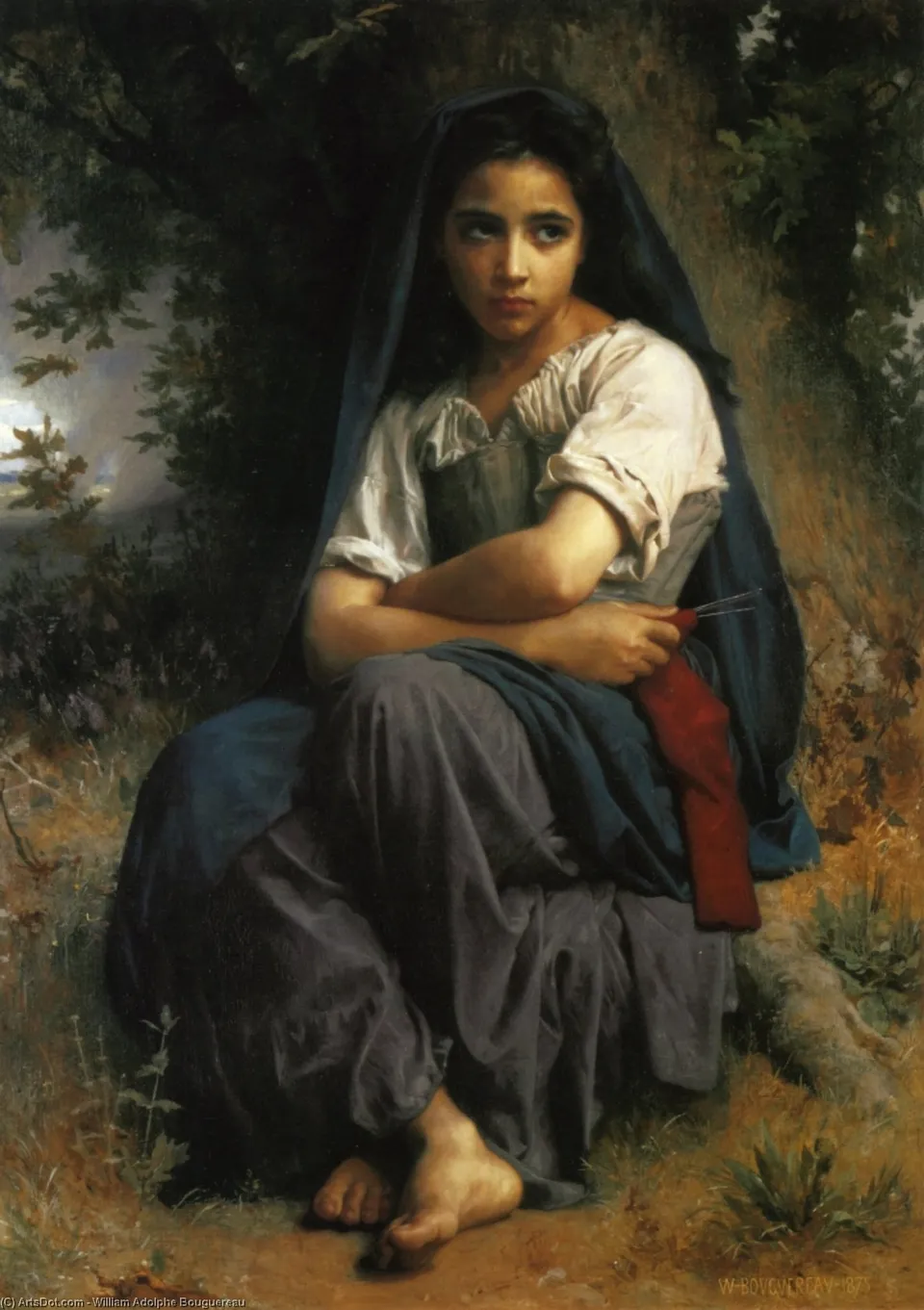
The Little Knitter

Captured in Academicism style by William-Adolphe Bouguereau during the Belle Époque, ‘The Little Knitter’ portrays a serene young girl lost in contemplation amidst dappled sunlight and scattered leaves—a timeless masterpiece inviting you to experience its exquisite beauty.

Viljamas Adolfas Bouguereau buvo Prancūzijos akademinis dailininkas. Jo įmantrios žanrinės drobės iškvėpino mitologiją ir įkvepėjo klasikinius principus. Atraskite jo meistriškumą šiandien!

Rankų darbo aliejinės reprodukcijos

Rankiniu būdu tapytas aliejus ant droblio jūsų pageidaujamame dydį ir rėmuose – mūsų menininkų darbas pagal užsakymą. ( Perejti prie spausdinimo Perejti prie skaitmeninio vaizdo)

P118B $10
P118H $10
P118W $10
P438Z $10
P508JH $12
P508YH $12
P805H $10
P805Z $10
P919BZ $10
P919G $10
P919XJ $10
P959ZH $10
P968JZ $12
W106C $8
W218G $10
W218JH $8
W218Y $10
W307PJ $10
W316G $10
W316PJ $8
W316Y $10
W398PJ $8
W4111J $10
W500HY $15
W500JH $15
W692G $12
W849H $8
W940BG $15
W953PJ $8

Standartinis dydis
individualiame dydį
CM
INCH

Pasirinkite iš mūsų nustatytų dydžių, atitinkančių originalaus meno kūrinio proporcijas.

plotis
aukštis

Galite įvesti savo matmenis, kad jie atitiktų konkretų rėmą ar erdvę. Jei pasirinktas dydis neatitinka originalaus paveikslėlio proporcijų, mes arba apkropsime meno kūrinį, arba papildysime tapybą rankomis dažytい elementais. Prieš pradėdami gamybą, jūsų patvirtinimui atsiųsime skaitmeninį maketą.
Atkreipkite dėmesį, kad ekrane rodomas vaizdas neatspindi tikrojo apkarpymo ar papildymo. Tik maketas tiksliai parodys galutinę kompoziciją.
Nors galima rinktis ir individualius dydžius, rekomenduojame pasirinkti matmenis iš nustatytos sąrašo, kad būtų išlaikytos originalios proporcijos.

Ką galima pakeisti (pavyzdžiai): Pakeisti veidą į kliento nuotrauką; Pridėti augintinį (pvz., pakeisti katę šunimi); Įtraukti paslėptą žinutę fone; Pakeisti fono kraštovaizdį ar elementus.
Gavus užsakymą, WahooArt.com komanda susisieks su klientu el. paštu dėl instrukcijų ir pateiks maketo pavyzdį.

Pristatymas visame pasaulyje () per 3–4 savaites, o ne įprastai – per 5 savaites. (16 rugsėjis). Kokybė lieka nepakeičiama.

why_choose_icon
Nemokamas greitasis pristatymas visame pasaulyje
why_choose_icon
Aukštos kokybės lininis drobė
why_choose_icon
Pilnas siuntimo draudimas
why_choose_icon
Muitinės mokesčių grąžinimo garantija
why_choose_icon
Tikro spalvų atitikimo garantija
why_choose_icon
100 dienų grąžinimo politika (tik esant įtaigoms)
why_choose_icon
100% pinigų grąžinimo garantija
why_choose_icon
Nuolaida už kelias reprodukcijas

Visų darbų kaina

$ 272

reproduction

The Little Knitter

Reprodukcijos technika

Reprodukcijos matmenys

-

Galutinė kaina

$ 272

Trumpos informacija

  • Artist: William-Adolphe Bouguereau
  • Title: The Little Knitter
  • Notable elements: Detailed depiction; Tranquil setting
  • Dimensions: 115 x 81 cm
  • Year: 1875
  • Medium: Oil on canvas

A Portrait of Innocence: Exploring Bouguereau’s “The Little Knitter”

William-Adolphe Bouguereau's "The Little Knitter," completed in 1875, stands as a quintessential example of Academic Impressionism—a movement that sought to reconcile the grandeur of classical tradition with the burgeoning vibrancy of modern artistic experimentation. Measuring 115 x 81 cm, this oil on canvas masterpiece captures a moment of quiet contemplation, transporting viewers back to a bygone era defined by idealized beauty and moral virtue.

  • Subject Matter: The painting depicts a young girl seated gracefully upon the ground, absorbed in the simple act of knitting. This deliberate choice of subject—a domestic scene—was characteristic of Bouguereau’s artistic sensibilities, reflecting his fascination with portraying idealized femininity and nurturing maternal instincts.
  • Style & Technique: Bouguereau's meticulous attention to detail is immediately apparent. He employs a smooth, polished brushstroke technique that lends an ethereal quality to the surface of the canvas. The artist skillfully renders textures—the soft wool of the scarf, the delicate folds of the girl’s dress—creating a palpable sense of realism despite its stylized presentation.
  • Historical Context: Painted during the Belle Époque, “The Little Knitter” embodies the prevailing artistic ethos of the period. Academic Impressionism sought to honor the legacy of Raphael and Titian while subtly incorporating elements of Impressionistic color palettes—primarily muted blues and greens—to evoke a serene atmosphere.
  • Symbolism: The act of knitting itself carries symbolic weight, representing domesticity, caregiving, and the transmission of values from mother to child. Furthermore, the girl’s gaze directed off-camera invites interpretation, suggesting an inner world brimming with imagination and emotion—a reflection of Bouguereau's belief in art's ability to convey profound psychological truths.
  • Emotional Impact: “The Little Knitter” succeeds in conveying a powerful sense of tranquility and innocence. Its luminous colors and masterful composition evoke feelings of peace, nostalgia, and admiration for the beauty of childhood—themes that resonate deeply with viewers across generations.

WahooArt offers exceptional reproductions of Bouguereau’s “The Little Knitter,” allowing collectors and interior designers alike to experience the enduring allure of this iconic artwork firsthand. Discover more about William-Adolphe Bouguereau and his artistic vision on WahooArt.


Autoriaus biografija

William-Adolphe Bouguereau (1825–1905): A Titan of Academic Realism

William-Adolphe Bouguereau, born in La Rochelle, France, in 1825, stands as one of the most recognizable and revered figures within the landscape of French academic art. From his formative years immersed in the pastoral beauty of Vendée – a region profoundly shaped by Impressionist painters like Monet – Bouguereau embarked on an artistic journey characterized by unwavering devotion to classical principles and unparalleled technical prowess. His oeuvre transcends mere visual representation; it embodies a profound belief in the inherent dignity and sublimity of human form, meticulously rendered with breathtaking precision and infused with emotive resonance. He wasn’t merely attempting to depict what he observed; rather, he sought to capture what he considered to be fundamentally beautiful—a pursuit that cemented his place as a cornerstone of 19th-century artistic achievement.

Early Influences and Artistic Training

Bouguereau's formative years were marked by exposure to the artistic traditions of Vendée, where he absorbed the stylistic nuances of Impressionism alongside his burgeoning fascination with the grandeur of antiquity. However, it was his enrollment at the École des Beaux-Arts in Paris—under the tutelage of François-Edouard Picquenot—that truly catalyzed his artistic development. Here, he immersed himself in the teachings of Raphael and Titian, absorbing their mastery of anatomy, perspective, and color theory. These masters served as guiding beacons, shaping Bouguereau’s stylistic vision and instilling within him an unwavering commitment to replicating the luminous beauty and idealized form that defined Renaissance art. The École instilled a discipline and rigor that would permeate his entire artistic practice—a dedication to meticulous draftsmanship and anatomical accuracy that distinguishes his work from its contemporaries.

The Pursuit of Ideal Beauty: Bouguereau’s Artistic Style

Bouguereau's distinctive artistic style is undeniably rooted in academic realism, yet it transcends mere imitation. He possessed an extraordinary aptitude for capturing the subtleties of human anatomy—the delicate curvature of a shoulder, the subtle blush of skin—with astonishing accuracy. Simultaneously, he demonstrated a masterful command of light and composition, skillfully orchestrating visual elements to evoke emotion and narrative depth. Unlike Impressionists who prioritized fleeting impressions of color and atmosphere, Bouguereau painstakingly reconstructed idealized forms with painstaking detail, striving for a perfection that resonated with the aesthetic sensibilities of his era. His canvases are populated by figures rendered with breathtaking realism—yet they possess an ethereal quality that elevates them beyond mere depiction. Consider *The Birth of Venus*, where Bouguereau transforms Botticelli’s mythological allegory into a luminous celebration of feminine grace and beauty—a testament to his ability to infuse classical themes with emotive resonance.

Major Achievements and Recognition

Throughout his illustrious career, Bouguereau achieved unparalleled acclaim within the Parisian Salon—receiving numerous awards and commissions that solidified his reputation as one of France’s foremost artistic luminaries. His paintings graced the homes of royalty and aristocracy alike, demonstrating his enduring popularity among discerning collectors. However, Bouguereau's unwavering adherence to traditional artistic values—a rejection of Impressionism’s radical experimentation—encountered resistance from avant-garde circles in the early 20th century. Despite this initial setback, Bouguereau’s legacy endured—recognized anew by art historians and critics who championed his technical brilliance and artistic integrity. Today, his works are housed in prestigious museums worldwide—including the Musée d’Orsay and The J. Paul Getty Museum—ensuring that his contribution to French art history will continue to inspire awe and admiration for generations to come. His influence can be discerned in contemporary figurative painting—where artists strive to emulate Bouguereau's mastery of form and light—a testament to the enduring power of classical ideals.

A Lasting Impression: Bouguereau’s Enduring Appeal

William-Adolphe Bouguereau’s artistic vision transcended mere stylistic convention; it embodied a profound belief in the inherent beauty and dignity of human form—a conviction that continues to captivate audiences today. His meticulous draftsmanship, anatomical accuracy, and emotive expression—combined with his unwavering devotion to classical principles—established him as a titan of academic realism—a figure whose influence reverberates throughout the annals of art history. He remains a pivotal artist of the 19th century—representing the zenith of artistic achievement and offering an enduring testament to the transformative power of beauty.

Viljamas Adolfas Bogušėjus

Viljamas Adolfas Bogušėjus

1825 - 1905 , Prancūzija

Trumpa informacija

  • Artistic Movement Or Style: Akademinis Realizmas
  • Artists Or Movements Influenced By This Artist: ['Žanras']
  • Artists Who Influenced This Artist:
    • Rafaelas
    • Titas
  • Date Of Birth: 1825
  • Date Of Death: 1905
  • Full Name: William-Adolphe Bouguereau
  • Nationality: Prancūzijoje
  • Notable Artworks:
    • Šešėlių Šuo
    • Mielasis Už Basą
  • Place Of Birth: La Rochelle, Prancūzija
Tyrinėkite meno kūrinius, suskirstytus pagal temas, stilius ir savybes.