


Rankiniu būdu tapytas aliejus ant droblio jūsų pageidaujamame dydį ir rėmuose – mūsų menininkų darbas pagal užsakymą. ( Pirkti spaudinį Pirkti vaizdą)





























Pasirinkite iš mūsų nustatytų dydžių, atitinkančių originalaus meno kūrinio proporcijas.

Galite įvesti savo matmenis, kad jie atitiktų konkretų rėmą ar erdvę. Jei pasirinktas dydis neatitinka originalaus paveikslėlio proporcijų, mes arba apkropsime meno kūrinį, arba papildysime tapybą rankomis dažytい elementais. Prieš pradėdami gamybą, jūsų patvirtinimui atsiųsime skaitmeninį maketą.
Atkreipkite dėmesį, kad ekrane rodomas vaizdas neatspindi tikrojo apkarpymo ar papildymo. Tik maketas tiksliai parodys galutinę kompoziciją.
Nors galima rinktis ir individualius dydžius, rekomenduojame pasirinkti matmenis iš nustatytos sąrašo, kad būtų išlaikytos originalios proporcijos.
Pristatymas visame pasaulyje () per 3–4 savaites, o ne įprastai – per 5 savaites. (7 rugsėjis). Kokybė lieka nepakeičiama.


Self portarit
Reprodukcijos matmenys
Piet Mondrian’s “Self-Portrait,” created around 1900, stands as a pivotal work in understanding the artist's formative years and his burgeoning fascination with simplification—a preoccupation that would ultimately define his groundbreaking contribution to abstract art. More than just a likeness of the painter himself, this charcoal drawing on paper embodies a deeper exploration of artistic identity and represents Mondrian’s initial foray into distilling visual experience.
“Self-Portrait” marks a crucial step away from Impressionistic techniques toward Mondrian’s signature style—Neoplasticism. This movement championed geometric abstraction as the purest form of artistic expression, rejecting naturalistic imagery in favor of simplified shapes and colors. The artist's deliberate use of charcoal demonstrates an early commitment to this aesthetic principle.
Beyond its technical merits, “Self-Portrait” carries symbolic weight. The artist's gaze—direct and unflinching—represents a confrontation with selfhood and an acknowledgement of inner contemplation. The somber tone of the painting underscores the introspective mood that characterizes this period of Mondrian’s artistic development.
Provenance Details:The artwork resides in the Philips Collection, Washington D.C., USA. It was bequeathed to the museum by Sal Slijper in 1971 and subsequently acquired as part of the Slijper bequest in 2008.
“Self-Portrait” foreshadows Mondrian’s revolutionary embrace of geometric abstraction, establishing him as a pioneer of De Stijl—a movement that championed pure form and color. This early work exemplifies his unwavering dedication to simplifying visual language and transforming it into an instrument for conveying profound emotional resonance.


1872 - 1944 , Nyderlandai

Explore the profound elegance of De Stijl. Discover how Piet Mondrian and the masters of Neoplasticism utilized geometric harmony and primary colors to redefine modern abstraction. An authoritative guide for the discerning collector seeking timeless, structured beauty.

Explore the profound legacy of American Modernism. From Geometric Abstraction to Abstract Expressionism, discover how this era redefined art history. Expert insights for elite collectors seeking to curate timeless, museum-quality masterpieces for their private collections.
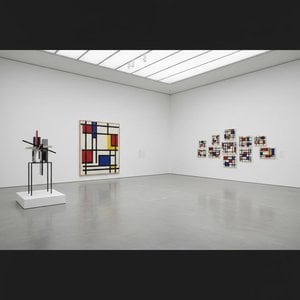
Explore the profound essence of Neoplasticism. Discover how Piet Mondrian and De Stijl masters used pure color and geometric form to redefine modern art. An essential guide for collectors seeking to understand the enduring power of abstract harmony and universal order.

Explore the profound spiritual depth of geometric abstraction. From Malevich's Suprematism to modern masters, our expert guide reveals how pure form and color command presence in fine art collections.

 Peržiūrėti realybėje
 Pasidalinti
 Dalintis
 Išsamiau

 Atsisiųsti
 Panašūs eksponatai
 Rentgeno nuotrauka
 Automatinė diorama
 Skaityti daugiau







 Stiklo variantas prieinamas tik pasirinkus dydį iki 110 cm


