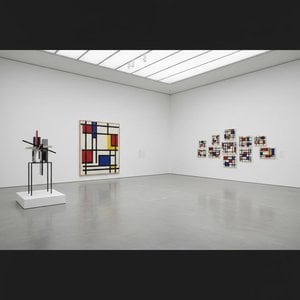
Pietas Mondrijano: Abstrakcijos Simfonija
Pietas Mondrianas, arba Pieteris Kornelis Mondriaanas – olandų dailininkas, gimęs 1872 m. Amersforte, Nyderlanduose, ir miręs 1944 m. Niujorke, Amerikoje, yra vienas reikšmingiausių XX amžiaus abstrakcionizmo pionierių. Jo kelionė nuo peizažo piešimo iki grynosios plastikos – tai nuostabi transformacija, atspindi ne tik dailininko asmeninį intelektualinį ir dvasinį vystymąsi, bet ir visos moderniosios dailės paradigmos poslinkį. Ankstyvieji Mondrijano darbai, pavyzdžiui, *Raudonasis malūnas*, atskleidžia jauno menininko stropumą studijuojant gamtą, įvaldant techniką, tačiau jau tada juntamas ilgesys paprastumo, siekis išgauti esmę. Tai buvo laikotarpis, kai dailininkas eksperimentavo su taškuotomis technika ir fovizmu, ieškodamas savo unikalios raiškos formos. Šie ankstyvieji bandymai buvo būtinas žingsnis į radikalų atsisakymą nuo realistiško vaizdavimo, kuris apibrėš jo palikimą.
Paryžiaus Įtaka ir Neoplastikos Gimimas
1912 m. persikelęs į Paryžių, Mondrijanas pasinėrė į avangardinio meno sūkurį. Kubizmas tapo lemiamu momentu, paskatinusiu jį dekonstruoti formas, išardyti daiktus į geometrines dalis ir atsisukti nuo to, ką jis mato, link tyrimo, kaip jis tai mato. Tačiau Mondrijano kelionė neapsiribojo tik stiliumi; tai buvo dvasinis ieškojimas. Giliai paveiktas Teosofijos – mistinės filosofijos, pabrėžiančios glūdinčius universalus principus – dailininkas įsitikino, kad menas gali būti priemonė išreikšti paslėptas tiesas. Šis įsitikinimas skatino jo neatsargų siekį abstrakcijos, vedantį jį sumažinti spalvas ir formas iki jų pačių fundamentaliausių elementų. Apie 1917 metus šis kelias kulminacija susiformavo Neoplastikos – grynosios plastikos – koncepcija. Tai buvo radikali estetika, grindžiama esminėmis formomis – stačiomis linijomis, tiesiais kampais – ir ribotu spalvų paletės: pagrindinėmis spalvomis (raudona, mėlyna, geltona), balta, pilka ir juoda. Mondrijano nuomone, šis sumažinimas nebuvo apie tuštumą; tai buvo apie atskleidžiant Visatos glūdinčią harmoniją, vizualizaciją dvasinio tvarkos. Kartu su Theo van Doesburgu dailininkas įkūrė *De Stijl* (Stilius) menininkų grupę, siekdami skleisti šias idėjas ir įtvirtinti Neoplastiką kaip svarbų moderniosios dailės jėgos elementą. Tokie šedevrai kaip *Kompozicija su raudonais, mėlynais ir geltonais* bei *Tableau nr. 2 Kompozicija Nr. V* yra neeilinių pavyzdžių, atspindinčių jo nepajudinamą įsipareigojimą geometrinei grynumui.
Niujorko Ritmai: Vėlesnis Dailės Žydėjimas
Antrojo pasaulinio karo protrūkis 1940 m. privertė Mondrijaną palikti Europą ir ieškoti prieglobsčio Niujorke, Amerikoje. Šis persikraustymas netikėtai pasirodė esantį itin įkvepiančiu. Miesto griežta tinklinė struktūra – ryški kontrastas su ankstesniais organiniais peizažais – atitiko dailininko principus. Vėlesni jo darbai, pirmiausia *Broadway Boogie Woogie* (1943), atspindi šią įtaką. Išlaikydamas Neoplastikos pagrindinius principus, paveikslas įveda dinamišką energiją, gyvą ritmą, įkvėptą miesto pulsavimo ir džiazo muzikos. Tiesios linijos išlieka, tačiau dabar jos šoka ir susijungia su didesniu laisvumu, sukuriant judėjimo ir džiugumo jausmą. Atrodė, kad Mondrijanas rado naują kalbą savo nustatytojo žodyno ribose – būdą išreikšti modernios miesto egzistencijos sudėtingumą per geometrinės abstrakcijos paprastumą.
Palikimas: Mondrijano Enduring Influence
Pietas Mondrianas paliko neįvertinamą įtaką meno pasauliui. Jis nebuvo tik dailininkas; tai buvo vizionierius, kuris fundamentaliai pakeitė mūsų supratimą apie abstrakciją ir jos potencialą išreikšti universalias tiesas. Jo darbai giliai paveikė daugybę menininkų, judėjimo ir disciplinų. Abstrakti ekspresija, minimalizmas ir spalvų lauko tapybos visos skolingos jam pionieriškam požiūriui. Tačiau jo įtaka išsiskiria ne tik už drobės ribų. Neoplastikos principai – paprastumas, aiškumas, geometrinis tvarkymas – paveikė architektūrą, dizainą ir madą. Nuo baldų ir tekstilės iki pastatų fasadų ir grafinių išdėstymų, Mondrijano estetika toliau formuoja mūsų vizualųjį pasaulį. Jis išlieka ikoniniu moderniosios dailės atvaizdu – nuolatinio abstrakcijos siekimo ir meninės naujovės galios simboliu. Kaip pastebėjo meno istorikas Stephenas Bayley, Mondrijanas tapo „totemu viskam, ko siekdavo Modernizmas“. Jo palikimas yra ne tik estetinės grožybės klausimas, bet ir intelektualinio atgarsio, dvasinio gylio ir nepajudinamojo įsitikinimo menų transformuojančiu potencialu.
Įtaka ir Pagrindiniai Darbai
- Ankstyvos Įtakos: Nyderlandų peizažistų mokykla, olandiškojo impresionizmo, taškuotosios technikos ir fovizmo įtaka padėjo pagrindą jo ankstesnėms meninėms paieškoms.
- Transformuojanti Įtaka: Kubizmas Paryžiuje buvo lemiamas poslinkiui link abstrakcijos ir geometrinių formų.
- Filosofinis Pagrindas: Teosofija giliai paveikė jo įsitikinimą, kad menas gali išreikšti universalus dvasines principus.
- Pagrindiniai Darbai: *Raudonasis malūnas* (ankstyvasis natūralistinis laikotarpis), *Kompozicija su raudonais, mėlynais ir geltonais* (tipiškas Neoplastizmas), *Tableau nr. 2 Kompozicija Nr. V* (demonstruoja esminių formų redukciją), *Broadway Boogie Woogie* (vėlesnis dinamiškumas, įkvėptas Niujorko miesto).
- Enduring Influence: Mondrijano darbai ir toliau įkvepia menininkus, architektus ir dizainerius, formuodami modernią estetiką per įvairias disciplinas.
Jo estetikos principai išsiplėtė už tapybos ribų ir paveikė architektūrą, dizainą bei madą. Jis išlieka ikoniniu moderniosios dailės atvaizdu, reprezentuodamas abstrakcijos siekimą ir universalų harmoniją.



 Peržiūrėti realaus dydžio版
 Perjungti į spausdinimą
 Siųsti
 Dalintis
 Išsamiau
 Gidas
Gidas

 Atsisiųsti
 Panašūs eksponatai
 Rentgeno spindulių nuotrauka
 Diaporama
 Statistika


 Rodyti daugiau






































 Stiklo variantas prieinamas tik pasirinkus dydį iki 110 cm