Peržiūrėti realybėjePeržiūrėti realybėje Peržiūrėti ARPeržiūrėti AR Perejti prie spausdinimo Perejti prie spausdinimoPirkti rankomis tapytą paveikslą Pirkti rankomis tapytą paveikslą PasidalintiPasidalinti
IšsamiauIšsamiau Pridėti į mėgstamiausius Pridėti į mėgstamiausius AtsisiųstiAtsisiųsti Panašūs eksponataiPanašūs eksponatai Rentgeno nuotraukaRentgeno nuotrauka Automatinė dioramaAutomatinė diorama StatistikaStatistika

Lucretia

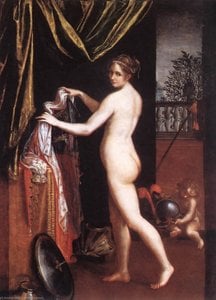
Lucas Cranach's "Lucretia" portrays Lucretia’s courageous act of suicide to protect her honor after Tarquin’s attempted rape, embodying Renaissance ideals of virtue and masterful chiaroscuro technique.

Lukaso Kranacho meistras – Šiaurės Rezgiseno meno šedevrai, įkvėpę Reformą ir iššūkianti tradicijas! Jo paveikslai žvelgia į istoriją ir įsikėlė į muziejų kolekcionierių širdis.

Įsigykite aukštos skiriamosios raiškos, patobulintą skaitmeninį vaizdą, gerokai pranašesnį už internetinę peržiūrą.

Kiekvieną failą mūsų specialistai kruopščiai paruošia naudojant pažangias technologijas ir profesionalų rankinį retušavimą. Užtikriname, kad kiekvienas vaizdas pasižymėtų išskirtiniu aiškumu, tikslia spalvų atspalviu ir smulkiomis detalėmis.

Baigiamas failas el. paštu pristatomas per 72 valandas; jis optimizuotas nedelsiant naudojimui profesionalioje, redakcinėje ir spausdinimo aplinkoje. Tai ta pati kokybė, kuria pasitiki aukščiausios klasės dizaino studijos, leidyklos ir galerijos.

Skaitmeninis vaizdas

Atsisiųskite didelės raiškos failą asmeniniam naudojimui, spausdinimui ir kūrybiniams projektams. (Perejti prie spausdinimo Perejti prie spausdinimoPirkti rankomis tapytą paveikslą Pirkti rankomis tapytą paveikslą)

Visų sumos kaina

$ 24,90

Kiekvieną skaitinio vaizdo užsakymą papildė

Profesionalus skaitmeninis pristatymas, garantuotas

Pasirinkę WahooArt.com, jūs ne tik gaunate paveikslėlį – jūs gaunate profesionaliai patobudintą skaitmeninį kūrinį, sukurtą itin tikniai ir užtikrinantį pasitenkinimą. Štai viską, kas automatiškai pritékia jūsų užsakymui:

shipping_icon
Greitas siuntimas el. paštu

Jūsų aukštos raiškos skaitmeninis vaizdo failas bus išsiųstas jums el. paštu per 72 valaudas nuo užsakymo – paruoštas naudojimui be jokių papildomų veiksmų.

canvas_icon
Skaitmeninis failas su dirbtiniu intelektu

Jūsų meno kūrinys profesionaliai optimizuojamas naudojant pažangius dirbtinio intelekto įrankius ir rankinį redagavimą, užtikrinant maksimalią detalę, aiškumą ir spalvų tikslumą.

insurance_icon
Nemokamas visam laikui pakartotinis siuntimas

Atsitiktinai ištrytikote ar praradote savo failą? Nebijokite – bet kuriuo metu atsiųsime jį jums vėl nemokamai.

tax_icon
Jokio importo mokesčio – niekada

Mėgaukitės savo meno kūriniu akimirka – skaitiniai failai visada yra neapmokestinami, todėl nereikės mokėti muitinės, mokesčių ar pristatymo mokesčių.

color_icon
Spalvų tikslumo garantija

Naudodami profesionalią įrangą ir spalvų valdymo sistemas, užtikriname, kad jūsų skaitmeninis vaizdas kuo tiksliau atspindėtų originalias spalvas.

return_icon
100 dienų patikimumo garantija

Jei nebuvosite patenkinti savo skaitmeniniu vaizdu, mes jį peržiūrėsime arba grąžinsime 100% sumą per 100 dienų – be jokių klausimų.

guarantee_icon
100% pinigų grąžinimo garantija

Nesitenkinate? Gaukite visą sumokėtą sumą per 100 dienų nuo skaitmeninio failo gavimo – be jokių papildomų klausimų.

discount_icon
Nuolaidos dideliems užsakymams

Pirkti 3 nuotraukas – pasiūla 10% - Pirkti 5 – pasiūla 15% - Pirkti 10 ir daugiau – pasiūla 20%. Puikiai tinka kūrybiniams projektams, galerijoms bei agentūroms.

Trumpos informacija

  • Movement: German Renaissance
  • Year: 1504
  • Artistic style: Elegant
  • Influences: South German Masters
  • Subject or theme: Mythology
  • Medium: Oil on panel
  • Location: Museo de Bellas Artes de Bilbao

Karo viktorina

Kiekviename klausime yra tik vienas teisingas atsakymas.

Klausimas 1:
What is the title of this painting?
Klausimas 2:
Who painted Lucretia?
Klausimas 3:
Where can you find this painting?
Klausimas 4:
What medium was used to create Lucretia?
Klausimas 5:
Lucretia is a significant figure in Roman mythology and history. What event is depicted?

Lucretia: A Renaissance Portrait Steeped in Myth and Moral Reflection

Lucas Cranach the Elder’s “Lucretia” stands as a cornerstone of German Renaissance art, embodying both exquisite craftsmanship and profound psychological insight. Painted around 1504 for Frederick III, Elector of Saxony—a patron deeply invested in humanist ideals—the artwork transcends mere visual representation to delve into themes of virtue, honor, and the devastating consequences of betrayal.

The painting depicts Lucretia, wife of Sextus Tarquinius Superbus, Rome’s tyrannical king. Following a scandalous affair between Sextus and Lucretia's younger sister, Julia, Lucretia bravely took her own life to protect her honor after Sextus attempted to rape Julia. Cranach meticulously captures the moment of Lucretia’s suicide—a woman draped in white linen, clutching a dagger—creating an image that is simultaneously serene and fraught with sorrow.

Cranach's masterful technique exemplifies the prevailing artistic sensibilities of his time. Executed on oak panel using oil paint, he employs chiaroscuro – dramatic contrasts between light and dark – to sculpt Lucretia’s form and imbue the scene with palpable emotion. The subtle shading highlights the delicate musculature of her torso and emphasizes the vulnerability conveyed by her gaze. Cranach's meticulous attention to detail extends beyond anatomy; he renders the drapery with remarkable realism, capturing folds and textures that contribute significantly to the painting’s overall atmosphere.

Beyond its technical brilliance, “Lucretia” resonates deeply with mythological symbolism rooted in Roman legend. Lucretia herself is a figure from Virgil's Aeneid, representing chastity and virtue—qualities deemed paramount by Renaissance humanists. The dagger symbolizes sacrifice and defiance against oppression, reflecting the moral dilemma faced by Lucretia as she chose honor over survival.

The painting’s emotional impact remains powerfully felt centuries later. Cranach's portrayal of grief is understated yet profound, conveying a sense of tragic beauty that speaks to universal human experiences. “Lucretia” serves not merely as a depiction of an historical event but as a meditation on the enduring importance of moral integrity and the devastating repercussions of injustice—a timeless masterpiece that continues to inspire contemplation and admiration.

  • Artist: Lucas Cranach the Elder
  • Year Painted: 1504
  • Medium: Oil on Panel
  • Location: Museo de Bellas Artes de Bilbao (Bilbao, Spain)

For a stunning high-quality reproduction of Lucretia, explore here.

Discover more about Cranach’s artistic legacy at Lucas Cranach the Elder's Artist Page.


Autoriaus biografija

Lucas Cranach the Elder

Lucas Cranach the Elder, born in Kronach, Germany around 1472, stands as a pivotal figure of the German Renaissance. His life unfolded during a period of immense religious and political upheaval, and his art became inextricably linked to both the burgeoning Protestant Reformation and the opulent courts he served. Initially trained by his father, Hans Maler, Cranach’s early artistic development remains somewhat shrouded in mystery, though influences from South German masters are evident in his evolving style. He quickly distinguished himself not merely as a skilled craftsman but as an artist capable of capturing psychological depth alongside technical precision – qualities that would soon draw the attention of powerful patrons. In 1504, he entered the service of Frederick III, Elector of Saxony, a relationship that would define much of his career and provide him with both stability and access to influential circles. This appointment as court painter in Wittenberg wasn’t simply about producing decorative works; it placed Cranach at the very heart of one of the most transformative movements in European history.

Early Life and Artistic Training

Little is known definitively about Lucas Cranach's formative years, but evidence suggests he received a comprehensive artistic education from his father, Hans Maler—a respected painter and craftsman who practiced in Kronach and Nuremberg. Hans Maler instilled in Lucas a meticulous attention to detail and a mastery of traditional techniques – skills that would serve as the foundation for Cranach’s subsequent artistic endeavors. While biographical information remains scarce, scholars believe Cranach's exposure to the artistic traditions of Nuremberg—particularly the influence of Albrecht Dürer—contributed significantly to his stylistic development. Dürer’s pioneering use of engraving and printmaking techniques undoubtedly shaped Cranach’s approach to visual communication, fostering a fascination with precision and clarity that would characterize much of his oeuvre. The workshop environment fostered by Hans Maler instilled in Lucas not only technical proficiency but also an understanding of the collaborative process—a practice that would become central to Cranach's artistic career.

Service to Frederick III and Wittenberg

Cranach’s ascension to prominence began with his appointment as court painter to Frederick III, Elector of Saxony, a patronage that proved remarkably fruitful both artistically and financially. Frederick III recognized Cranach’s talent for portraiture and commissioned numerous portraits of himself and members of the Saxon nobility—works that exemplify Cranach's stylistic innovations and demonstrate his ability to convey psychological nuance alongside technical virtuosity. Wittenberg, where Cranach served as court painter during Luther’s tenure, became a crucible of artistic and intellectual ferment—a place where Cranach wrestled with theological debates and engaged in dialogues with leading humanist thinkers. This engagement with the Reformation profoundly influenced Cranach's artistic vision, prompting him to explore themes of faith, morality, and human dignity—subjects that would permeate his paintings and woodcuts throughout his career. The patronage of Frederick III provided Cranach with access to resources and opportunities unavailable to many other artists of his time—allowing him to establish a thriving workshop and produce an astonishingly diverse body of work.

Style and Technique: Northern Renaissance Elegance

Lucas Cranach’s artistic style is characterized by its refined elegance and meticulous attention to detail—qualities that align perfectly with the aesthetic sensibilities of the Northern Renaissance. He employed a distinctive technique combining oil painting, woodcut, and engraving—a combination that enabled him to achieve remarkable visual effects while maximizing accessibility through affordable prints. Cranach's figures possess elongated proportions—a stylistic convention reflecting influences from Flemish masters—and are rendered with subtle shading and modeling that convey a sense of depth and realism. His use of color is vibrant yet restrained—creating harmonious compositions that prioritize clarity and balance. The artist’s meticulous rendering of drapery—particularly in portraits—demonstrates his mastery of traditional techniques and underscores the importance he placed on conveying visual accuracy. Cranach's woodcuts, in particular, stand out for their expressive power—capturing fleeting moments of emotion with remarkable immediacy.

Legacy and Influence

Lucas Cranach the Elder died in 1553, leaving behind an unparalleled artistic legacy that continues to inspire admiration and scholarly inquiry. He was a master of portraiture, a skilled interpreter of religious themes, and a shrewd businessman who understood the transformative potential of visual communication. His work not only reflects the cultural and intellectual landscape of his era but also actively shaped it—particularly through his engagement with the Protestant Reformation and his contribution to the dissemination of humanist ideas. Cranach’s influence extended far beyond Wittenberg and Saxony—reaching artists across Europe and establishing him as one of the most celebrated figures of the German Renaissance. His stylistic innovations—including elongated proportions, vibrant colors, and meticulous attention to detail—became hallmarks of Northern Renaissance art—and his legacy persists in the works of subsequent generations of painters. Cranach’s enduring fascination with mythology—evident in paintings depicting Venus and other classical deities—demonstrates his intellectual curiosity and underscores his commitment to exploring universal themes of beauty, love, and human aspiration. He remains a testament to the power of artistic vision—a figure whose work continues to captivate audiences worldwide.
Lukaso Kranacho Vyresniojo Vardas

Lukaso Kranacho Vyresniojo Vardas

1472 - 1553 , Vokietija

Trumpai apie šį kūrėją

  • Artistic Movement Or Style: Nordrenaissance
  • Artists Or Movements Influenced By This Artist: ['Martin Luther']
  • Artists Who Influenced This Artist: ['Hans Maler']
  • Date Of Birth: Kronach, Deutschland
  • Date Of Death: 1553
  • Full Name: Lucas Cranach der Ältere
  • Nationality: Deutsch
  • Notable Artworks:
    • Jagd der Hirsche
    • Selbstbildnis
    • Ankündigung an Joachim
  • Place Of Birth: Deutschland