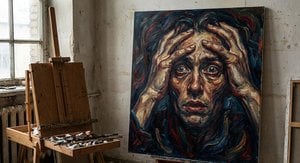
A Vision of Devotion: The Soul of Ensor’s Masterpiece
In the quiet corners of art history, few works possess the haunting, introspective power of James Ensor’s The Virgin of the Consolation. Painted around 1908, this profound achievement in Belgian Expressionism transcends mere portraiture to offer a meditation on faith, vulnerability, and the sacred. The canvas presents a scene of deep emotional resonance: a woman, draped in regal sapphire blue and adorned with a subtle crown, stands as a pillar of spiritual authority. Before her, a man kneels in a posture of palpable reverence, his gaze fixed upward with an intensity that bridges the gap between the earthly and the divine. It is a tableau that captures a fleeting moment of quiet contemplation, inviting the viewer to step into a space where the boundaries between the physical world and the spiritual realm begin to blur.
The composition is masterfully orchestrated to draw the eye inward, toward the emotional heart of the narrative. Framed by a somber archway that suggests an intimate sanctuary, the scene is further enriched by two canvases hanging above the central figures, depicting biblical scenes. These secondary paintings serve as visual echoes, reinforcing the Virgin Mary’s role as a conduit for divine grace and anchoring the work within a long tradition of sacred storytelling. For the discerning collector or interior designer, this piece offers more than just aesthetic beauty; it provides a focal point of profound depth, capable of anchoring a room with its heavy, contemplative atmosphere.
The Expressive Language of Light and Texture
Ensor’s technical execution is a testament to the transformative power of the Expressionist movement. Eschewing the rigid constraints of objective realism, he employs a muted, sophisticated palette dominated by deep blues, earthy browns, and shadowy tones. This choice of color creates an atmosphere of subdued solemnity, perfect for evoking the weight of religious devotion. The artist’s hand is visible in every thick, deliberate brushstroke, which lends a remarkable textural richness to the canvas. These impasto-like applications do not merely depict form; they emphasize the physicality of the paint itself, mirroring the psychological intensity and the raw, human emotions of the subjects depicted.
There is a deliberate distortion of perspective and form within the work that serves to amplify its emotional impact. By manipulating space, Ensor directs the viewer’s focus toward the interplay of light and shadow on the figures' faces and garments. This technique creates a sense of movement and life within the stillness of the scene. For those seeking to incorporate high-quality reproductions into a curated space, the tactile quality of Ensor’s style offers a sophisticated layer of visual interest, making it an ideal selection for environments that value texture, nuance, and the evocative power of fine art.
A Legacy of Shadows and Symbolism
To understand The Virgin of the Consolation, one must understand the world of James Ensor. Born in the seaside town of Ostend, Belgium, Ensor’s upbringing was steeped in the vibrant, often unsettling imagery of carnivals and masks. While much of his work explores the grotesque and the masked, this particular piece reveals a more tender, albeit haunting, side of his genius. The juxtaposition of the woman's regal crown with her apparent vulnerability speaks to the complexities of maternal devotion and the anxieties of the early 20th century, making the painting feel remarkably modern in its psychological depth.
The painting stands as a singular achievement that balances the unsettling with the sublime. It is a work that does not merely ask to be seen, but to be felt. Whether placed in a private gallery or used as a centerpiece in a thoughtfully designed interior, this reproduction of Ensor’s vision brings with it a sense of history and a profound emotional gravity. It remains an enduring invitation to contemplate the mysteries of faith and the enduring beauty found within the shadows of the human experience.



 Peržiūrėti realybėje
 Pirkti spaudinį
 Pasidalinti
 Dalintis
 Išsamiau

 Atsisiųsti
 Panašūs eksponatai
 Rentgeno nuotrauka
 Automatinė diorama

 Skaityti daugiau






































 Stiklo variantas prieinamas tik pasirinkus dydį iki 110 cm