NEMOKAMA MENO KONSULTACIJA

x
Pirkti atspaudą Pirkti atspaudąUžsisakyti kopiją Užsisakyti kopiją PasidalintiPasidalinti
IšsamiauIšsamiau Pridėti į mėgstamiausius Pridėti į mėgstamiausius AtsisiųstiAtsisiųsti Panašūs eksponataiPanašūs eksponatai RentgenogramąRentgenogramą Automatinė dioramaAutomatinė diorama

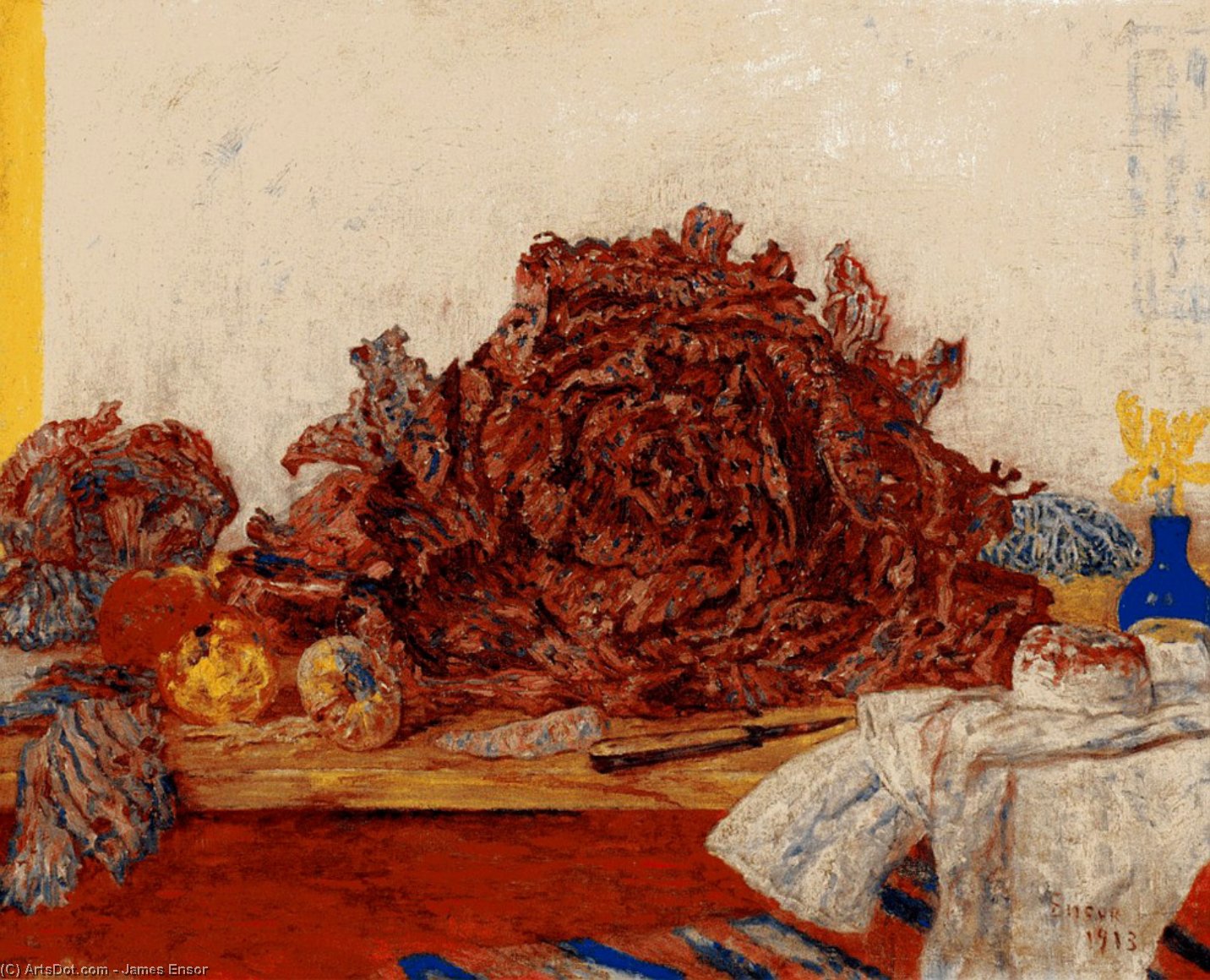
Choux rouges et oignons

"James Ensoras (1860–1949 m.) – vienas reikšmingiausių XIX a. pabaigos Belgijos avangardinių dailininkų. Garsiausiu jo paveikslu minimas „Kristaus įžengimas į Briuselį 1889 metais“, kuriame jis parodytas groteskiškai išraiškiantis žvilkus į žiūrovą ir naudojamas spalvingai išraiškingi dažai, simbolizuojantys gyvenimo energiją. Jo kūriniai yra įvykdyti įvykdyti įvykdyti įvykdyti įvykdyti įvykdyti į

Įsigykite aukštos skiriamosios raiškos, patobulintą skaitmeninį vaizdą, gerokai pranašesnį už internetinę peržiūrą.

Kiekvieną failą mūsų specialistai kruopščiai paruošia naudojant pažangias technologijas ir profesionalų rankinį retušavimą. Užtikriname, kad kiekvienas vaizdas pasižymėtų išskirtiniu aiškumu, tikslia spalvų atspalviu ir smulkiomis detalėmis.

Baigiamas failas el. paštu pristatomas per 72 valandas; jis optimizuotas nedelsiant naudojimui profesionalioje, redakcinėje ir spausdinimo aplinkoje. Tai ta pati kokybė, kuria pasitiki aukščiausios klasės dizaino studijos, leidyklos ir galerijos.

Skaitmeninis vaizdas

Atsisiųskite didelės raiškos failą asmeniniam naudojimui, spausdinimui ir kūrybiniams projektams.

Visų sumos kaina

$9.99

Kiekvieną skaitinio vaizdo užsakymą papildė

Profesionalus skaitmeninis pristatymas, garantuotas

Pasirinkę WahooArt.com, jūs ne tik gaunate paveikslėlį – jūs gaunate profesionaliai patobudintą skaitmeninį kūrinį, sukurtą itin tikniai ir užtikrinantį pasitenkinimą. Štai viską, kas automatiškai pritékia jūsų užsakymui:

shipping_icon
Greitas siuntimas el. paštu

Jūsų aukštos raiškos skaitmeninis vaizdo failas bus išsiųstas jums el. paštu per 72 valaudas nuo užsakymo – paruoštas naudojimui be jokių papildomų veiksmų.

canvas_icon
Skaitmeninis failas su dirbtiniu intelektu

Jūsų meno kūrinys profesionaliai optimizuojamas naudojant pažangius dirbtinio intelekto įrankius ir rankinį redagavimą, užtikrinant maksimalią detalę, aiškumą ir spalvų tikslumą.

insurance_icon
Nemokamas visam laikui pakartotinis siuntimas

Atsitiktinai ištrytikote ar praradote savo failą? Nebijokite – bet kuriuo metu atsiųsime jį jums vėl nemokamai.

tax_icon
Jokio importo mokesčio – niekada

Mėgaukitės savo meno kūriniu akimirka – skaitiniai failai visada yra neapmokestinami, todėl nereikės mokėti muitinės, mokesčių ar pristatymo mokesčių.

color_icon
Spalvų tikslumo garantija

Naudodami profesionalią įrangą ir spalvų valdymo sistemas, užtikriname, kad jūsų skaitmeninis vaizdas kuo tiksliau atspindėtų originalias spalvas.

return_icon
60 dienų pasitenkinimo garantija

Jei nebuvate patenkinti savo skaitinio vaizdo, per 60 dienų jį pertaisysime arba grąkinsime 100% sumą – be jokių klausimų.

guarantee_icon
100% pinigų grąžinimo garantija

Nepat 만족inti? Gaukite visą sumokėtą sumą per 60 dienų nuo skaitmeninio failo gavimo – be jokių papildomų klausimų.

discount_icon
Nuolaidos dideliems užsakymams

Pirkti 3 nuotraukas – pasiūla 10% - Pirkti 5 – pasiūla 15% - Pirkti 10 ir daugiau – pasiūla 20%. Puikiai tinka kūrybiniams projektams, galerijoms bei agentūroms.

Trumpos informacija

  • Influences:
    • Symbolism
    • Expressionism
  • Notable elements: Bold colors, distortion
  • Title: Choux rouges et oignons
  • Subject or theme: Still life, cycles
  • Movement: Expressionism
  • Location: Various collections

Karo viktorina

Kiekviename klausime yra tik vienas teisingas atsakymas.

Klausimas 1:
Which artistic movement is most closely associated with James Ensor’s ‘Choux rouges et oignons’?
Klausimas 2:
The vibrant reds and yellows in ‘Choux rouges et oignons’ are likely intended to evoke which emotional response?
Klausimas 3:
What is a key characteristic of James Ensor’s artistic style, as reflected in this painting?
Klausimas 4:
The inclusion of objects like red cabbages and onions in the still life is potentially symbolic of what?
Klausimas 5:
James Ensor’s upbringing in Ostend, Belgium, influenced his art. What was a significant element of his childhood environment that shaped his artistic vision?

Kolekcinio objekto aprašymas

A World Woven in Masks and Melancholy: James Ensor’s *Choux rouges et oignons*

James Ensor's 1896 painting, *Choux rouges et oignons*, isn’t merely a still life; it’s a carefully constructed tableau of unsettling beauty, a window into the artist’s uniquely shadowed psyche. Born in Ostend, Belgium, to an English father and a Belgian mother – a heritage that perpetually positioned him between two worlds – Ensor developed a profound fascination with duality, disguise, and the hidden anxieties simmering beneath the surface of everyday life. This preoccupation manifests powerfully in *Choux rouges et oignons*, where familiar objects are rendered with deliberate distortion and imbued with an atmosphere of quiet unease. The painting’s power lies not just in its visual elements but in the palpable sense of melancholy that clings to it, a feeling rooted in Ensor's own complex personal history and his broader engagement with the burgeoning Expressionist movement.

The Language of Distortion: Style and Technique

Ensor’s technique is immediately arresting. He employs bold, almost jarring colors – vibrant reds and yellows dominate the composition, contrasted against darker greens and browns – to create a sense of heightened emotional intensity. The forms themselves are deliberately distorted; the cabbages appear bulbous and misshapen, the onions seem to swell with an unsettling vitality, and even the table itself possesses a subtly warped quality. This isn’t a faithful representation of reality but rather a deliberate manipulation of form designed to evoke feeling. Ensor masterfully utilizes impasto – applying paint thickly – particularly in the rendering of the fruits and vegetables, adding texture and emphasizing their physicality while simultaneously contributing to the painting's overall sense of unease. The brushstrokes are visible, energetic, and imbued with a raw immediacy that speaks directly to the artist’s emotional state.

Symbolism Beneath the Surface: Apples, Bottles, and Cycles

*Choux rouges et oignons* is rich in symbolic potential. The prominent red cabbages and onions are frequently interpreted as representations of mortality and the cyclical nature of life and death – a common motif in Ensor’s work. The scattered apples, often associated with temptation and decay, further reinforce this theme. Notice also the carefully positioned objects: two bottles flanking the table, perhaps symbolizing duality or confinement; a vase, suggesting fragility and beauty; and a bowl resting on the surface, hinting at nourishment and sustenance. These seemingly simple elements coalesce to create a complex visual narrative that invites contemplation and interpretation. It’s important to remember Ensor's context within Symbolism – a movement concerned with exploring inner psychological states through evocative imagery – which informs this layering of meaning.

A Bridge Between Traditions: Ensor, Kuhn, and the Still Life

While *Choux rouges et oignons* firmly establishes Ensor’s unique Expressionist voice, it also reveals connections to earlier artistic traditions. The still life genre has a long history in art, dating back to Renaissance masters like Leonardo da Vinci. Ensor's work shares similarities with the Apple Basket series created by Walt Kuhn, another prominent figure of the early 20th century who similarly employed still life arrangements to explore themes of mortality and human experience. However, Ensor transcends mere imitation; he infuses the traditional still life with his own intensely personal vision, transforming it into a powerful expression of psychological turmoil. The painting’s placement within this lineage highlights both Ensor's originality and his engagement with the broader artistic landscape of his time.

At WahooArt.com, we offer meticulously crafted hand-painted reproductions of *Choux rouges et oignons*, allowing you to experience the full impact of Ensor’s masterful vision in stunning detail. Whether for your personal collection or as a striking addition to your interior design scheme, our reproductions capture the painting's haunting beauty and emotional depth with unparalleled fidelity. Explore our selection today and bring this captivating work of art into your world.**

panašūs kūriniai


Autoriaus biografija

James Ensor

James Sidney Edouard, Baron Ensor was born April 13, 1860 in Ostend, Belgium. He was a Flemish-Belgian painter and printmaker, an important influence on expressionism and surrealism who lived in Ostend for almost his entire life. He was associated with the artistic group Les XX. Ensor's father, James Frederic Ensor, born in Brussels of English parents, was a cultivated man who studied engineering in England and Germany. Ensor's mother, Maria Catherina Haegheman, was Belgian. Ensor himself lacked interest in academic study and left school at the age of fifteen to begin his artistic training with two local painters. From 1877 to 1880, he attended the Académie Royale des Beaux-Arts in Brussels, where one of his fellow students was Fernand Khnopff. Ensor first exhibited his work in 1881. From 1880 until 1917, he had his studio in the attic of his parents' house. His only travels were three brief trips to Paris, London, and Holland. During the late 19th century much of Ensor’s work was rejected as scandalous, particularly his painting Christ’s Entry Into Brussels (1888–89), but his paintings continued to be exhibited, and he gradually won acceptance and acclaim. In 1895 his painting The Lamp Boy (1880) was acquired by the Royal Museums of Fine Arts of Belgium in Brussels, and he had his first solo exhibition in Brussels. By 1920 he was the subject of major exhibitions; in 1929 he was named a Baron by King Albert, and was the subject of the Belgian composer Flor Alpaerts’s “James Ensor Suite”; and in 1933 he was awarded the Légion d'honneur. Alfred H. Barr, Jr., the founding director of the Museum of Modern Art in New York, after considering Ensor’s 1887 painting Tribulations of Saint Anthony (now in MoMA’s collection), declared Ensor the boldest painter working at that time. ## Early Influences and Artistic Training Ensor's formative years were marked by exposure to both Flemish and English artistic traditions. His father, James Frederic Ensor, instilled in him a love for intellectual pursuits and fostered an appreciation for scientific observation—values that would inform his artistic vision throughout his life. Simultaneously, Ensor’s mother, Maria Catherina Haegheman, nurtured his sensitivity to beauty and encouraged him to explore the expressive potential of color and form. Recognizing the limitations of traditional academic training, Ensor deliberately distanced himself from established conventions and sought inspiration in unconventional sources—a decision that would ultimately propel him toward artistic innovation. His initial artistic endeavors focused on capturing the atmosphere of Ostend’s seaside resort town, where his family operated a souvenir shop brimming with curiosities and carnival paraphernalia. These early paintings reflect a fascination with realism tempered by an awareness of psychological complexity—traits that would characterize Ensor's distinctive style for decades to come. ## The Emergence of Expressionism: A Radical Departure Ensor’s artistic trajectory took a decisive turn in the late 1880s as he embraced the burgeoning movement of Expressionism, rejecting the pursuit of objective representation in favor of subjective emotional experience. Influenced by artists such as Edvard Munch and Vincent van Gogh—whose canvases pulsed with raw emotion and distorted forms—Ensor sought to convey inner turmoil and psychological anxieties through bold brushwork and jarring color palettes. He rejected the conventions of Impressionism, which prioritized capturing fleeting impressions of light and atmosphere, arguing that art should confront uncomfortable truths and explore the depths of human consciousness. This rejection of aesthetic ideals fueled his artistic critique and solidified his commitment to a radically innovative style—a stylistic hallmark that would define Ensor’s oeuvre for years to come. ## Recurring Themes and Artistic Symbolism Throughout his prolific career, Ensor consistently explored themes of mortality, decay, social satire, and religious hypocrisy—subjects that resonated with a timeless relevance. His artistic symbolism was deliberately unsettling, rejecting traditional iconography in favor of grotesque imagery and enigmatic compositions designed to provoke contemplation and challenge viewers’ assumptions. He drew inspiration from diverse sources—including Flemish folklore, biblical narratives, and contemporary theatrical productions—weaving together disparate elements into cohesive visual statements. Ensor's fascination with masks—particularly those worn during the Ostend Carnival—served as a recurring motif in his paintings, reflecting his belief that appearances conceal hidden identities and social anxieties. The artist’s masterful manipulation of color and form—characterized by bold brushstrokes and vibrant hues—created canvases imbued with dramatic intensity and psychological depth. ## Legacy and Recognition: A Pioneer of Modern Art James Ensor's artistic legacy extends far beyond the confines of his lifetime, establishing him as a pivotal figure in the history of modern art. His uncompromising rejection of academic conventions paved the way for subsequent generations of artists who dared to challenge artistic norms and explore uncharted territories—a courageous stance that cemented his place among the most influential innovators of his era. Despite facing initial resistance from critics and fellow artists—who deemed his work scandalous and subversive—Ensor gradually gained acceptance and acclaim, culminating in his appointment as a Baron by King Albert I in 1929 and the bestowal of the Légion d'honneur in 1933. His enduring influence can be seen in the works of countless artists who followed him—a testament to the transformative power of artistic vision and unwavering conviction. Ensor’s contribution to art history remains unparalleled, securing his place as one of the most celebrated figures of the avant-garde movement.
Džeimsas Ensoras

Džeimsas Ensoras

1860 - 1949 , Belgija

Trumpai apie šį kūrėją

  • Artistic Movement Or Style: Expressionism, Surrealism
  • Artists Who Influenced This Artist:
    • Bruegel the Elder
    • Francisco Goya
    • Whistler
  • Date Of Birth: April 13, 1860
  • Date Of Death: November 19, 1949
  • Full Name: James Sidney Edouard Ensor
  • Nationality: Belgian
  • Notable Artworks:
    • The Scandalized Masks
    • Skeletons Fighting...
    • Christ's Entry into Brussels
  • Place Of Birth: Ostend, Belgium