Peržiūrėti realaus dydžio版 Peržiūrėti AR realybėje Pirkti rankomis tapytą reprodukciją Perejti prie skaitmeninių vaizdų Siųsti
Išsamiau Vadovas Pridėti į mėgstamiausius Atsisiųsti Panašūs eksponatai Rentgeno spindulių nuotrauka Diaporama Statistika

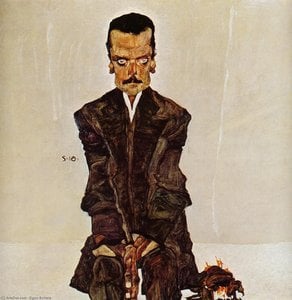
agony 1912

A haunting monochrome confrontation with primal fear, Egon Schiele’s 1912 Expressionist masterpiece Agony captures raw psychological torment and vulnerability, inviting you to explore this profound work of modern art.

Egon Šylė – Austrių ekspresionizmo dailininkas. Žiūrėkite į jo reikšmę Vienoje ir pasaulyje! Ekspresionistinio meno srovės atstovas, žinomas dėl savo psichologinės gilumo ir išraiškos.

Giclée / Meno spausdinimas

Muziejų lygio „giclée“ arba drobos spausdinimas: greita gamyba ir lankstios apdailos parinktys. ( Pirkti rankomis tapytą reprodukciją Perejti prie skaitmeninių vaizdų)

Corner sample of the P118B picture frame: lieto polistirolo, 5 cm wide and 3 cm thick
P118B €10
Corner sample of the P118H picture frame: lieto polistirolo, 5 cm wide and 3 cm thick
P118H €10
Corner sample of the P118W picture frame: lieto polistirolo, 5 cm wide and 3 cm thick
P118W €10
Corner sample of the P438Z picture frame: lieto polistirolo, 5.5 cm wide and 3.5 cm thick
P438Z €10
Corner sample of the P508JH picture frame: lieto polistirolo, 7 cm wide and 3.5 cm thick
P508JH €12
Corner sample of the P508YH picture frame: lieto polistirolo, 7 cm wide and 3.5 cm thick
P508YH €12
Corner sample of the P805H picture frame: lieto polistirolo, 5 cm wide and 3.5 cm thick
P805H €10
Corner sample of the P805Z picture frame: lieto polistirolo, 5 cm wide and 3.5 cm thick
P805Z €10
Corner sample of the P919BZ picture frame: lieto polistirolo, 7 cm wide and 3.5 cm thick
P919BZ €10
Corner sample of the P919G picture frame: lieto polistirolo, 7 cm wide and 3.5 cm thick
P919G €10
Corner sample of the P919XJ picture frame: lieto polistirolo, 7 cm wide and 3.5 cm thick
P919XJ €10
Corner sample of the P959ZH picture frame: lieto polistirolo, 5 cm wide and 3 cm thick
P959ZH €10
Corner sample of the P968JZ picture frame: lieto polistirolo, 6 cm wide and 4 cm thick
P968JZ €12
Corner sample of the W106C picture frame: solidus medžio, 5 cm wide and 3 cm thick
W106C €8
Corner sample of the W218G picture frame: solidus medžio, 5 cm wide and 3 cm thick
W218G €10
Corner sample of the W218JH picture frame: solidus medžio, 5 cm wide and 3 cm thick
W218JH €8
Corner sample of the W218Y picture frame: solidus medžio, 5 cm wide and 3 cm thick
W218Y €10
Corner sample of the W307PJ picture frame: solidus medžio, 6 cm wide and 3 cm thick
W307PJ €10
Corner sample of the W316G picture frame: solidus medžio, 6 cm wide and 3 cm thick
W316G €10
Corner sample of the W316PJ picture frame: solidus medžio, 6 cm wide and 3 cm thick
W316PJ €8
Corner sample of the W316Y picture frame: solidus medžio, 6 cm wide and 3 cm thick
W316Y €10
Corner sample of the W398PJ picture frame: solidus medžio, 5 cm wide and 3 cm thick
W398PJ €8
Corner sample of the W4111J picture frame: solidus medžio, 6.5 cm wide and 3.5 cm thick
W4111J €10
Corner sample of the W500HY picture frame: solidus medžio, 7 cm wide and 5 cm thick
W500HY €15
Corner sample of the W500JH picture frame: solidus medžio, 7 cm wide and 5 cm thick
W500JH €15
Corner sample of the W692G picture frame: solidus medžio, 8 cm wide and 4 cm thick
W692G €12
Corner sample of the W849H picture frame: solidus medžio, 5 cm wide and 3 cm thick
W849H €8
Corner sample of the W940BG picture frame: solidus medžio, 7.5 cm wide and 4.5 cm thick
W940BG €15
Corner sample of the W953PJ picture frame: solidus medžio, 6 cm wide and 3.5 cm thick
W953PJ €8

Standartinis
individualaus dydžio
CM
INCH

Pasirinkite iš mūsų nustatytų dydžių, atitinkančių originalaus meno kūrinio proporcijas.

plotis
aukštis

Įveskite jums reikiamą plotį ir aukštį, kad atvaizdas derėtų prie jūsų rėmo ar sienos. Spausdiną galima tik sumažinti, bet nepadidinti virš originalaus paveikslėlio dydžio, todėl keičiant proporcijas, dalis vaizdo prarandama. Prieš spausdinimą atsiųsime jums skaitmeninį maketą patvirtinimui. Šioje puslapio nuotraukoje matomas pjūvis nėra tikslus – jį rodo tik maketas.

Pristatymas visame pasaulyje () per 2 weeks, o ne įprastas 4/5 savaičių laikotarpis. (22 spalis)

Nemokamas greitasis pristatymas visame pasaulyje
Aukštos kokybės lininis drobė
Pilnas siuntimo draudimas
Muitinės mokesčių grąžinimo garantija
Tikro spalvų atitikimo garantija
100 dienų grąžinimo politika (tik esant įtaigoms)
100% pinigų grąžinimo garantija
Nuolaida dideliems užsakymams

Bendroji kaina

€ 60

agony 1912

Giclée / Meno spausdinimas

Reprodukcijos dydis

-

Visų pasirinktų variantų kaina

€ 60

Pagrindinė informacija

  • Subject or theme: Human suffering; Anxiety
  • Title: Agony
  • Influences: Vienna Secession
  • Artistic style: Psychological realism
  • Medium: Oil on canvas

Karo viktorina

Kiekviename klausime yra tik vienas teisingas atsakymas.

Klausimas 1:
What artistic movement is Egon Schiele’s ‘Agony’ primarily associated with?
Klausimas 2:
The painting depicts two men in a posture that suggests what emotion?
Klausimas 3:
Where can visitors see ‘Agony’ housed?
Klausimas 4:
What is a notable feature of Schiele's artistic style that contributes to the painting’s expressive power?
Klausimas 5:
What role does the inclusion of a book in the composition play in conveying the painting’s thematic concerns?

A Descent Into Darkness: The Visceral Power of Agony

In the hauntingly monochrome landscape of Egon Schiele’s 1912 masterpiece, Agony, we are not merely observers of a scene, but witnesses to an unflinching confrontation with primal fear and psychological torment. This work stands as a profound pillar of Austrian Expressionism, a movement that sought to strip away the polished veneers of academic tradition to reveal the raw, often unsettling truths of the human condition. Through his mastery of line and contrast, Schiele captures a moment of intense vulnerability, inviting the viewer into a space where the boundaries between physical sensation and emotional suffering begin to dissolve.

The composition is deliberately unsettling, designed to provoke a sense of unease that lingers long after one has turned away. At the heart of the canvas, two men dominate the frame in a display of profound tension. One figure kneels in apparent submission, his posture conveying a deep-seated vulnerability, while another stands above him, hands gripping the kneeling man's head with a force that suggests an act of aggression or overwhelming psychological pressure. This dynamic interplay of power and control is a recurring motif in Schiele’s oeuvre, yet here it reaches a fever pitch of dramatic intensity.

The Language of Expressionism: Technique and Symbolism

Schiele’s technique in Agony is a testament to the expressive potential of the monochrome palette. By eschewing color, he heightens the dramatic effect, using bold contrasts of black and white to amplify the oppressive atmosphere. The figures are rendered with the characteristic angular lines and unsettling proportions that define Schiele's style; these distortions are not mere stylistic choices but essential tools used to convey inner turmoil rather than a realistic likeness. Every jagged edge and sharp contour serves to emphasize the psychological drama unfolding before our eyes.

Beyond the central figures, the painting is layered with subtle complexities that deepen its symbolic resonance. The presence of smaller figures scattered throughout the scene adds a sense of chaotic depth, suggesting a world in flux. A book placed near one of the men introduces an intellectual or perhaps even spiritual dimension to the struggle, hinting at the weight of knowledge or tradition amidst the chaos. This interplay of elements creates a dynamic and captivating composition that challenges the viewer to look past the surface and engage with the deeper, more turbulent layers of meaning embedded within the work.

An Eternal Resonance for the Modern Collector

For the discerning collector or interior designer, Agony offers much more than a striking visual presence; it provides an emotional anchor. The painting’s ability to evoke profound feelings of empathy, tension, and introspection makes it a powerful centerpiece for any curated space. It is a work that demands attention, sparking dialogue and reflection on themes of mortality, power, and the fragility of existence.

Owning a high-quality reproduction of this seminal work allows one to bring the intense energy of early twentieth-century Viennese modernism into a contemporary setting. Whether placed in a gallery-style living room or a contemplative study, the stark beauty and psychological depth of Schiele’s Agony serve as a constant reminder of the enduring power of art to confront the darkest corners of the human soul and find truth within the shadows.

问答 (or more naturally for a website heading): Klausimai ir atsakymai

Kokio vietos išdėstymo formatas „agony 1912“, autorius – Egon Šylė tinka?

„agony 1912“, autorius – Egon Šylė formatas Landscape rekomenduojamas Living Room erdvėje. Formatas ir erdvė kartu padeda tinkamai išdėsti reprodukciją.

Kokią nuotaiką „agony 1912“, autorius – Egon Šylė suteikia interjerui?

Savo Dramatic nuotaika „agony 1912“ siūloma Living Room erdvei.

Koks kontrastas yra darbe „agony 1912“, autorius – Egon Šylė?

„agony 1912“, autorius – Egon Šylė pasižymi Gentle kontrastu tarp švesių ir tamsių paviršių.


Autoriaus biografija

Egon Schiele

Austrijos pozicija dviejų pasaulinio karo horizonte buvo labai abejojanti: vienu metu ji buvo šiek tiek iš Šiaurės į rytus, lengvai įsitikinusi veiksmų vyrai. Mažėjęs šalis po 1918 m., beveik visiškai neišplitusi tarptautiniu pasauliu buvo lengvai įvykdinta Hitlerio Reichui 1938 m.; meno srityje tai reiškė kad modernizmo istorija buvo išvykstanti nuo Šiaurės iki pietų, su pagrindiniu dėmesiu į formą. Vokelių šiek tiek pripažino ekspresionizmą kaip svarbų meno srovę; jis buvo vienas iš žymiausius austrių artistas XX amžiaus pradžioje – kartu su Gustavu Klimtu ir Oskar Kokoschka išvykę į Vieną buvo laikomas vienu iš Žyduvo šimtmečio svarbiausių vizualinių menininkų.

Gyvenimas

Egonas Šylė gimė 1890 m. vasario 3 d. Tulne, Austrijoje. Jo tėvas Adolfas Šylė buvo Tulno geležinkelio stoties direktorius ir gimė 1851 m. Vienoje Adolfo Šyly tevai turėjo tris jaunesnes seseris: Elvirą, Melaniją ir Gertrūdą. Elvira mirė vaikyste dėl gimtinių sifiliso. Jo tėvas buvo užsikrėtęs sifiliu įsimėlynėje savo jaunystės metais po vienos jo naujosios žmonos išėjimo iš kambario.

Meno vystymasis

Šylė mokytojo Christian Griepenkerl įtaką išgyveno Vienoje 1907 m. ir G. Klimtas tapo jo svarbiu rėmėju. Šylė paliko akademiją 1906 m., nes jos mokymo metodai buvo labai konservatyvus, ir įkūrė Naują austrių dailės grupę 1909 m. Grupėje vyravo ekspresionistinė estetika, kuri iššūkiant šiuolaikinėms kultūros normas.

Žymūs kūriniai

Šylė buvo vienas iš žymiausius austrių artistas XX amžiaus pradžioje – kartu su Gustavu Klimtu ir Oskar Kokoschka išvykę į Vieną buvo laikomas vienu iš Žyduvo šimtmečio svarbiausių vizualinių menininkų. Šylė buvo ekspresionizmo meno srovės atstovas.

Žymūs veiksniai

Šylė buvo žinomas dėl savo iššūkiantį įžiūrą į pasaulio problemas ir šiuolaikinę estetika, kuri iššūkiant šiuolaikinėms kultūros normas. Šylė buvo ekspresionizmo meno srovės atstovas.

Egon Šylė

Egon Šylė

1890 - 1918 , Austrija

Trumpa informacija apie kūrėją

  • Artistic Movement Or Style: Ekspresionizmas
  • Artists Who Influenced This Artist: ['Gustavas Klimtas']
  • Date Of Birth: 1890 m.
  • Date Of Death: 1918 m.
  • Full Name: Egon Schiele
  • Nationality: Austras
  • Notable Artworks:
    • Savęs portretas su fizižalis
    • Porą įemčianti
    • Žemės apėjimų kraštovaizdis
  • Place Of Birth: Tulnas, Austrija
Tyrinėkite meno kūrinius, suskirstytus pagal temas, stilius ir savybes.