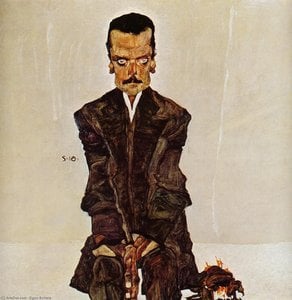
The Visceral Pulse of Expressionism
In the hauntingly intimate masterpiece Agonia, painted in 1912, Egon Schiele invites the viewer into a psychological landscape where the boundaries between physical struggle and existential dread dissolve. The canvas presents a scene of profound tension: two figures locked in a silent, heavy confrontation. One man lies prone upon the floor, his posture embodying a raw sense of vulnerability and surrender, while another stands over him, looming with an imposing presence. This is not merely a depiction of a moment in time, but a window into the very ache of existence. Schiele’s ability to capture the interplay between power and helplessness transforms a simple room into a stage for the human soul's most turbulent conflicts.
The technique employed in Agonia is a masterclass in the Expressionist tradition. Schiele moves beyond the pursuit of realistic representation, instead utilizing bold, angular brushstrokes and a jarring color palette to prioritize emotional truth. The application of paint is characterized by a heavy impasto, where thick, textured layers lend a palpable sense of unease to the surface of the canvas. These expressive, almost restless marks create a vibration of anxiety that seems to emanate from the figures themselves. Through this tactile approach, the artist ensures that the discomfort and tension of the scene are felt physically by the observer, making the work an immersive experience of psychological depth.
Symbolism and the Shadows of Vienna
Emerging from the intellectual ferment of early 20th-century Vienna, Agonia is deeply rooted in the philosophical currents of its era. As the Austro-Hungarian Empire faced decline, artists like Schiele were increasingly drawn to Nietzschean themes of nihilism and the struggle for meaning amidst chaos. Within the composition, subtle symbols enrich the narrative; the cigarette held by the standing figure serves as a poignant visual shorthand for contemplation—perhaps a fleeting attempt to find solace or distraction amidst an overwhelming sense of despair. The muted palette of browns and deep reds further reinforces this melancholic atmosphere, grounding the painting in a world of shadow and introspection.
For the discerning collector or interior designer, this work offers more than just aesthetic beauty; it provides a profound emotional anchor for a space. The painting’s ability to evoke feelings of drama and intensity makes it a compelling centerpiece for those seeking art that challenges and inspires. Whether viewed as a study of human fragility or a powerful statement on the complexities of interpersonal dynamics, Agonia remains an enduring testament to Schiele's genius. Owning a high-quality reproduction of this piece allows one to bring the raw, unshielded energy of Austrian Modernism into a contemporary setting, fostering a continuous dialogue between the historical weight of the past and the aesthetic sensibilities of the present.



 Peržiūrėti realybėje
 Perejti prie spausdinimo
 Pasidalinti
 Dalintis
 Išsamiau

 Atsisiųsti
 Panašūs eksponatai
 Rentgeno nuotrauka
 Automatinė diorama
 Statistika

 Skaityti daugiau






































 Stiklo variantas prieinamas tik pasirinkus dydį iki 110 cm