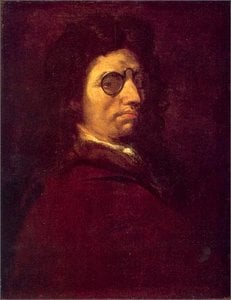
Luca Giordano’s *The Philosopher Cratetes*: A Portrait of Playful Contemplation
This captivating portrait, painted in 1650 by Luca Giordano, offers a rare glimpse into the Neapolitan artist's burgeoning talent during the late Baroque period. Measuring 113 x 90 cm, *The Philosopher Cratetes* immediately draws the eye with its intimate scale and the subject’s remarkably expressive face. The painting depicts a man – likely a scholar or philosopher, as suggested by the title – engaged in a moment of unguarded amusement. His hand is raised, seemingly either waving or gesturing emphatically, while his eyebrows are arched in what appears to be a wry smile or perhaps even a mischievous expression. This isn’t a solemn portrait of intellectual rigor; instead, Giordano captures a fleeting, human moment of contemplation and delight.
A Masterclass in Baroque Technique
Luca Giordano was a prolific artist known for his dynamic compositions and masterful use of light and color. Trained initially under Jusepe de Ribera, he quickly developed his own distinctive style – one characterized by luminosity, movement, and a remarkable ability to render realistic textures. In *The Philosopher Cratetes*, this is evident in the meticulous detail with which Giordano portrays the man’s facial features: the subtle wrinkles around his eyes, the texture of his beard, and the sheen on his skin. The dark background serves not as an absence of color but rather as a dramatic foil, intensifying the impact of the subject's face and emphasizing the play of light across his form. Giordano’s brushwork is loose yet controlled, creating a sense of immediacy and vitality that is characteristic of his work.
Historical Context and Symbolism
Painted in Naples during a period of significant artistic innovation, *The Philosopher Cratetes* reflects the broader trends of the late Baroque. The era was marked by a renewed interest in classical antiquity, but also by a desire to express emotion and drama through art. Giordano’s work aligns with this spirit, offering a departure from the more austere and idealized portraits that were prevalent at the time. While the precise identity of the sitter remains unknown, the title suggests an engagement with philosophical ideas – a common theme in Neapolitan portraiture during this period. The gesture itself could be interpreted as representing intellectual curiosity or even a playful rejection of conventional wisdom.
Emotional Impact and Artistic Value
*The Philosopher Cratetes* is more than just a portrait; it’s an invitation to connect with the human spirit. Giordano's ability to capture a moment of genuine emotion – a flicker of amusement, a hint of contemplation – elevates this work beyond mere representation. This painting exemplifies Luca Giordano’s skill and his contribution to the artistic landscape of Naples during the 17th century. A hand-painted reproduction offers an unparalleled opportunity to experience the full impact of this remarkable artwork in your own space.



 წინასწარი ნახვა
 გადართვა ბეჭდზე
 გაგზავნა
 გაზიარება
 დეტალები

 ჩამოტვირთვა
 მსგავსები
 რენტგენოგრაფიული კვლევა
 სლაიდშოუ
 სტატისტიკა


 გადასართად დაწვრილებით ნახეთ






































 მინის ჩარჩოს არჩევანი ხელმისაწვდომია მხოლოდ 110 სმ-ზე ნაკლები ზომისთვის