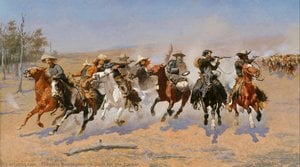
ქრონიკერი გან disappearing West: ფრედერიკ რემინგტონის ცხოვრება და ხელოვნება
ფრედერიკ სეკრაიდერ რემინგტონი, რომელიც 1861 წლის 4 ოქტომბერს კანტონში, ნიუ-იორკში დაიბადა, არ იყო იმ Wild West-ის პროდუქტი, რომელსაც ის ასახვდა; პირიქით, ის აღმოსავლელი იყო, რომელმაც თავისი მხატვრული იდენტობა ფასინაციისა და მიძღვნილი შესწავლის გზით შექმნა. მისი გვარი ცხოვრებისკენ მიანიშნებდა, რომელიც შორს იყო მტვერ ტრეკებსა და კავალერიის თავდასხმებიდან - ფრანგული ბასკური წინაპრობა ნიუ-ინგლისის მყარ რესპუბლიკურ ფესვებთან იყო შერეული, მამა, რომელიც სამოქალაქო ომის პოლკოვნიკი და გაზეთის რედაქტორი იყო, და დისტანციური ბიძაშვილები სახელოვანი Remington Arms-ის დინასტიაში. თუმცა, ადრეულმა სამხედრო თემებთან ურთიერთობამ, ერთგული სულისკვეთებასა და სიახლის აღსაქმელობითი თვალით, ის გზაზე დააყენა, როგორც ამერიკის დასავლეთის ყველაზე ცნობილი მხატვარი. მისი ბავშვობა ბლუმინგტონში, ილინოისი გადავიდა, შემდეგ კი კანტონში დაბრუნდა და საბოლოოდ ოგდენსბურგში, ნიუ-იორკში დასახლდა, მაგრამ მის წარმოსახვას საზღვრის ცხოვრების ისტორიებმა ააღელვა. მიუხედავად იმისა, რომ თავდაპირველად მას სამხედრო განათლება ურჩევია ვერმონტის ეპისკოპალურ ინსტიტუტში, რემინგტონის ნამდვილი მოწოდება ბრძანებების შესრულებაში კი არა, მის გარშემო სამყაროს დაკვირვებასა და ინტერპრეტირებაში მდგომარეობდა. Yale-ის უნივერსიტეტში მოკლე პერიოდმა ეს დაადასტურა; ფუტბოლმა და ესკიზებმა უფრო მეტად გაიტაცა, ვიდრე ფორმალურმა აკადემიურმა სწავლამ.
ილუსტრატორიდან მხატვრად: მხატვრული ხედვის ჩამოყალიბება
რემინგტონის მხატვრული მოგზაობა დიდი ტილოებით კი არა, ქაღალდზე მელნით დაიწყო. მისი პირველი გამოქვეყნებული ნამუშევარი, *Yale Courant*-ისთვის ესკიზი, ადრეულ უნარს აჩვენებდა მოქმედების და თხრობის აღსაქმელობითი თვისებებში. 1881 წელს მონტანაში გადავლითმა მისი მთელი ცხოვრების მანძილზე გაღვივებული West-ით შეყვარება გამოიწვია. ეს მხოლოდ ტურისტული მზერა არ იყო; რემინგტონი ცდილობდა კულტურაში ჩაძირვას, ხედავდა კაუბოებს, ადგილობრივ ამერიკელებს და თვით ლანდშაფტს. თავდაპირველად მან მეურნეობისა და მაინინგის საქმეებში მიიღო მონაწილეობა, მაგრამ ისინი წარუმატებელი აღმოჩნდა, რაც მას საშუალება მისცა მთლიანად ხელოვნებას მიეძღვნა. დაბრუნების შემდეგ ის სწრაფად დამკვიდრდა როგორც *Harper's Weekly*-ისა და *Collier’s*-ის ილუსტრატორი, მისი დინამიური დასავლეთის სცენების აღსანიშნავი გამოსახულებებმა ეროვნული აუდიტორია გაიტაცა, რომელსაც საზღვრის ისტორიები სჭირდებოდა. ეს ილუსტრაციები მხოლოდ რეპორტაჟი არ იყო; ისინი დრამით, ენერგიითა და დასავლეთის რომანტიზებული ხედვით იყო აღსავსე, რაც ძალიან ახმიანობდა საზოგადოების წარმოსახვას. ამ სამუშაოს წყალობით რემინგტონმა გაიუმჯობესა კომპოზიციის უნარები, მოძრაობის და ემოციების გადაცემა - თვისებები, რომლებიც მოგვიანებით განსაზღვრავდა მის ნახატებს. მან მიიღო მინიმალური ფორმალური მომზადება Yale-ში ხატვის რამდენიმე გაკვეთილის გარდა და Art Students League-ში მოკლე პერიოდის გარდა, შეიმუშავნა კი საკუთარი გამორჩეული სტილი, რომელიც ენერგიული ფუნჯით ხატვით, მკვეთრი ფერებითა და რეალიზმზე ორიენტირებულობით გამოირჩევა.
გან disappearing სამყაროს აღსაღდგმელობა: თემები და სტილი
რემინგტონის ხელოვნება განუყოფელია ამერიკის ისტორიის კონკრეტული მომენტისგან - ძველი დასავლეთის ჩრდილოვადას. მის ტილოებზე ხალხი იკრიბება: მამაცი კაუბოები, რომლებიც საქონელს მიჰყავთ, სტოიკური ადგილობრივი ამერიკელები გადასახლებას უმღერებენ და აშშ-ის კავალერიის ჯარისკაცები როგორც გმიროულ ბრძოლებში, ასევე ტრაგედიულ კონფლიქტებში ჩართული. მან არ გაურბოდა საზღვრის ცხოვრების მკაცრი რეალობის აღსანიშნავად, მაგრამ მის ნამუშევრებს ხშირად რომანტიზებული პორტრეტი აქვს, რაც გამარჯვებას, თავგადასავლობასა და კულტურების შე충돌ს უსვამს ხაზს.
მისი ნახატები არ არის მხოლოდ ისტორიული დოკუმენტები; ისინი გამოხატვის თხრობებია, რომლებიც გმირის, დაკარგვისა და პროგრესის გარდაუვალობის თემებს იკვლევს. რემინგტონის სტილი დროთა განმავლობაში ვითარდებოდა, უფრო მკვრივი, აკადემიური რენდერინგიდან უფრო თავისუფალი, გამომსახველი ფუნჯით ხატვამდე. ის იყო მოძრაობის დაჭერისოსანი - ცხენები სწრაფად მიდიან ვაკეებზე, კაუბოები საქონელს ეჭიდებიან, ჯარისკაცები ბრძოლაში შედიან.
მხატვარმა ხშირად იყენებდა ესკიზებსა და ფოტოგრაფიას მითითებისთვის, მაგრამ მის ხელოვნებას ყოველთვის გადაეხვა მხოლოდ მიბაძვა, ის იყო მისი საკუთარი ხედვისა და ემოციური ინტენსივობისგან აღსავსე. მნიშვნელოვანი ნამუშევრები, როგორიცაა *My Ranch*, *Waiting in the Moonlight*, *Ridden Down* (1905) და *The Long-Horn Cattle Sign* (1908), მაგალითად მოჰყვება მის უნარს დასავლეთის დიდებისა და ხ fragilityის აღსანიშნავად.
მემკვიდრეობა და მდგრადი გავლენა
ფრედერიკ რემინგტონი 1909 წელს, 48 წლის ასაკში მოულოდნელად გარდაიცვალა, მაგრამ უზარმაზარი მემკვიდრეობა დატოვა, რომელიც დღესაც ააღელვებს აუდიტორიას. მისი გავლენა დასავლეთის ხელოვნებაზე უდავოა; მან არა მხოლოდ დასავლეთი აღწერა, ის თაობების განმავლობაში განსაზღვრა. მან დაამყარა ვიზუალური ენა საზღვრისთვის - კაუბოების, ინდიელებისა და კავალერიის იკონოგრაფია, რომელიც ღრმად არის ჩაწვრილი პოპულარულ კულტურაში.
- მისი სამუშაომ შთააგზნინა სხვა მრავალი მხატვარი, მათ შორის N.C. Wyeth და Zane Grey.



 წინასწარი ნახვა
 გადართვა ბეჭდზე
 გაგზავნა
 გაზიარება
 დეტალები
 გზამკვლევი

 ჩამოტვირთვა
 მსგავსები
 რენტგენოგრაფიული კვლევა
 სლაიდშოუ
 სტატისტიკა


 გადასართად დაწვრილებით ნახეთ