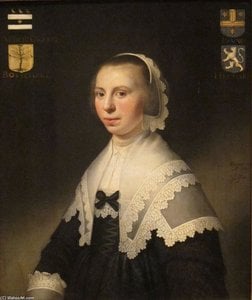
Un Maestro di Delft del Ritratto Barocco
Willem Jacobsz Delff, la cui vita abbracciò gli vibranti anni tra il 1580 e il 1638, rimane una figura luminosa all'interno dell'intricato arazzo dell'Età dell'Oro olandese. Incontrare le sue opere significa immergersi in un'epoca in cui la ritrattistica trascendeva la semplice somiglianza; essa divenne una rappresentazione accuratamente orchestrata di status, emozione e dignità eterna. Nato a Delft, questo crogiolo artistico nutrì un talento che era tanto tecnicamente brillante quanto profondamente risonante con l'esperienza umana.
La sua giovinezza fu intrisa della stessa atmosfera del mecenatismo artistico. Non emerse nel mondo dell'arte come un genio isolato, bensì come parte di una vibrante e creativa stirpe. L'ombra e la guida di suo padre, Jacob Willemsz. Delff I—un rispettato ritrattista a Delft—gli fornirono un apprendistato inestimabile nel catturare le sottili sfumature dei legami familiari e del carattere individuale. Questa immersione all'interno di una famiglia dedita all'impegno artistico, ulteriormente sostenuta dai talenti dei suoi fratelli, stabilì una base profonda per la sua stessa maestria.
L'Artigianato tra Linea e Luce
La precoce fama professionale di Delff si costruì su un comando straordinario dell'incisione. Egli possedeva il dono di tradurre la ricchezza della pittura a olio nella bellezza nitida e precisa della stampa monocromatica. Queste incisioni rivelano un occhio meticoloso, capace di rendere le texture—che si tratti di velluto, pizzo o metallo lucido—con un'incredibile fedeltà. Eppure, sebbene le sue stampe testimonino la sua abilità tecnica come disegnatore, sono i suoi dipinti a catturare veramente l'ampiezza della sua ambizione artistica.
Il suo stile maturo è innegabilmente segnato dalla grandezza e dal dramma intrinseci all'arte barocca. Delff comprese come la luce potesse scolpire il volto di un soggetto, come le ombre profonde potessero suggerire narrazioni non dette e come una composizione opulenta potesse elevare un semplice ritratto a emblema di potere. Che stesse ritraendo membri della nobiltà o l'affluente classe mercantile, i suoi soggetti non sono mai semplicemente osservati; essi vengono presentati sotto la luce di una profonda rilevanza storica.
Catturare la Nobiltà e la Profondità Psicologica
Il tema che definisce maggiormente l'eredità di Delff è il ritratto dell'élite: la nobiltà e coloro che detene un potere significativo nella società olandese. I suoi ritratti non sono meri documenti celebrativi; sono studi psicologici velati da sfarzo. Egli possedeva una straordinaria capacità di infondere nei suoi soggetti un'aura di dignità intrinseca, facendo sentire l'osservatore partecipe di un momento di silenziosa e potente contemplazione.
Il simbolismo intrecciato in queste opere è sottile ma pervasivo.
Uno sguardo particolare può suggerire acume politico; la ricchezza dei tessuti parla di ricchezza accumulata. Delff padroneggiò l'arte della suggestione, permettendo alla postura del soggetto e alla magistrale gestione della luce da parte dell'artista di svolgere gran parte del lavoro narrativo. Il suo impegno verso il realismo non sacrificò mai la necessaria teatralità richiesta dall'estetica barocca.
Risonanza Storica ed Eredità Duratura
Willem Jacobsz Delff si pone come un ponte vitale tra le intime tradizioni della ritrattistica di suo padre e le grandi, drammatiche dichiarazioni dell'alto Barocco. La sua carriera funge da testimonianza del potere duraturo della bottega familiare nel sostenere l'eccellenza artistica durante periodi di intenso fiorire culturale. Sebbene sia scomparso nel 1638, il suo contributo al registro visivo dell'Età dell'Oro olandese rimane indelebile.
Per il moderno ammiratore d'arte,
esplorare l'opera di Delff è un invito in un mondo dove la maestria tecnica incontra una profonda osservazione umana. Il suo lavoro ci invita non solo ad ammirare il colore, ma a contemplare il peso della storia racchiuso in un singolo, squisitamente reso sguardo.
Domande e risposte
Dove posso esplorare le opere di Willem Jacobsz Delff suddivise per soggetto?
Le opere di Willem Jacobsz Delff possono essere esplorate per soggetto nella pagina Catalogo per soggetti dell'artista.
Quali opere di Willem Jacobsz Delff sono le più visualizzate?
Le statistiche relative alle opere di Willem Jacobsz Delff sono disponibili nella pagina Statistiche dell'artista.
Dove posso vedere il profilo cromatico delle opere di Willem Jacobsz Delff?
L'uso del colore di Willem Jacobsz Delff nelle opere presenti su questo sito web può essere approfondito consultando la pagina Profilo Cromatico dell'Artista dell'artista.