Albert Anker, 1831 – 1910

Albert Anker Paintings: The 83 Most Famous Works, Ranked

Albert Anker's most famous painting is Writing lessons (also known as Schreibunterricht) (1865). With The Prodigal Son (1858) and Sunday afternoon (1862), it completes the three works everyone recognises. Our catalogue lists 83 works by Albert Anker; the 83 below are the ones the world looks at most, each with its year, the museum that holds it and why it matters.

Ranked by our popularity score, which combines the searches, visits and orders for each work. Updated Ottobre 2026. Every masterpiece on this page can be ordered as a museum-quality, hand-painted oil reproduction or a fine art print, at the size you choose.

Portrait of Albert Anker
Albert Anker · 1831 – 1910
Born · died
1831 – 1910, Ins
Movement
Realismo
Works in our catalogue
83
Most famous
Writing lessons (also known as Schreibunterricht) (1865)
Most works at
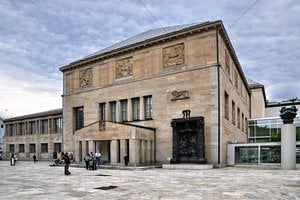
Kunsthaus Zürich

The 10 most famous Albert Anker paintings

Albert Anker, paintings 11 to 83

The LIttle Musician (1873) by Albert Anker
#49

The LIttle Musician

1873

The Little Musician is an oil on canvas painting by the Swiss artist Albert Anker. Created about 1873, this work captures a singular, quiet moment of childhood. The…

Order a reproduction →

The subjects Albert Anker painted most

The four subjects that return most often among these masterpieces, with the finest example of each.

Where to see Albert Anker's paintings

The 7 museums that hold the most of the paintings on this page.

Museum City Works by Albert Anker Paintings from this list
Kunsthaus Zürich, ZurigoKunsthaus Zürich Zurigo 3 The Milk Soup at Kappel, Civil marriage, Due ragazze sulla panca della stufa
Kunst Museum Winterthur | Reinhart am Stadtgarten, WinterthurKunst Museum Winterthur | Reinhart am Stadtgarten Winterthur 3 The little knitters, The artist's daughter Louise, Creche
Museo di arte e storia, NeuchâtelMuseo di arte e storia Neuchâtel 2 Sunday afternoon, The Bourbakis
Museo delle Arti Visive di Berna, BernaMuseo delle Arti Visive di Berna Berna 2 The Poor Man's Soup, Still-Life with Coffee, Milk and Potatoes
Palais des Beaux-Arts, LillePalais des Beaux-Arts Lille 1 In the Woods
Musée cantonal des Beaux-Arts, LosannaMusée cantonal des Beaux-Arts Losanna 1 Queen Bertha and the Spinners
Kunstmuseum Basel, BasileaKunstmuseum Basel Basilea 1 Children at Breakfast

Albert Anker's most famous painting of each decade

  1. 1850s
  2. 1860s
  3. 1870s
    The Bourbakis (1871) by Albert Anker
    No. 4 of 83

    The Bourbakis

    Age 39 – 48 · Museo di arte e storia
  4. 1880s
  5. 1890s
  6. 1900s
  7. 1910s

Questions about Albert Anker's paintings

What is Albert Anker's most famous painting?Show the answer

Writing lessons (also known as Schreibunterricht) (1865). Next come The Prodigal Son (1858) and Sunday afternoon (1862).

How old was Albert Anker when Writing lessons (also known as Schreibunterricht) was painted?Show the answer

34 years old: Writing lessons (also known as Schreibunterricht) dates from 1865 and Albert Anker was born in 1831.

What are the top 10 paintings by Albert Anker?Show the answer

Writing lessons (also known as Schreibunterricht), The Prodigal Son, Sunday afternoon, The Bourbakis, In the Woods, The Wine Festival, Betende im Beinhaus von Stans, Baptism, Boy at table II and Girl, drinking coffee. The ranking above gives the year and the museum of each.

How many paintings did Albert Anker make?Show the answer

Our catalogue lists 83 works by Albert Anker, dated from 1858 to 1910.

Where are Albert Anker's most famous paintings?Show the answer

Most of them are in Kunsthaus Zürich (Zurigo), Kunst Museum Winterthur | Reinhart am Stadtgarten (Winterthur) and Museo di arte e storia (Neuchâtel). The table above lists the museums one by one.

When did Albert Anker paint the most famous works?Show the answer

In 1890s: 16 of the 83 works on this page date from then, among them The Genius of Death.

What are Albert Anker's earliest and latest famous paintings?Show the answer

The earliest on this page is The Prodigal Son (1858), the latest Boy with Slate Tablet (1910).

What did Albert Anker paint most often?Show the answer

Rural life (3), Swiss art (3) and Portraits (3), among the 83 works on this page.

Which art movement does Albert Anker belong to?Show the answer

Realismo and Contemporary realism, as the paintings on this page show.

Which Albert Anker paintings can I see at the Kunsthaus Zürich?Show the answer

The Milk Soup at Kappel, Civil marriage and Due ragazze sulla panca della stufa are among the 3 works on this page held by the Kunsthaus Zürich, Zurigo.

Can I buy a reproduction of a Albert Anker painting?Show the answer

Yes. Every painting on this page can be ordered as a museum-quality, hand-painted oil reproduction or a fine art print, in the size you choose, from the painting's own page.

About Albert Anker

Primi Anni e Formazione

Albert Samuel Anker nacque il 1° aprile 1831 a Ens, in Svizzera. Suo padre, Samuel Anker, era veterinario e ricoprì una carica nell'assemblea costituzionale del Canton Berna. La famiglia si trasferì poi a Neuchâtel nel 1836 quando il padre assunse un ruolo simile lì. Anker dimostrò fin da subito un’attitudine per l’arte, ricevendo le prime lezioni di disegno da Frédéric-Wilhelm Moritz. Continuò la sua formazione artistica con Louis Wallinger dal 1845 al 1848 insieme ad Auguste Bachelin. Dopo aver frequentato il Gymnasium a Berna e conseguito la maturità nel 1851, intraprese inizialmente studi teologici all'Università di Berna e successivamente all'Università di Halle in Germania. Tuttavia, ispirato dalle collezioni d’arte che incontrò in Germania, Anker scelse infine di dedicarsi a una carriera artistica, ottenendo l'approvazione del padre nel 1854.

Sviluppo Artistico e Influenze

Anker si trasferì a Parigi dove studiò con Charles Gleyre all’École nationale supérieure des Beaux-Arts. Questo periodo fu cruciale per il suo sviluppo artistico, esponendolo alle tendenze artistiche francesi contemporanee. Pur essendo influenzato dal Realismo, Anker sviluppò uno stile distintivo caratterizzato da un meticoloso dettaglio, una sottile espressione emotiva e un focus sulla rappresentazione di scene quotidiane della vita rurale svizzera. La sua opera riflette un apprezzamento per la semplicità e la dignità dell’esistenza contadina. Spesso raffigurava bambini, agricoltori e interni domestici con notevole realismo e tenerezza. L'influenza dei maestri olandesi come Johannes Vermeer si può osservare nella sua attenzione alla luce e al dettaglio, così come nella sua rappresentazione di ambientazioni interne intime.

Opere Principali e Temi

Anker è noto soprattutto per i suoi dipinti che raffigurano scene della vita rurale svizzera del XIX secolo. Tra le sue opere più celebrate figurano "Il Piccolo Musicista", un'affascinante rappresentazione di un giovane ragazzo che suona il violino, “Ritratto di una Giovane”, che mostra l’innocenza giovanile, e "La Moglie di un Contadino, Mentre Cuce", che cattura un momento di tranquilla serenità domestica. "Unterwalden (costumi tradizionali dopo Josef Reinhart)" dimostra il suo interesse nel documentare il patrimonio culturale svizzero attraverso studi a acquerello sugli abiti tradizionali. Ha prodotto anche ritratti, nature morte e scene di genere che riflettono i valori e l'estetica del suo tempo. Il suo studio a carboncino "Vecchio Contadino al Tavolo (22 aprile 1907)” offre uno sguardo sul suo processo artistico e sulla sua capacità di trasmettere emozioni con semplici linee. I temi ricorrenti nella sua opera includono l’infanzia, la vita familiare, le tradizioni rurali e la bellezza del paesaggio svizzero.

Riconoscimenti e Significato Storico

Albert Samuel Anker ottenne un notevole riconoscimento durante la sua vita, diventando noto come il "pittore nazionale" della Svizzera grazie alla popolarità e al fascino duraturo delle sue rappresentazioni della cultura svizzera. Le sue opere furono esposte in numerose mostre nazionali e internazionali, guadagnandosi apprezzamento critico e un fedele seguito. L'arte di Anker ha svolto un ruolo significativo nel plasmare l’immagine della Svizzera del XIX secolo, presentando una visione romantica ma realistica della vita rurale. Ha contribuito allo sviluppo del Realismo svizzero, influenzando le generazioni successive di artisti. I suoi dipinti continuano ad essere ammirati per la loro abilità tecnica, la profondità emotiva e il significato storico, offrendo preziose intuizioni sul panorama sociale e culturale della sua epoca. Anker morì il 16 luglio 1910 a Ins, in Svizzera, lasciando dietro di sé un’eredità come uno dei più amati e importanti artisti svizzeri.

All 83 works by Albert Anker →