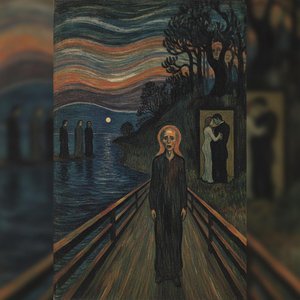
Margit Anna: Hungarian Painter of Identity and Symbol
Hungarian painter Margit Anna (1913-1991) emerged from the fertile artistic landscape of Hungary during the interwar years, leaving an indelible mark on Expressionist art with her poignant self-portraits and explorations of profound themes. Born in Borota, Hungary, Anna’s formative years were steeped in a rich cultural heritage that would undoubtedly inform her artistic vision. While biographical details remain somewhat sparse, her dedication to capturing inner emotional states through meticulous detail and symbolic imagery speaks volumes about her artistic sensibilities. Anna's artistic journey began with studies at the Budapest Academy of Fine Arts, where she honed her skills under influential teachers who championed a modernist approach. This training instilled in her a commitment to conveying complex psychological narratives—a characteristic that would become synonymous with her oeuvre. Her early works showcased an interest in landscapes and portraits, establishing a foundation for her later explorations into more emotionally charged subjects. Notably, she was deeply impacted by the Expressionist movement, particularly artists like Edvard Munch and Ernst Ludwig Kirchner, whose techniques of distorted perspective and emotive color palettes resonated profoundly within Anna’s artistic consciousness. These masters encouraged her to confront difficult truths about human experience—a preoccupation that would become central to her artistic endeavors. Her breakthrough came with a series of self-portraits that captivated audiences and critics alike. These paintings weren't merely representations of her physical appearance; they were meticulously crafted explorations of identity—a preoccupation that would permeate her entire artistic output. Through subtle gestures, expressive facial expressions, and carefully chosen symbolic elements – such as flowers representing fragility and remembrance – Anna conveyed a palpable sense of melancholy and introspection. Recurring motifs of solitary figures against desolate backgrounds underscored the artist’s fascination with themes of isolation and existential questioning. Each portrait served as a meditation on the complexities of human consciousness, reflecting her own personal struggles and triumphs. Anna's involvement with Anchers Hus, a pivotal hub for Skagen Painter colony, exemplifies her openness to experimentation and collaboration—a spirit that propelled her artistic development. Situated in Skagen, Denmark, this influential artist’s community fostered dialogue between diverse artistic traditions and encouraged artists to push the boundaries of conventional techniques. Her participation in collaborative projects allowed her to engage with fellow creatives and broaden her artistic horizons. Furthermore, she was honored as an artist of distinction by the Duchess Anna Amalia Library, cementing her legacy as a champion of literature and intellectual pursuits—a testament to her belief in the transformative power of art and knowledge. Anna’s enduring influence can be seen in subsequent generations of Hungarian artists who embraced Expressionist principles while retaining their own distinctive voices. Her unflinching gaze into the human psyche—coupled with her masterful command of technique—continues to inspire admiration and scholarly interest. She remains a testament to the power of art as a vehicle for conveying profound emotional truths, securing her place as one of Hungary’s most significant painters of the 20th century.- Notable Works: “Is This The Promised Land,” “Self-portrait”, “Woman With A Bunch Of Flower”
Domande e risposte
Dove si possono trovare le opere di Margit Anna raggruppate per movimento artistico?
Le opere di Margit Anna possono essere consultate per movimento nella pagina Tutti i movimenti dell'artista.
Posso sfogliare le opere di Margit Anna in base alla palette di colori?
Le opere di Margit Anna possono essere esplorate per palette cromatica nella pagina Per palette di colori dell'artista.
Dove si possono trovare le opere di Margit Anna raggruppate per parole chiave?
Le opere di Margit Anna possono essere esplorate tramite parole chiave nella pagina Per parole chiave dell'artista. Ogni parola chiave raggruppa le opere correlate.