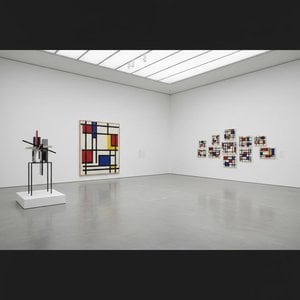
Ilya Bolotowsky: Pioniere dell'Astrattismo Geometrico
Ilya Bolotowsky (1907-1981) si erge come una figura cruciale nella storia dell'arte astratta del XX secolo, in particolare all'interno dell'influente movimento De Stijl. Nato a San Pietroburgo, in Russia, nel turbulento scenario della Prima Guerra Mondiale e della Rivoluzione Russa, la sua infanzia gli trasmise un profondo apprezzamento per il rigore intellettuale e un anelito verso l'armonia visiva: qualità che avrebbero definito interamente la sua traiettoria artistica.
- Giovinezza e Formazione: Bolotowsky emigrò a Baku e Costantinopoli prima di trasferirsi a New York nel 1923, dove intraprese una formazione accademica presso la National Academy of Design. Questo periodo formativo lo espose alle influenze classiche parallelamente alla fioritura delle idee moderniste.
- L'influenza del De Stijl: La visione artistica di Bolotamento fu irrevocabilmente plasmata da Piet Mondrian, la cui incrollabile adesione all'astrazione geometrica e a una tavolozza riduttiva — basata principalmente su linee orizzontali e verticali in colori primari e toni neutri — divenne la pietra angolare della sua estetica.
La nascita degli American Abstract Artists e una visione collettiva
L'impegno di Bolotowsky nel promuovere il dialogo artistico andò ben oltre la sua pratica personale. Riconoscendo le sfide affrontate dai pittori astratti nel tentativo di ottenere riconoscimento in un mondo dell'arte prevalentemente figurativo, egli co-fondò nel 1936 gli American Abstract Artists: un collettivo dedicato a difendere gli interessi dei propri membri e a promuovere la comprensione tra gli astrattisti e il grande pubblico. Questo sforzo esemplifica la convinzione di Bolotowsky che il progresso artistico prosperi attraverso l'esplorazione condivisa e il sostegno reciproco.
- I Dieci Dissidenti di Whitney: Insieme a Louis Schanker, Adolph Gottlieb, Mark Rothko e Joseph Solman, Bolotowsky formò "i Dieci", un gruppo di artisti che sfidò le convenzioni dell'accademia e affermò la propria indipendenza attraverso mostre autonome.
- Iniziative di Arte Pubblica: Il coinvolgimento di Bolotowsky in progetti di arte pubblica sottolineò la sua convinzione che l'arte potesse contribuire al miglioramento sociale. In particolare, guidò la realizzazione del murale per il Williamsburg Housing Project, un traguardo storico che dimostrò la sua capacità di tradurre concetti filosofici in narrazioni visive d'impatto.
Esplorare l'intuizione e la forma geometrica
Nonostante il meticoloso controllo di Bolotowsky sugli elementi compositivi, egli insistette nel dare priorità all'intuizione accanto alle regole formali nel determinare la direzione delle sue opere. Questo approccio riflette una più ampia sensibilità umanista: il riconoscimento che la creatività artistica scaturisce sia dalla contemplazione intellettuale che dalla risposta emotiva spontanea.
- Forme tridimensionali: La sperimentazione di Bolotowsky con sculture tridimensionali — prevalentemente verticali e dalle pareti dritte — rappresenta una significativa deviazione dai suoi primi dipinti, segnalando un impegno costante verso nuovi linguaggi artistici.
- Riconoscimenti ed Esposizioni: La sua opera ottenne il plauso internazionale attraverso mostre presso l'Università del New Mexico nel 1970 e successive retrospettive al Museo Guggenheim e alla National Collection of Fine Arts, consolidando la sua eredità come figura di spicco nel canone modernista.
Eredità e influenza duratura
Il contributo di Ilya Bolotowsky all'arte astratta si estende oltre i singoli capolavori; egli ha stabilito gli American Abstract Artists e ha coltivato una vibrante comunità artistica. La sua incrollabile dedizione ai principi di Mondrian, unita alla sua prospettiva umanista sulla creatività, continua a ispirare gli artisti di oggi. L'influenza duratura di Bolotowsky è palpabile nella continua esplorazione dell'astrazione geometrica e della sua capacità di trasmettere profondi ideali filosofici.
Domande e risposte
Dove si possono trovare le opere di Ilya Bolotowsky raggruppate per movimento artistico?
La pagina Tutti i movimenti raggruppa le opere di Ilya Bolotowsky per movimento artistico.
Posso ordinare le opere di Ilya Bolotowsky per colore?
La pagina Indice dei colori organizza le opere di Ilya Bolotowsky per colore.
Posso esplorare le opere di Ilya Bolotowsky tramite parole chiave?
Per trovare le opere di Ilya Bolotowsky relative a un tema specifico, consulta la pagina Per parole chiave dell'artista, che raggruppa le opere per parola chiave.