Early Life and Artistic Beginnings
David Wilkie Wynfield (c. 1837 – 26 May 1887) emerged from a lineage steeped in artistic tradition, his father serving as an Indian Army officer and Sophia May Burroughes his second wife—a woman herself connected to the art world through her familial ties to Sir David Wilkie RA. Born in London, Wynfield’s formative years were shaped by exposure to both military discipline and the vibrant intellectual currents of Victorian society. Notably, he was a nephew of Sir David Wilkie RA, whose legacy would profoundly influence Wynfield's artistic sensibilities. Recognizing his innate talent early on, Wynfield enrolled at James Mathew Leigh’s art school in Newman Street in 1856, marking the commencement of his formal artistic education—a pivotal step toward realizing his ambitions as a painter.The St John’s Wood Clique and Romantic Vision
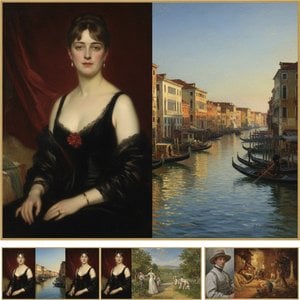
Wynfield swiftly joined the celebrated St John's Wood Clique, an influential group of artists who championed historical narratives and embraced romantic themes. This collective fostered a spirit of experimentation and collaboration, propelling Wynfield to explore landscapes and portraits set against the backdrop of medieval and Renaissance Europe. His paintings frequently depicted idealized figures engaged in dramatic scenes—a stylistic choice reflecting the broader artistic sensibilities of his time. The Clique’s commitment to capturing emotion and grandeur established Wynfield as a participant in a movement that sought to elevate art beyond mere representation, aiming instead for an immersive experience of beauty and imagination. He was particularly drawn to portraying historical subjects with meticulous detail and expressive brushwork—a hallmark of the Romantic aesthetic.Photography: Pioneering Shallow Focus
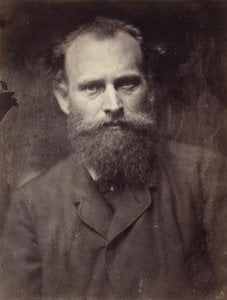
A transformative encounter with photography captivated Wynfield during the 1860s, sparking his fascination with this emerging medium. Recognizing its potential to emulate the painterly effects of Old Masters—a technique he meticulously honed—Wynfield developed a distinctive shallow-focus portrait photography method. This innovation wasn’t merely a technical accomplishment; it represented a conceptual leap—a deliberate effort to fuse artistic vision with photographic precision. Wynfield painstakingly studied the methods employed by masters like Rembrandt and Vermeer, adapting their compositional strategies to his photographic practice. He achieved this remarkable feat by utilizing long exposures and carefully positioning subjects within darkened studios—techniques that maximized light diffusion and minimized movement blur. The resulting portraits captured not only likeness but also an elusive quality of mood and atmosphere—a testament to Wynfield’s mastery of both disciplines. Wynfield's pioneering approach earned him considerable acclaim, culminating in the publication of *The Studio*, a groundbreaking book showcasing his portraits alongside those of fellow artists like Julia Margaret Cameron and Henry Stacy Marks.Notable Achievements and Legacy
Wynfield’s unwavering support for contemporary artists extended beyond his photographic work; he served on the committee of the Dudley Gallery in Piccadilly from 1867, fostering a thriving environment for artistic discourse and creativity. His enduring influence can be discerned in Cameron’s oeuvre—a testament to Wynfield’s ability to inspire and propel artistic progress. He was also a founding member of the Artists' Rifles Corps, demonstrating his commitment to civic duty alongside his passion for art. David Wilkie Wynfield died prematurely at age forty-nine from tuberculosis—a tragic loss that curtailed his artistic career but nevertheless cemented his place as a pivotal figure in Victorian art history. His legacy continues to resonate with scholars and enthusiasts alike, securing his position as a cornerstone of the era’s artistic landscape.Domande e risposte
Dove posso vedere tutte le opere di David Wilkie Wynfield?
Ogni opera di David Wilkie Wynfield su questo sito può essere consultata nella pagina Tutte le opere d'arte dell'artista.
Con quali altri nomi è noto David Wilkie Wynfield?
David Wilkie Wynfield è noto anche come Wynfield.
Esiste una cronologia della carriera di David Wilkie Wynfield?
La Cronologia di David Wilkie Wynfield è una linea temporale a scorrimento che presenta le opere dell'artista in ordine cronologico, suddivise in capitoli relativi ai diversi periodi della sua carriera.